


Is Your Kitchen Sink Clogged? Here’s What to Do First
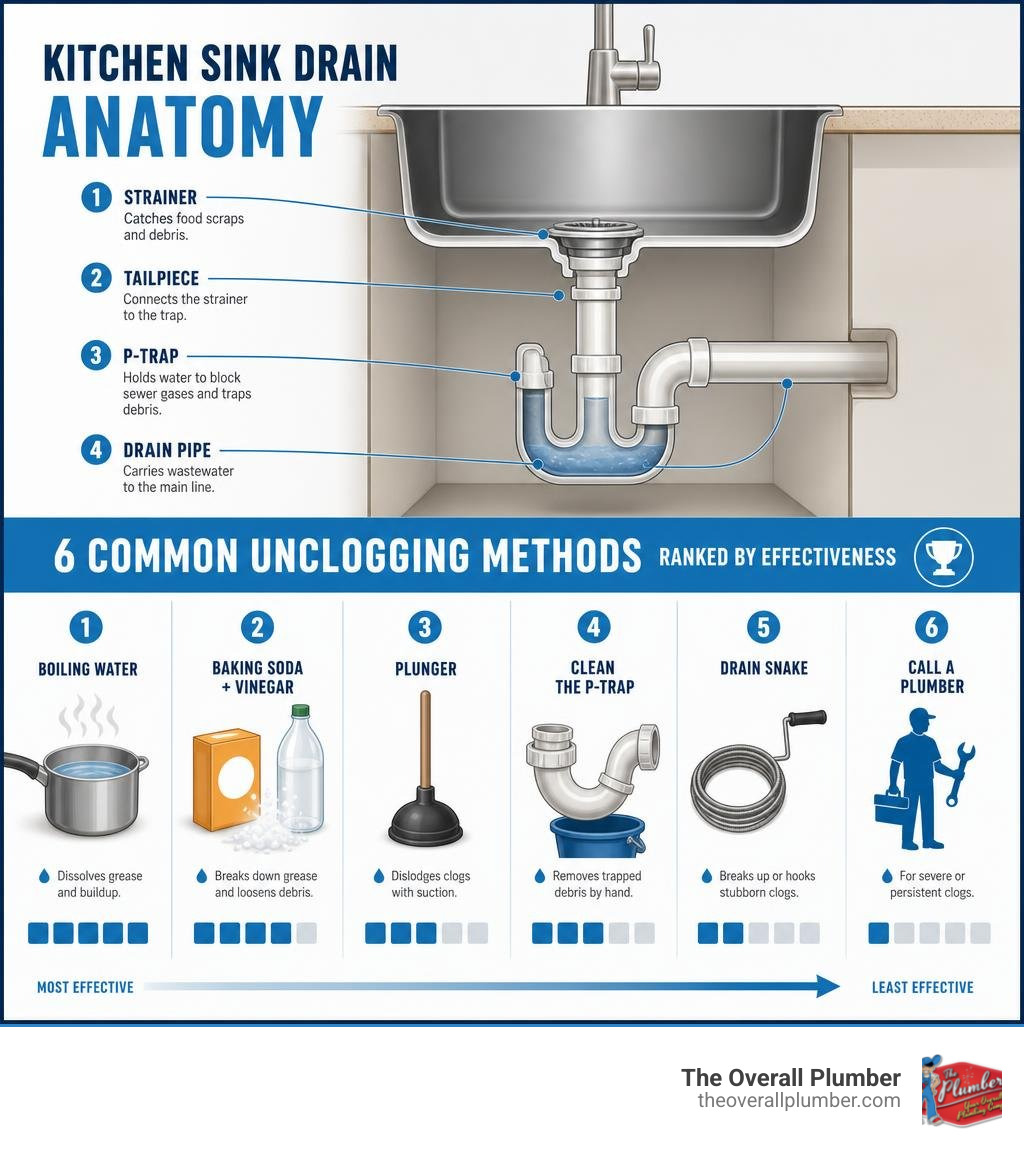
If you need to know how to unclog a kitchen sink, here are the most effective methods to try, starting with the simplest:
- Boiling water – Pour in stages directly down the drain to dissolve grease (metal pipes only)
- Baking soda + vinegar – Pour 1 cup baking soda followed by 1 cup white vinegar, cover the drain, wait 15-30 minutes, then flush with hot water
- Plunger – Fill the sink with 2-3 inches of water and plunge with 15-20 firm strokes using a cup plunger
- Clean the P-trap – Place a bucket under the curved pipe beneath your sink, unscrew the slip nuts, and clear out debris
- Drain snake – Feed a 25-foot hand auger into the drain and rotate clockwise to break up or hook the clog
- Call a plumber – If multiple drains are backing up or nothing works after 90 minutes, it’s time for professional help
A clogged kitchen sink is one of the most common plumbing headaches homeowners face – over 50% of homeowners deal with one at least once a year. One minute you’re rinsing dishes, the next you’re staring at a pool of standing grey water that just won’t budge. Most clogs come down to the same handful of culprits: grease, food scraps, and soap scum slowly building up inside your drain line until water has nowhere to go.
The good news? Most kitchen sink clogs can be cleared at home without calling a plumber, using tools and ingredients you already have on hand. This guide walks you through every method – from the cheapest and simplest to the more hands-on approaches – so you can match the fix to the clog.
I’m Dayton Whitworth, a second-generation plumber serving the Greater Houston and Gulf Coast area, and I’ve cleared more clogged kitchen sinks than I can count across Galveston County, Brazoria County, and beyond. Knowing how to unclog a kitchen sink safely and effectively is one of the most practical skills a homeowner can have, and I’ll show you exactly how to do it right.
Understanding the Culprits: What Causes a Clogged Kitchen Sink?
Before grabbing your tools, it helps to understand exactly what you are fighting. Unlike bathroom sinks—where hair and soap scum reign supreme—the kitchen sink is a battleground of organic materials, fats, and food waste.

Statistically, nearly 60% of all kitchen blockages are exacerbated by solidified food fats, and up to 80% of total kitchen clogs are caused by grease in some form. When you pour warm cooking oil, bacon grease, or meat fat down the drain, it looks like a harmless liquid. However, as soon as it hits the cold pipes beneath your home—often just 12 inches inside the drain line—it solidifies. Over weeks and months, this grease forms a sticky, plaque-like lining along the pipe walls, narrowing the passage.
Once that sticky grease layer is established, every tiny food scrap that slips past your sink strainer gets trapped. The most common offenders include:
- Starchy Foods: Pasta, rice, and potato peels swell when exposed to water, forming a thick, glue-like paste that easily plugs drains.
- Fibrous Vegetables: Celery, corn husks, and onion skins can wrap around garbage disposal blades and tangle inside the P-trap.
- Coffee Grounds: They do not dissolve; instead, they clump together in the grease lining like wet sand, creating a virtually impermeable barrier.
- Soap Scum and Hard Water Minerals: In our coastal Texas service areas—from Pearland and Pasadena down to Galveston—hard water minerals combine with soap residue to form a tough, scaly buildup.
Leaving a slow-draining sink alone is never a good idea. If you ignore those warning signs, a partial clog will inevitably turn into a complete blockage, which can lead to structural pipe damage, leaks, or even foul-smelling sewage backups. To understand why procrastination is risky here, read our guide on Why Waiting for a Clog to Clear Itself is a Recipe for Disaster.
Safety First: Preparing for DIY Drain Cleaning
Unclogging a sink is a straightforward DIY project, but safety should always come first. Before you start, gather your protective gear and prepare your workspace to prevent messes or injuries.
Essential Safety Gear and Preparation
- Safety Goggles: Protect your eyes from unexpected splashes of dirty water, bacteria, or residual chemicals that may be sitting in the pipes.
- Heavy-Duty Rubber Gloves: Keep your hands clean and safe from bacteria, mold, and sharp debris.
- Bucket and Towels: Always place a bucket and a few old towels directly beneath the P-trap before loosening any plumbing joints to catch wastewater.
- Garbage Disposal Power Safety: If your sink has a garbage disposal, turn off its power at the electrical breaker before putting your hands or any tools near the drain. Never rely solely on the wall switch.
Your DIY Tool Checklist
Before you begin, make sure you have these basic tools ready:
- A standard rubber cup plunger (designed for sinks, not toilets)
- Baking soda and white vinegar
- Dish soap (such as Dawn)
- Channel lock pliers or pipe wrench
- A 15-to-25-foot hand-crank drain snake (plumbing auger)
- A wet/dry shop vacuum (optional, for stubborn clogs)
How to Unclog a Kitchen Sink Using Natural Home Remedies
If your sink is draining slowly but is not yet completely backed up, you can often clear the blockage using natural, non-corrosive home remedies. These methods are safe for your pipes, highly affordable, and require no specialized plumbing skills.
Method 1: The Boiling Water Flush (For Grease Clogs Only)
Boiling water is the simplest and cheapest first line of defense against grease buildup.
- Remove Standing Water: Bail out as much standing water from the sink basin as possible using a cup and a bucket.
- Boil the Water: Bring about half a gallon of water to a rolling boil.
- Pour in Stages: Slowly pour the boiling water directly down the drain opening in two or three stages, waiting a few seconds between each pour to let the heat melt through the grease.
Warning: Only use boiling water if you have metal (copper or galvanized steel) pipes. If you have plastic PVC or ABS pipes under your sink, boiling water can soften the plastic, warp the joints, and cause leaks. For PVC pipes, use the hottest tap water your faucet can produce instead.
Method 2: Baking Soda and Vinegar (The “Science Volcano” Method)
When baking soda (sodium bicarbonate) mixes with white vinegar (acetic acid), it creates a chemical reaction that releases carbon dioxide gas. This bubbling action physically agitates and loosens organic debris, clearing approximately 70% of minor kitchen sink clogs.
- Add Baking Soda: Pour 1 cup of dry baking soda straight down the drain.
- Add Vinegar: Follow it with 1 cup of white vinegar.
- Seal the Drain: Immediately plug the drain with a stopper or a wet rag to force the fizzing pressure downward into the clog rather than up into the sink.
- Wait and Flush: Let the mixture sit for 15 to 30 minutes until the bubbling subsides. Flush the drain thoroughly with a kettle of hot water to wash away the loosened debris.
You can learn more about how these and other home remedies perform by reading How to Unclog a Kitchen Sink: 5 Methods That Work (2026).
Method 3: The Baking Soda and Salt Overnight Variation
For stubborn, slow-draining grease clogs, mix 1 cup of baking soda with half a cup of coarse table salt. Pour the dry mixture down the drain and let it sit overnight. The salt acts as a mild abrasive to scour the inside of the pipe walls, while the baking soda breaks down organic matter. Flush the drain with hot water the following morning.
Mechanical Methods: Plungers, P-Traps, and Drain Snakes
When natural chemical reactions aren’t enough to dissolve a blockage, you need to use mechanical force. These methods physically agitate, pull apart, or retrieve the clog from your pipes.
When and How to Unclog a Kitchen Sink with a Plunger
Plunging resolves about 60% of kitchen sink clogs without professional help. However, many homeowners use the wrong tool or technique.
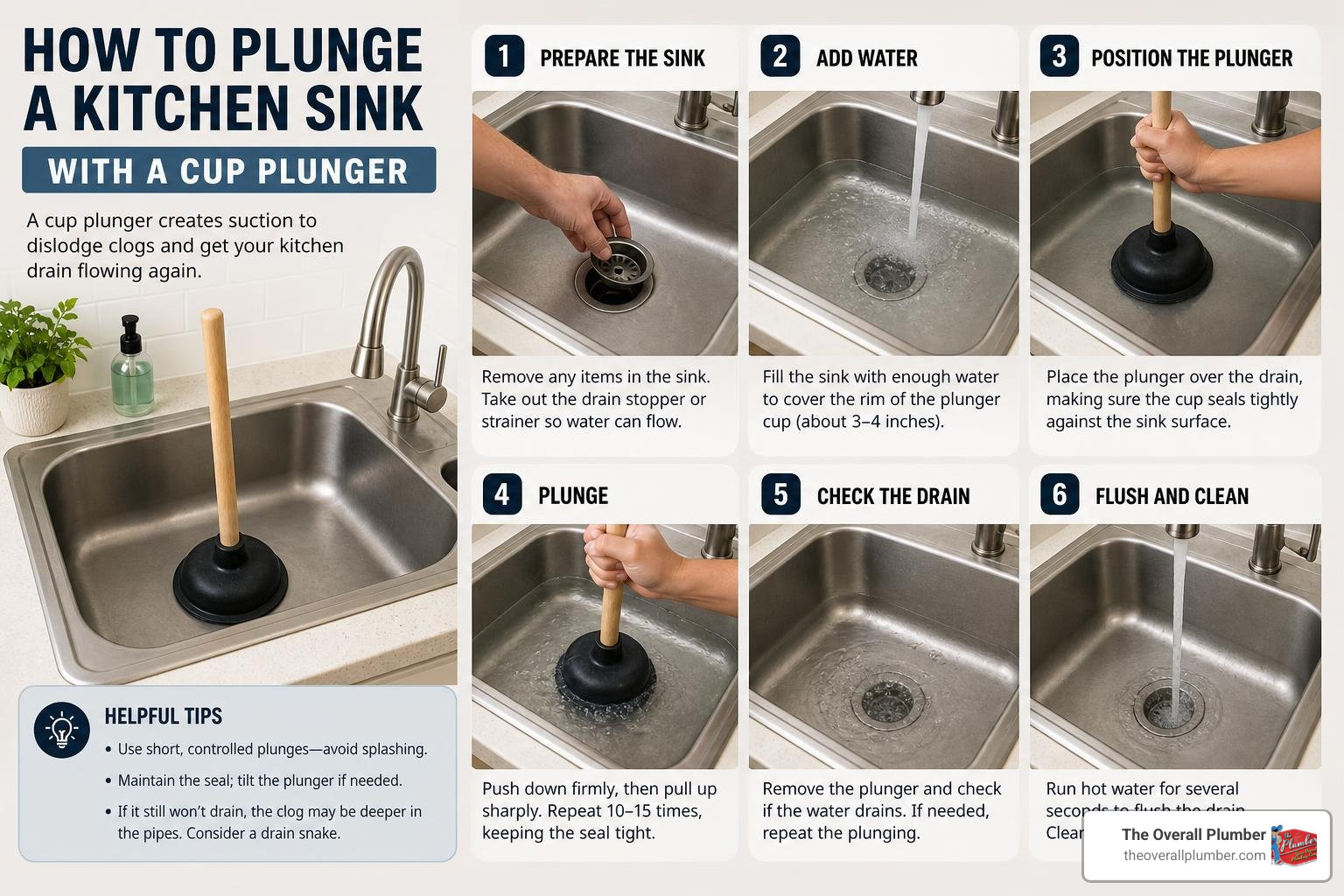
To clear a sink, you must use a cup plunger, which has a flat-rimmed bottom that creates a tight seal against flat sink basins. Do not use a flange plunger, which has an extended rubber flap designed specifically to fit inside toilet bowls.
Step-by-Step Plunging Guide:
- Block the Second Drain (For Double Sinks): If you have a double-basin sink, you must seal the non-clogged side. If you don’t, the plunging pressure will simply escape out the other drain. Stuff a wet rag tightly into the second drain, or hold a solid sink stopper down firmly.
- Create a Water Seal: Fill the clogged sink basin with 2 to 3 inches of water—just enough to completely submerge the rubber cup of the plunger.
- Improve the Seal (Optional): Apply a thin layer of petroleum jelly (Vaseline) to the rim of the plunger cup to help create an airtight seal against the sink surface.
- Position and Plunge: Place the plunger cup directly over the drain opening. Press down gently to force out any trapped air, then plunge vigorously up and down vertically for 15 to 20 firm, rapid strokes. Keep the seal intact throughout.
- Break the Seal and Flush: Pull the plunger away quickly. If the water drains, flush the pipe with hot tap water for several minutes to clear any remaining debris.
Step-by-Step Guide: How to Unclog a Kitchen Sink by Cleaning the P-Trap
If plunging fails, the clog is likely sitting in your P-trap. This is the U-shaped bend in the pipe directly beneath your sink. The P-trap is designed to hold a small pool of water, which acts as a barrier to block smelly sewer gases from entering your home. Because of its sharp curves, it is also the most common place for food scraps, grease, and small foreign objects to collect.
Cleaning the P-trap is a highly effective DIY task that takes only 10 to 15 minutes. For professional tips on handling under-sink plumbing, check out How to Unclog a Kitchen Sink, According to Master Plumbers (Step-by-Step Guide) | The Kitchn.
   [ Sink Basin ]
 |
 |  <-- Tailpiece
 |
 +----+------+  <-- Slip Nut
 | |
 |  P-TRAP   |  <-- (Water barrier / Clog collector)
 +----+------+
 |
 +-------> [ Wall Drain Pipe ]
How to Safely Remove and Clean the P-Trap:
- Clear the Area: Empty all cleaning supplies and items from under your sink to give yourself plenty of working room.
- Position Your Bucket: Place a bucket directly underneath the P-trap to catch the wastewater and slimy debris that will drain out when you open the pipes.
- Loosen the Slip Nuts: Locate the two plastic or metal slip-joint nuts securing the U-shaped trap to the sink tailpiece and the wall pipe. Turn them counterclockwise by hand. If they are too tight or seized, use channel lock pliers gently to avoid cracking plastic ABS or PVC pipes.
- Remove the Trap: Carefully pull the P-trap straight down. Keep it upright so you don’t spill its contents, then empty it into your bucket.
- Clean and Inspect: Take the P-trap to another working sink or use an outdoor garden hose to thoroughly rinse it. Use an old toothbrush or bottle brush to scrub away grease, slime, and food buildup from the inside.
- Reassemble and Test: Push the clean P-trap back into position. Hand-tighten the slip nuts clockwise, then snug them slightly with your pliers (do not overtighten, or you may crack the plastic threads). Run the faucet to check for leaks.
Using a Drain Snake or Auger for Deep Blockages
If your P-trap is completely clear but the water still won’t drain, the blockage is located deeper in the waste line inside the wall. To reach it, you will need a handheld plumbing auger, commonly called a drain snake.
A standard 15-to-25-foot hand auger consists of a flexible steel cable with a corkscrew-like tip attached to a rotating drum. To learn more about selecting and using these tools safely, read our guide on how to Snake Your Way to Success with Auger Drain Cleaning.
How to Snake a Kitchen Drain Line:
- Remove the P-Trap: For the best results, remove the P-trap entirely to access the horizontal drain line inside the wall directly.
- Feed the Cable: Loosen the thumbscrew on the snake’s drum and manually feed the steel cable into the wall opening until you feel resistance. This resistance indicates you have hit either a sharp bend or the clog itself.
- Lock and Crank: Tighten the thumbscrew to lock the cable in place. Leave about 6 inches of cable sticking out of the pipe. Rotate the hand crank clockwise slowly while applying gentle forward pressure. This helps the corkscrew tip chew through the blockage or grab onto debris.
- Retrieve the Clog: Once you feel the resistance give way, loosen the thumbscrew and slowly pull the cable back out of the pipe. Keep a trash bag handy, as the cable will bring up messy grease, hair, and food debris.
- Reassemble and Flush: Reinstall the P-trap, tighten the slip nuts, and flush the drain with hot water to wash away any remaining loose particles.
Chemical Drain Cleaners vs. Professional Solutions
When faced with a stubborn clog, many homeowners reach for commercial liquid drain cleaners. However, professional plumbers strongly advise against using these products.
The Dangers of Chemical Drain Cleaners
Liquid drain cleaners contain high concentrations of corrosive chemicals like sodium hydroxide (lye) or sulfuric acid. While they can dissolve organic matter, they pose serious risks:
- Pipe Damage: The chemical reaction that dissolves clogs generates intense heat. This heat can soften and warp plastic PVC pipes, damage rubber gaskets, and corrode older metal joints.
- Garbage Disposal Ruin: Corrosive chemicals can destroy the internal seals and motor of your garbage disposal.
- Health and Safety Hazards: Chemical cleaners release toxic fumes and can cause severe chemical burns or permanent blindness if they splash onto your skin or eyes.
- Plumber Hazards: If you use a chemical cleaner and it fails to clear the clog, you are left with a basin full of highly toxic, acidic water. If you eventually have to call a plumber, they must work around these hazardous chemicals, which can delay repairs.
The Professional Alternative: Hydro Jetting and Camera Inspections
Professional drain cleaning is safer, more effective, and provides a long-term solution. Rather than using harsh chemicals, we use advanced mechanical methods to restore your pipes to like-new condition:
- Sewer Camera Inspections: We insert a high-definition, waterproof camera into your drain line to pinpoint the exact location, material, and cause of the clog, ensuring we use the right tool for the job.
- Hydro Jetting: This process uses high-pressure water (up to 4,000 PSI) to scour grease, soap scum, and mineral buildup off your pipe walls without damaging the pipes.
| Feature | Chemical Drain Cleaners | Professional Hydro Jetting |
|---|---|---|
| Safety for Pipes | Low (can warp PVC and corrode metal) | High (uses only pressurized water) |
| Effectiveness | Temporary (clears a small hole in the clog) | Complete (clears the entire pipe diameter) |
| Safety for Users | Low (burn hazards, toxic fumes) | High (handled safely by licensed plumbers) |
| Environmental Impact | Harmful (introduces toxic chemicals to water) | None (chemical-free) |
| Long-Term Value | Low (clogs often return quickly) | High (prevents future clogs for years) |
To see how professional tools can quickly resolve your drain issues, read about How Clogged Drain Service Can Help You Unclog Fast.
Frequently Asked Questions about Kitchen Sink Clogs
Can I use a wire hanger to unclog a kitchen sink?
While a straightened wire coat hanger can help retrieve hair or soap scum from shallow bathroom drains, we do not recommend using it in your kitchen sink. The stiff, sharp metal can easily scratch the interior of plastic PVC pipes, creating rough spots where grease and food particles can cling even faster. Furthermore, a hanger is too rigid to navigate the tight turns of a P-trap and will often push the clog deeper down the line. A plastic zip-it tool or a professional hand snake is a much safer option.
Why does my kitchen sink drain slowly but not clog completely?
A slow-draining sink is almost always caused by a gradual buildup of grease, soap residue, and food fats along the pipe walls. Over months, this buildup narrows the opening of your drain line, similar to a clogged artery. While water can still squeeze past, it drains very slowly. This is a clear warning sign that a complete blockage is forming. Running a natural baking soda and vinegar flush or cleaning your P-trap now can prevent a major plumbing emergency later.
How do I prevent future kitchen sink clogs?
The best way to handle a clog is to prevent it from forming in the first place. Follow these simple kitchen habits:
- Never Pour Grease Down the Drain: Pour warm cooking oils, bacon grease, and fats into an empty tin can or jar, let it cool, and discard it in the trash.
- Use a Mesh Strainer: Place a stainless steel mesh strainer over your drain opening to catch food scraps, seeds, and debris. Clean it out after every dishwashing session.
- Run Cold Water with the Disposal: Always run cold water while using your garbage disposal and keep it running for 15 seconds after turning the unit off. This helps flush food particles all the way out to the main sewer line.
- Perform Weekly Hot Water Flushes: Once a week, pour a kettle of very hot tap water down your drain to help dissolve and wash away any grease film before it solidifies.
When to Call the Professionals
While DIY methods can resolve most minor kitchen blockages, some plumbing nightmares require professional expertise. You should stop your DIY attempts and call a licensed plumber if:
- Your sink remains completely backed up after trying multiple DIY methods.
- Water backs up into other fixtures, such as your bathtub or washing machine drain, when you run the kitchen sink (this indicates a main sewer line clog).
- You notice leaks, cracked pipes, or pooling water under your sink cabinet.
- Your kitchen sink clogs repeatedly in the exact same spot.
At The Overall Plumber, we understand how disruptive a clogged kitchen sink can be to your daily routine. We proudly serve homeowners across Houston, Galveston, Pearland, League City, Friendswood, Santa Fe, Clear Lake, Pasadena, La Porte, Texas City, Harris County, and Galveston County, Texas.
We offer professional drain cleaning with advanced augers, high-definition camera inspections, and comprehensive plumbing protection plans. Best of all, we provide priority scheduling, no overtime fees, and no trip charges, all backed by our solid satisfaction guarantees.
If you are dealing with a stubborn clog or need professional drain maintenance, don’t wait for a small leak to turn into major water damage. To book an appointment with our experienced local plumbers, visit our Local Clogged Drain Service page or call The Overall Plumber today.