


What Does It Cost to Fix a Plumbing Leak in 2026?
The cost to fix a plumbing leak in 2026 typically falls between $150 and $850, but what you actually pay depends heavily on where the leak is and how hard it is to reach.
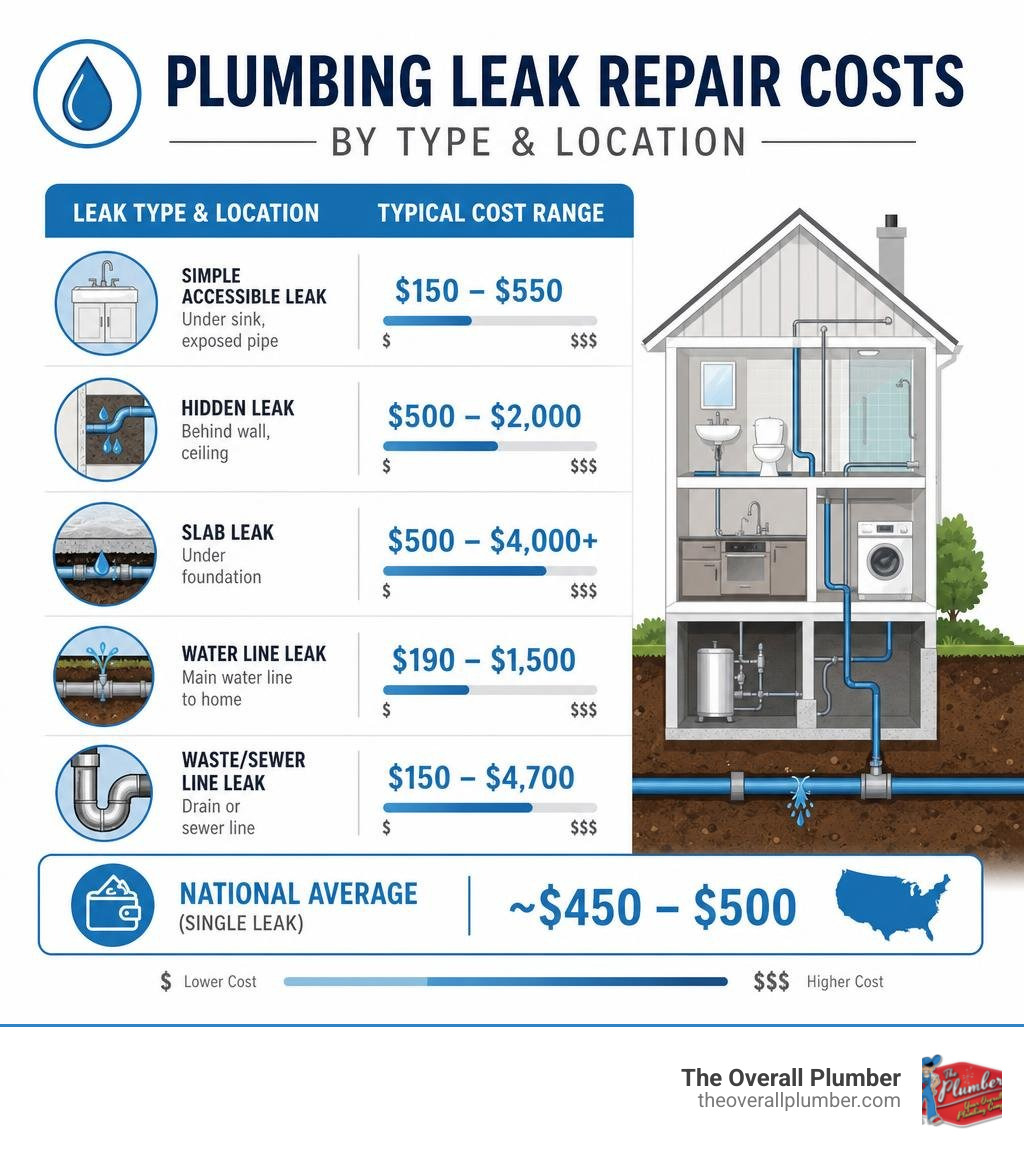
Here’s a quick look at typical costs:
| Leak Type | Typical Cost Range |
|---|---|
| Simple accessible leak (under sink, exposed pipe) | $150 – $550 |
| Hidden leak (behind wall, ceiling) | $500 – $2,000 |
| Slab leak | $500 – $4,000+ |
| Water line leak | $190 – $1,500 |
| Waste/sewer line leak | $150 – $4,700 |
| National average (single leak) | ~$450 – $500 |
Most homeowners pay around $450 for a straightforward repair. But a leak behind drywall or under your foundation can push costs far higher once you factor in access, cleanup, and secondary damage.
A small drip might seem minor, but it can quietly cause mold, rot, and structural damage — and those repairs cost far more than fixing the leak itself.
I’m Dayton Whitworth, a second-generation plumber serving Greater Houston, Brazoria County, Galveston County, and the surrounding Gulf Coast, with hands-on experience across hundreds of leak repairs ranging from simple fixture fixes to complex slab leak emergencies. Understanding the cost to fix a plumbing leak before you call a pro puts you in a much stronger position to budget confidently and avoid surprises.
Average Cost to Fix Plumbing Leak in 2026
When budgeting for plumbing repairs, it is incredibly helpful to understand what goes into the final invoice. According to the 2026 Plumbing Cost Benchmarks, the national average for a standard residential plumbing repair sits around $310 to $480, depending on the specific scope of the job. A deeper look into the Plumbing Costs Guide reveals a median cost of $331 for most common household calls.
However, a single national number does not tell the whole story. The price of fixing a leak can vary wildly based on whether the issue is a dripping faucet or a major pipe failure deep underground.
| Repair Type | Low-End Cost | Average Cost | High-End Cost |
|---|---|---|---|
| Leaky Faucet Repair | $100 | $225 | $350 |
| Toilet Leak / Flapper | $120 | $235 | $450 |
| Exposed Pipe Patch | $150 | $350 | $550 |
| Sewer Line Spot Repair | $1,500 | $3,200 | $8,000+ |
| Main Water Line Repair | $330 | $850 | $3,000 |
One of the most misunderstood parts of plumbing pricing is the diagnostic or service call fee. Many plumbing companies charge a flat $50 to $200 just to roll a truck to your house and assess the issue. At The Overall Plumber, we do things differently: we offer no trip charges to our local customers across Houston, Clear Lake, League City, and Galveston. This means you do not have to pay us simply for showing up to inspect your leak.
Factors That Drive Up the Cost to Fix Plumbing Leak
Several key variables dictate whether your repair bill stays on the low end or climbs into the thousands.
- Labor Rates: Labor represents 60% to 85% of most plumbing bills. Licensed plumbers must undergo years of training, and their hourly rates reflect that expertise.
- Pipe Materials: The physical cost of a patch or replacement section varies. Modern materials like PEX are highly cost-effective and flexible, whereas matching older copper or cast iron can require more specialized fittings and labor.
- Emergency Surcharges: If you call a plumber at 2:00 AM on a Sunday, you can expect an emergency multiplier of 1.5x to 2x the standard hourly rate, plus potential after-hours surcharges of $100 to $350. Fortunately, we offer no overtime fees and priority scheduling to our protection plan members, helping you avoid these massive price spikes during a midnight crisis.
- Permit Fees: For major repairs—especially those involving municipal sewer lines or cutting into concrete slabs—local building departments require permits. These can add $50 to $300 to the job to ensure everything is done up to local Texas building codes.
If you are dealing with a pipe that has completely given way, understanding the mechanics and costs of a Broken Pipe Repair can help you make an informed decision when speaking with our technicians.
Hidden vs. Accessible: How Location Impacts the Cost to Fix Plumbing Leak
The old saying in real estate—”location, location, location”—applies perfectly to plumbing. The single biggest driver of plumbing costs is not the price of the replacement pipe, but how hard it is for our plumbers to reach it.
- Accessible Leaks (Under Sinks & Basements): If a drain pipe under your kitchen sink starts weeping, it is highly accessible. Our plumber can simply open the cabinet doors, sit on the floor, and swap out the trap or tighten the slip nuts. These repairs typically cost between $150 and $400 because they require minimal setup and no demolition.
- Hidden Leaks (Behind Walls & Ceilings): When a pipe inside a second-story wall or ceiling springs a pinhole leak, the job becomes significantly more complex. We must carefully locate the leak, cut through the drywall, repair the pipe, and dry out the space. While the plumbing repair itself might only cost $250 to $550, the total project cost rises because of the need for drywall patching, painting, and insulation replacement.
- Slab Leaks (Under Concrete Foundations): This is the most challenging scenario for Gulf Coast homeowners. Because many homes in Houston, Pearland, and Pasadena are built on concrete slab foundations, water supply lines run directly beneath the concrete. Over time, shifting clay soils can cause these pipes to crack. Repairing a slab leak involves high-tech electronic leak detection, breaking through the concrete foundation with a jackhammer, repairing the pipe, and repouring the concrete. This process typically ranges from $2,000 to $5,000+. If you suspect you have a leak beneath your home’s foundation, read our guide on Is There a Water Leak Under Concrete Slab? Here Is How to Tell to identify the warning signs early.
Cost Breakdown by Leak and Pipe Type
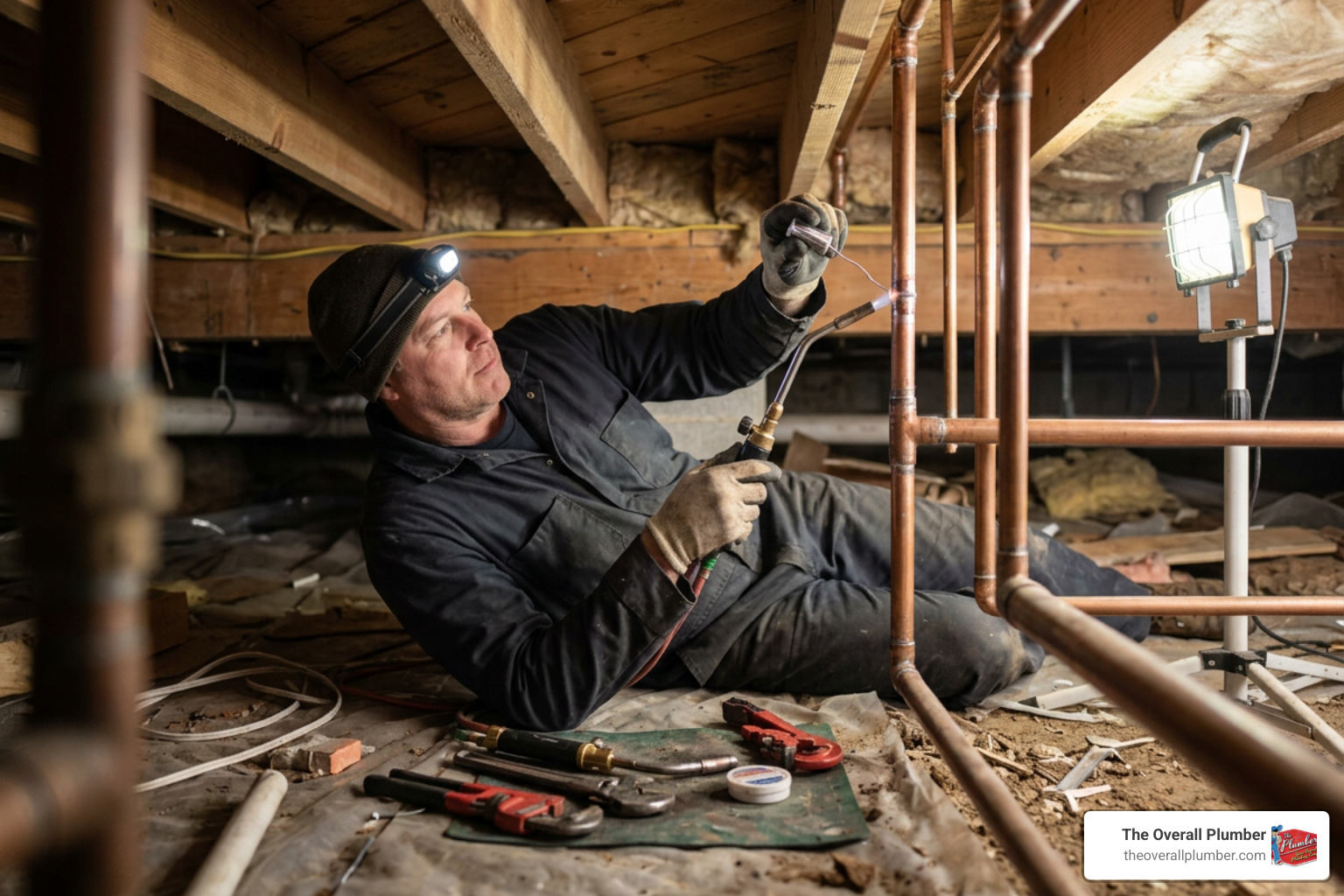
Different pipes carry different materials under varying pressures. A pressurized water supply line behaves very differently from a gravity-fed waste line, and the materials used to construct them play a massive role in the final cost to fix plumbing leak.
According to the comprehensive Pipe Repair Cost in 2026, matching the right repair method to the specific pipe material is essential for a permanent fix. Let’s break down how the pipe type and material affect your repair options and budget.
Water Supply and Waste Line Leaks
Your home has two distinct plumbing networks: the supply side (which brings clean, pressurized water in) and the waste side (which carries dirty water out using gravity).
- Water Supply Lines: These pipes are constantly under high pressure (typically 40 to 80 psi). When a pressurized water line develops a pinhole leak or bursts, it releases water rapidly. A minor water line repair can cost between $190 and $1,500 depending on its location. Because of the high pressure, temporary patches rarely last; the damaged section must be cut out and replaced.
- Waste and Sewer Lines: Waste lines are larger and operate under gravity rather than pressure. However, they carry raw sewage, making repairs highly sensitive. A minor drain pipe repair might run $150 to $650, but a collapsed main sewer line can cost anywhere from $1,500 to $8,000+ depending on depth and accessibility. If we need to excavate your yard to reach the pipe, landscaping restoration costs will also factor into your total budget. To understand how we locate these buried pipes without destroying your lawn, check out The Ultimate Guide to Finding Your Sewer Line Without Making a Mess.
The material of your pipes also dictates the repair process:
- PEX (Cross-linked Polyethylene): The modern standard for residential plumbing. PEX is flexible, highly resistant to scale and chlorine, and can expand slightly during a freeze without bursting. Repairs are fast and affordable because joints are secured using mechanical crimp rings.
- Copper: Traditional and highly durable, but susceptible to pinhole leaks if your water chemistry is slightly acidic. Copper repairs require soldering with an open flame torch, which demands a high level of skill and safety precautions, driving labor costs up.
- PVC & CPVC: Rigid plastic pipes commonly used for drain lines (PVC) and cold/hot water supply lines (CPVC). They are joined using chemical solvent cement. While the materials are inexpensive, CPVC can become brittle as it ages, requiring careful handling during repairs.
- Cast Iron & Galvanized Steel: Found in older homes throughout Galveston and historic parts of Houston. Cast iron drain stacks eventually rust from the inside out, leading to structural failure. Galvanized steel supply lines corrode internally, restricting water flow and causing frequent leaks. These materials are incredibly heavy and difficult to cut, often requiring us to transition the old pipe to modern PVC or PEX.
Fixture and Appliance Leaks
Not all leaks occur inside your walls. Many of the most common plumbing service calls involve visible fixtures and appliances in your kitchen and bathrooms.
- Faucets: A dripping faucet is usually caused by a worn-out rubber washer, O-ring, or ceramic cartridge. While a slow drip might seem like a minor nuisance, it can waste thousands of gallons of water over a year. Repairing a standard faucet typically costs $100 to $300. However, if the fixture is older than 15 years, we often recommend a full replacement to save you money on repeat repairs. You can explore your options in our guide on Faucet Leaks.
- Garbage Disposals: Leaks under the kitchen sink are frequently traced back to a failing garbage disposal. Water can weep from the sink flange, the dishwasher bypass connection, or the internal motor seals. If the internal seals are shot, the disposal must be replaced. A standard disposal replacement usually costs around $225 to $450 installed. To diagnose your kitchen sink dampness, take a look at The Lowdown on Leaks Under Your Garbage Disposal.
Additional Expenses and Insurance Coverage

When budgeting for the cost to fix plumbing leak, many homeowners forget to account for the secondary expenses that occur after the pipe is fixed. A burst pipe can be repaired in an hour, but the water it released can leave behind a trail of destruction.
- Drywall Repair: If we have to cut through your ceiling or walls to access a leaking pipe, those holes must be patched. Professional drywall repair typically costs $50 to $75 per square foot, with small ceiling patches averaging $150 to $350.
- Water Damage Cleanup & Drying: Standing water must be extracted immediately to protect your home’s framing and subfloors. Professional water extraction and industrial air movers run about $4 to $7 per square foot.
- Mold Remediation: Mold can begin to grow within 24 to 48 hours of water exposure. If a slow leak has been dripping behind your shower wall for months, mold remediation can easily add $500 to $3,000+ to your total restoration bill.
This brings up a common question: Does homeowners insurance cover plumbing leaks?
The answer depends entirely on the cause and speed of the leak. Standard homeowners insurance policies are designed to cover sudden and accidental water damage. For example, if a supply line suddenly bursts and floods your living room, insurance will typically cover the cost of water extraction, drywall repair, new flooring, and mold remediation. However, they will rarely pay for the actual plumbing repair itself (the physical pipe patch).
On the flip side, insurance companies almost always deny claims for gradual damage. If a slow, hidden leak has been dripping behind a wall for two years due to poor maintenance or old pipes, they expect you to have caught and repaired it. This is why regular plumbing inspections and proactive maintenance are so critical for protecting your wallet.
Repair vs. Replace Decisions
If you find yourself calling a plumber every few months to patch another pinhole leak, you are likely facing systemic pipe failure. At some point, patching old pipes becomes a game of whack-a-mole.
We recommend using the following framework to decide between a spot repair and a full system replacement:
- Choose a Spot Repair if: The pipe material is under 20 years old, the failure is isolated (such as a single nail puncture or a joint damaged by a hard freeze), and the surrounding plumbing is in excellent condition.
- Choose a Repipe if: Your home still has galvanized steel or polybutylene piping, you have experienced multiple leaks in different areas of the house within a single year, or your water is constantly coming out rust-colored.
While a spot repair might cost $250 to $600, a whole-house repipe is a major investment, typically ranging from $5,500 to $15,000+ depending on the size of your home and the number of bathrooms. To understand the long-term savings and process, read Everything You Need to Know About Whole House Repipe Costs.
Frequently Asked Questions About Plumbing Leak Costs
How much do plumbers typically charge per hour in 2026?
In 2026, professional plumbers nationwide charge between $75 and $150 per hour, with master plumbers in high-cost-of-living metropolitan areas billing up to $200+ per hour. These rates cover the plumber’s wage, specialized tools, vehicle maintenance, liability insurance, and ongoing training.
Most companies also charge a service call or diagnostic fee to cover the cost of driving to your home. At The Overall Plumber, we eliminate this barrier by offering no trip charges and no overtime fees, ensuring you receive transparent, straightforward pricing.
Does homeowners insurance cover the cost of fixing a plumbing leak?
As a general rule, standard homeowners insurance covers the consequences of a sudden, accidental water leak (like ruined drywall, buckled wood flooring, and mold cleanup) but does not cover the cost of the plumbing repair itself.
If a pipe slowly corrodes over several years due to age, insurance will typically deny the entire claim, classifying it as a lack of routine home maintenance.
How can I find a hidden water leak in my home?
If your water bill spikes unexpectedly or you hear the faint sound of running water when all fixtures are turned off, you likely have a hidden leak. You can perform a simple DIY test using your water meter:
- Turn off every faucet, appliance, and hose bib in your home.
- Locate your water meter box (usually near the street curb) and write down the reading.
- Do not use any water for two hours.
- Check the meter again. If the numbers have changed or the low-flow indicator dial is spinning, water is escaping somewhere in your system.
For precise localization without tearing your home apart, professional electronic leak detection is required. You can learn more about how we pinpoint these invisible issues in our guide, Wheres the Water? How to Find a Plumber to Find Water Leak.
Schedule Your Professional Leak Repair Today
At The Overall Plumber, we are dedicated to providing the residents of Houston, Brazoria County, Galveston County, and the surrounding Gulf Coast communities with reliable, high-quality plumbing solutions. We stand behind our work with ironclad satisfaction guarantees, priority scheduling for emergencies, and a strict policy of no trip charges and no overtime fees.
Whether you need advanced thermal imaging to locate a mysterious damp spot or immediate help with a broken water line, our experienced team is ready to assist. Explore our Local Leak Detection and Repairs Houston Plumber page or learn more about our fast Broken Pipe Repair services to see how we protect your home.
Contact our team today at (832) 340-2001 to schedule your service with The Overall Plumber.