

The Lowdown on Leaks Under Your Garbage Disposal
That Puddle Under Your Sink Is Trying to Tell You Something
Garbage disposal leaks from the bottom are one of the most serious plumbing issues you can find under your kitchen sink — and one of the most misunderstood.
Quick answer: What causes a garbage disposal to leak from the bottom?
- Internal seal failure — The most common cause. Seals between the motor and grinding chamber wear out over time and cannot be repaired.
- Cracked housing — Physical damage or corrosion can split the disposal body, allowing water to escape.
- Loose power cord fitting — The cord entry point on the bottom can loosen, letting water seep out.
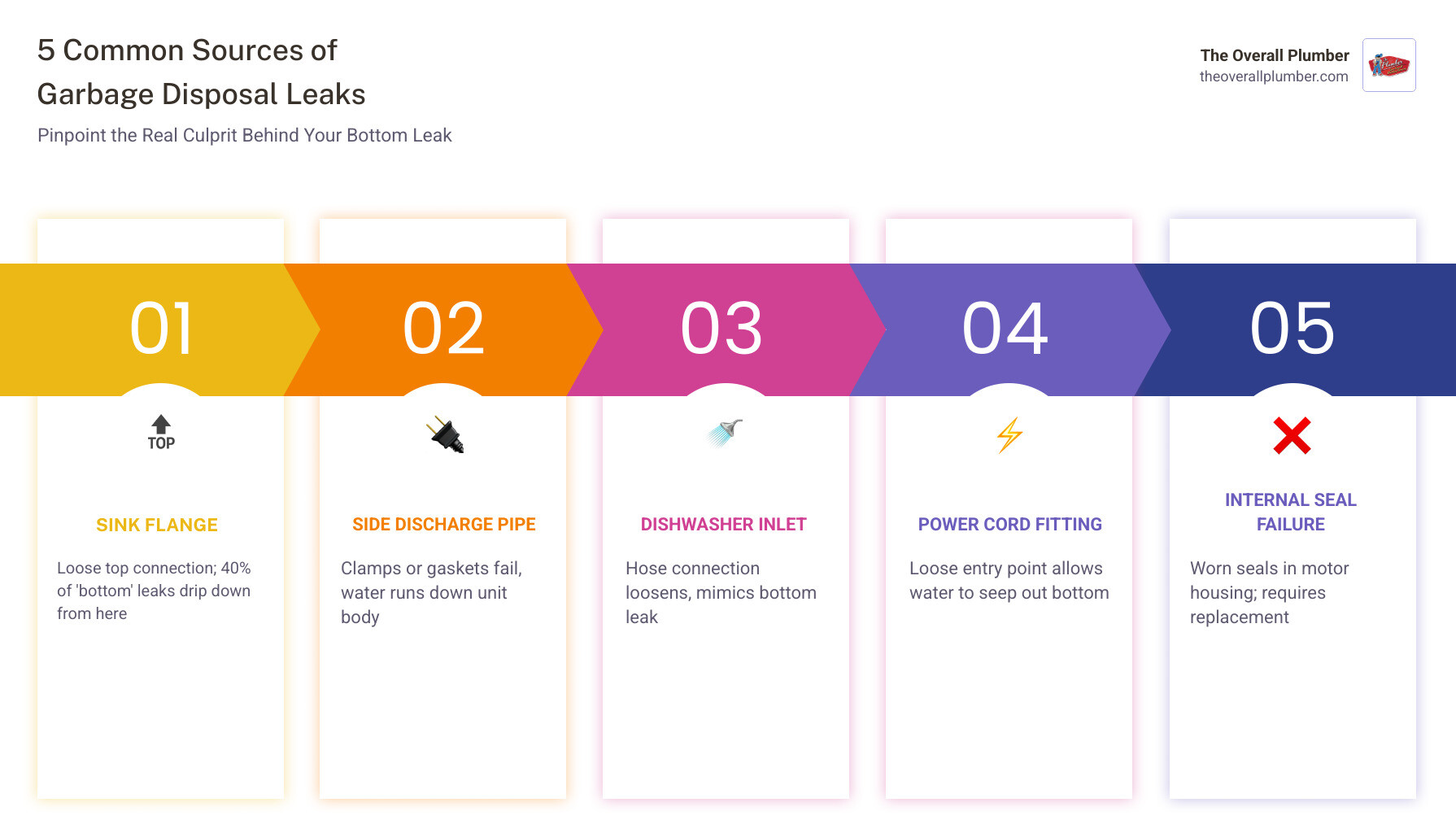
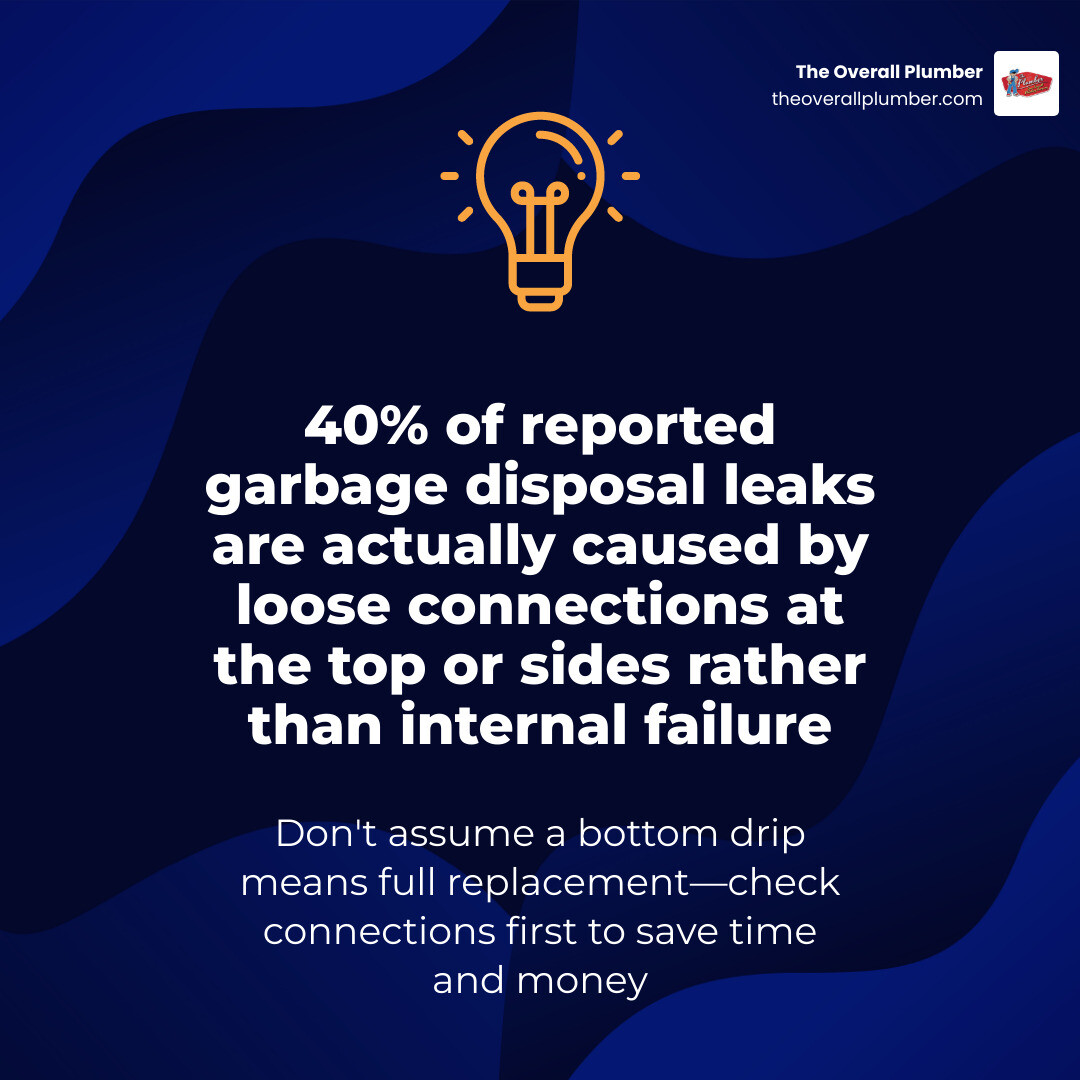
- Drips from above — About 40% of apparent bottom leaks are actually water traveling down from a loose sink flange or side connection.
Bottom line: If water is genuinely coming from the bottom of the unit itself — not dripping down from a higher point — you almost certainly need to replace the disposal, not repair it.
A puddle under your sink looks simple enough. But pinpointing exactly where the water is coming from takes a few careful steps. Water follows gravity, so a leak at the top of your disposal can travel all the way down and pool at the bottom, making diagnosis tricky.
This guide walks you through how to find the true source of the leak, what each location means, and what to do about it.
I’m Dayton Whitworth, a second-generation plumber serving the Greater Houston and Gulf Coast area, and I’ve diagnosed dozens of garbage disposal leaks from the bottom for homeowners who were ready to replace a unit that only needed a $5 gasket. Let’s make sure you know exactly what you’re dealing with before spending a dime.
Why Your Garbage Disposal Leaks From the Bottom
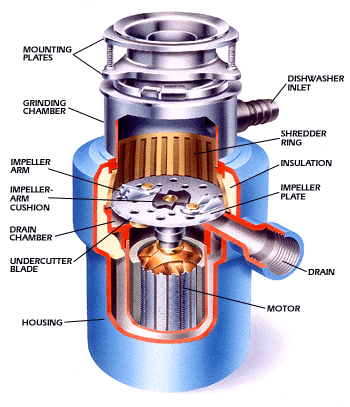
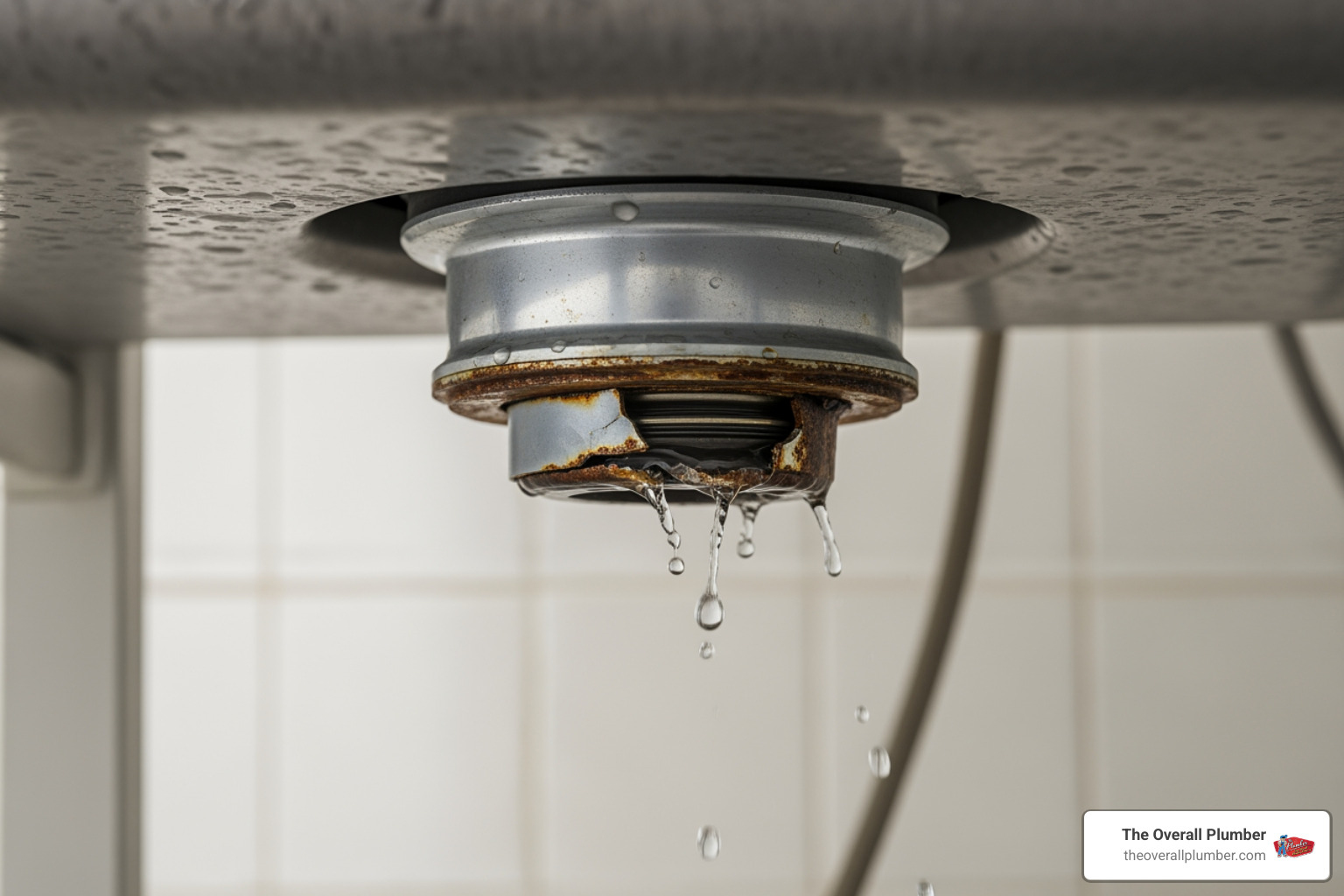
When we talk about a garbage disposal leaks from the bottom, we are usually referring to water exiting the unit through the motor housing, the reset button, or the electrical compartment. This is a “true” bottom leak, and it’s a big deal.
Inside your disposal, there is a watertight seal that separates the upper grinding chamber (where the food goes) from the lower motor housing (where the electricity lives). Over time, this seal takes a beating from heat, vibration, and chemical exposure. When it fails, water enters the motor area.
According to 4 ways to fix a garbage disposal that’s leaking from the bottom, once water reaches this internal compartment, it has nowhere to go but down. You might see it dripping out of the red reset button or the power cord entry point. This is particularly dangerous because water and electricity are a recipe for a short circuit or even a fire hazard.
| Leak Location | Likely Cause | Repairable? |
|---|---|---|
| Sink Flange (Top) | Loose bolts or old putty | Yes – Reseal/Tighten |
| Side Connections | Loose clamps or worn gaskets | Yes – Replace parts |
| Reset Button | Failed internal motor seal | No – Replace unit |
| Body Shell | Cracks or corrosion | No – Replace unit |
| Power Cord Entry | Internal seal or loose fitting | Rarely – Usually replace |
Identifying the Source of a Garbage Disposal Leaks From Bottom
Because water is a master of disguise, it can travel down the sides of the unit, making a top leak look like it’s coming from the bottom. To find the truth, we use the “Newspaper Method” or the “Cardboard Test.”
- Dry everything: Use a towel to completely dry the outside of the disposal and the floor of the cabinet.
- Lay the trap: Place a piece of dry cardboard or several sheets of newspaper directly under the unit.
- The Fill Test: Fill the sink with about 4 inches of water and pull the plug without turning the disposal on.
- The Run Test: Turn on the water and the disposal, letting it run for 60 seconds.
- Check the first drop: Watch the cardboard. If the first drops land directly under the center of the unit, you have a true garbage disposal leaks from the bottom. If the drops land near the edges or show a trail coming from the side, the leak is likely dripping down from higher up.
A flashlight is your best friend here. According to How to Fix a Leaking Garbage Disposal, you should trace the wetness from the bottom up to see where the trail ends.
Distinguishing Drips from a True Garbage Disposal Leaks From Bottom
Many homeowners in Pearland and League City call us thinking they need a new unit, only for us to find that the mounting assembly has simply vibrated loose. Garbage disposals are basically heavy-duty vibrators; that constant shaking can loosen the mounting bolts over time.
If the leak is coming from the very top where the unit meets the sink, it’s a sink flange issue. This is often caused by deteriorated plumber’s putty. We also see this happen when people put things they shouldn’t down the drain, leading to clogs that put back-pressure on the seals. You can read more about how waste impacts your system in our guide on Grease Traps And Garbage Disposals.
Step-by-Step Diagnosis and Safety Precautions
Before you go poking around under the sink, we have to talk about safety. A leaking disposal isn’t just a plumbing problem; it’s an electrical one.
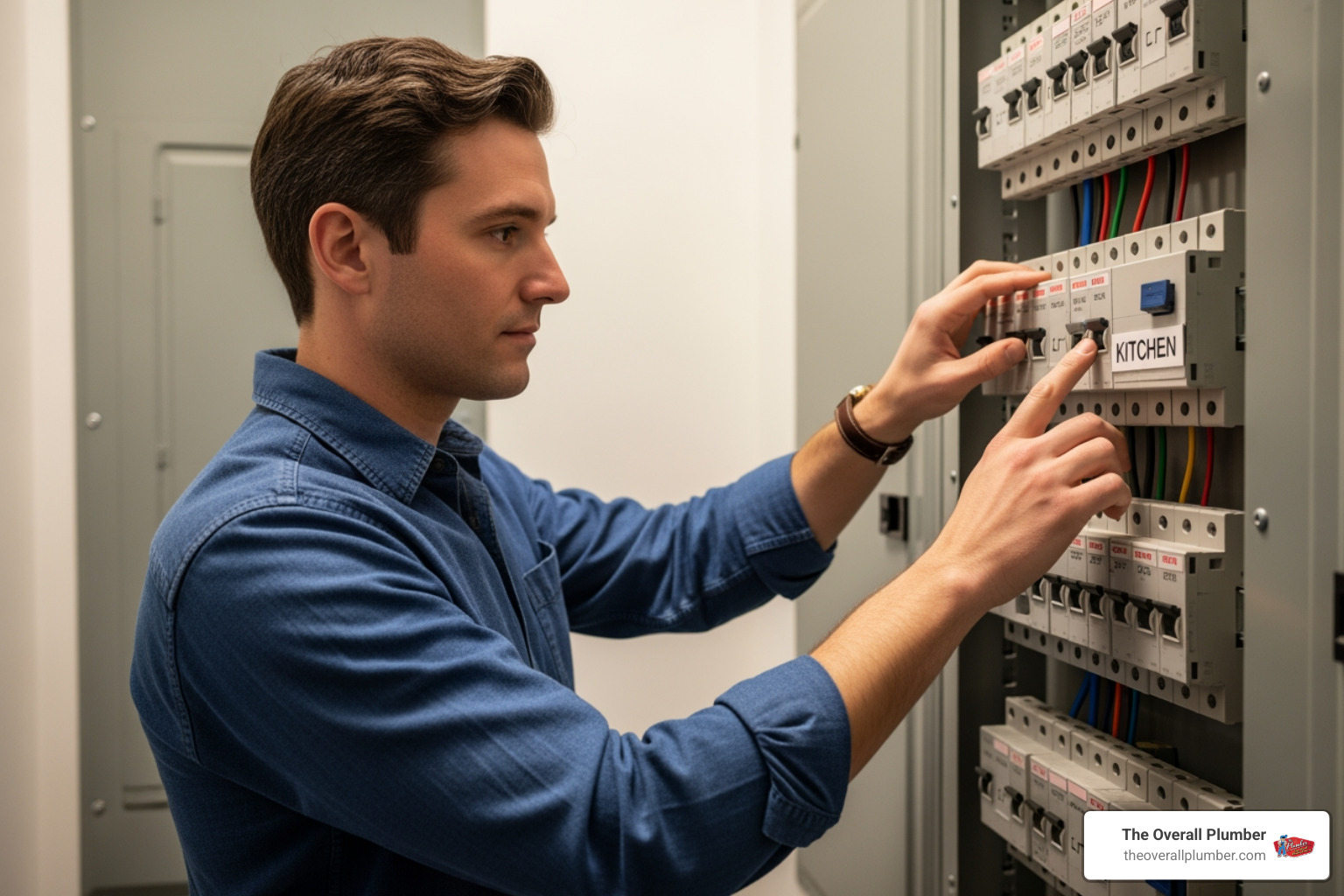
- Cut the Power: Unplug the unit from the wall outlet. If it’s hard-wired, find your electrical panel and flip the circuit breaker. Never work on a leaking disposal while it has power.
- Clear the Area: Remove everything from under the sink. You need room to move, and you don’t want your cleaning supplies getting soaked.
- Use a Bucket: Even a small leak can dump a lot of water when you start wiggling pipes. Keep a bucket under the unit at all times.
As noted in Garbage Disposal Leaking From Bottom: Causes & Fixes, if you see water coming out of the electrical cover or near the power cord, do not touch those wires until you are 100% sure the breaker is off.
Testing the Side Connections and Dishwasher Inlet
If the bottom of your unit is wet but the cardboard test shows water hitting the edges first, check the side connections. There are two main spots:
- The Discharge Pipe: This is the large pipe that carries waste to your sewer line. It’s held on by a metal flange and two bolts. If these bolts are loose or the rubber gasket inside has perished, water will spray out and run down the side.
- The Dishwasher Inlet: This is the smaller hose that comes from your dishwasher. It’s usually held on by a simple hose clamp. If that clamp is loose or the hose has a small crack, it will leak every time the dishwasher drains.
According to How to Fix a Garbage Disposal Leaking from the Bottom, tightening a hose clamp or replacing a $5 rubber gasket can often solve the problem. You can even use plumber’s tape on the threads of the discharge pipe for an extra-secure seal.
Inspecting the Internal Shell and Motor Joint
If the connections are tight and the flange is dry, but you still see a garbage disposal leaks from the bottom, we need to look at the body itself.
Most modern disposals have a plastic or metal outer shell. In our humid Texas City and Galveston climate, corrosion can eat through metal housings over time. Look for:
- Hairline Cracks: These can be hard to see. They often open up only when the motor is running and the water is under pressure.
- Corrosion Spots: If you see rust on the bottom of the unit, the internal chamber is likely compromised.
- Manufacturing Defects: In rare cases, a brand-new unit might leak due to a faulty seam.
While some DIY guides suggest using waterproof epoxy to patch a crack, Garbage Disposal Leaking From Bottom | Troubleshooting Tips points out that this is usually a temporary band-aid. The vibration of the motor will eventually crack the epoxy, and the leak will return — often when you aren’t looking.
Repair vs. Replacement: When to Call It Quits
In the plumbing world, we have a “50% Rule.” If the cost of the repair (parts and labor) is more than 50% of the cost of a new unit, you’re better off replacing it.
Garbage disposals typically last between 8 and 15 years. If your unit is over 10 years old and is a garbage disposal leaks from the bottom, don’t waste your money on repairs. The internal seals are gone, and even if you fix one leak, another is right around the corner.
Maintenance Tips to Prevent Future Leaks
You can’t make a disposal last forever, but you can certainly keep it from dying early. Here in the Houston area, we see a lot of “avoidable” deaths for these appliances.
- Use Cold Water: Always run cold water before, during, and after using the disposal. Cold water keeps fats and grease solid so they can be ground up and flushed away. Hot water melts grease, which then coats the internal seals and causes them to degrade faster.
- Avoid Fibrous Foods: Celery, onion skins, and corn husks act like hair in a drain—they wrap around the blades and put massive strain on the motor and seals.
- Clean Regularly: A mix of baking soda and vinegar followed by a flush of cold water can help remove the acidic food residue that corrodes the metal chamber.
- Annual Inspection: Once a year, reach under there and give the unit a gentle wiggle. If it feels loose, tighten the mounting bolts before the vibration causes a leak.
For more tips on keeping your kitchen plumbing in top shape, check out our insights on Grease Traps And Garbage Disposals.
Frequently Asked Questions About Disposal Leaks
Is it safe to use a disposal leaking from the bottom?
Absolutely not. If water is dripping from the bottom, it is likely passing through the electrical motor. This creates a massive risk for electrical shock or a short circuit. Furthermore, the standing water will quickly lead to cabinet rot and mold growth. If you see a bottom leak, unplug the unit and stop using that side of the sink immediately.
How much does it cost to fix a leaking disposal in 2026?
If it’s a simple fix like a gasket or plumber’s putty, you might spend $10–$20 on parts if you do it yourself. However, a garbage disposal leaks from the bottom usually requires a full replacement. A decent mid-range unit in 2026 typically costs between $150 and $300, plus professional installation. While DIY is an option for some, a professional install ensures your warranty stays valid and your plumbing is up to code.
Can a bottom leak fix itself?
We hear this one a lot in Santa Fe and La Porte! A homeowner sees a leak, ignores it for a day, and then notices it’s dry. Did it fix itself? No. This is usually due to “thermal expansion” or evaporation. The seal is still broken, but it might only leak when the unit gets hot or when a certain volume of water is used. It will leak again, and usually, the next time will be much worse.
Professional Solutions for Your Kitchen Plumbing
At The Overall Plumber, we’ve seen every type of leak imaginable in Brazoria County and Harris County. We know that a kitchen sink out of commission is more than an inconvenience—it’s a disruption to your family’s life.
Whether you need a simple drain cleaning with our high-tech camera inspections or a full garbage disposal replacement, we are here to help. We offer:
- No Trip Charges: We believe in fair pricing from the start.
- Priority Scheduling: Because a leaking sink can’t wait.
- Satisfaction Guarantees: We don’t leave until it’s fixed right.
- No Overtime Fees: Plumbing emergencies don’t stick to a 9-to-5 schedule, and neither do we.
If you’re tired of seeing a puddle under your sink or you’re worried about the damage a garbage disposal leaks from the bottom might be doing to your home, we are here to help. We can also help with other common kitchen issues; check out our more info about faucet leak services to keep your whole kitchen running smoothly.