


What to Do When You Have a Leaking or Broken Pipe
When you need a pipe fix, plumbing problems can’t wait. Here are the most important steps to take right now:
- Shut off the main water supply to stop the flow immediately
- Open faucets to drain any water still in the pipes
- Move valuables away from the wet area
- Apply a temporary fix (tape, epoxy putty, or a repair clamp) if the leak is minor
- Call a licensed plumber for a permanent repair
A leaking pipe under the kitchen sink. Water spreading across the floor. The clock ticking. It’s one of those home emergencies that feels overwhelming the moment you spot it.
The bad news: water from a broken pipe can cause mold growth within just 24 to 48 hours. The good news: knowing exactly what to do — and doing it fast — can save you thousands in damage.
This guide walks you through everything. From stopping the leak right now, to understanding your repair options, to knowing when to call a pro.
I’m Dayton Whitworth, a second-generation plumber with hands-on experience handling every kind of pipe fix plumbing situation — from small under-sink drips to full pipe replacements across Greater Houston and the Gulf Coast. Let’s get your pipes sorted.
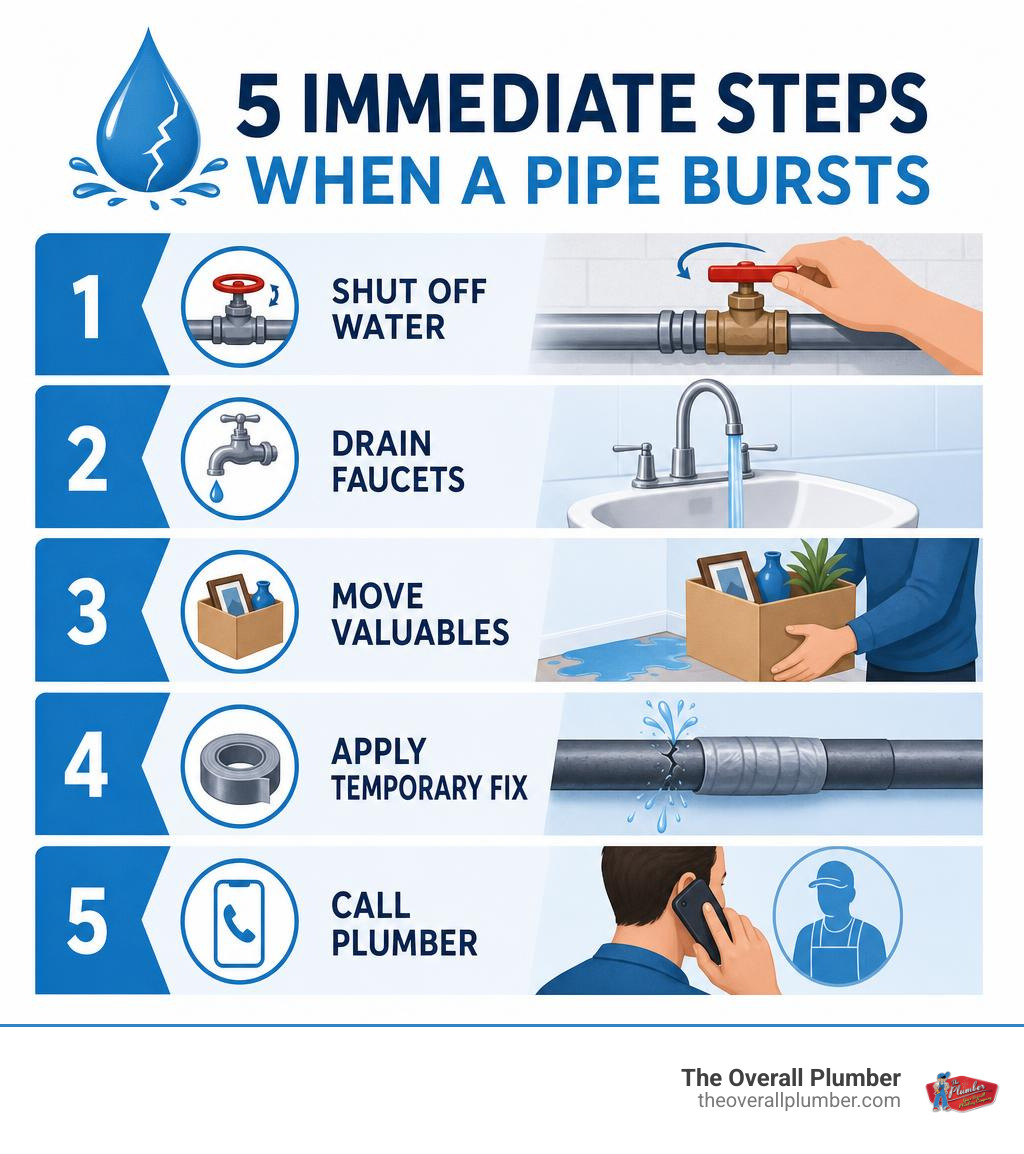
Immediate Steps to Take When You Discover a Broken Pipe

When water is actively spraying or pooling inside your home, panic is your worst enemy. Taking systematic, rapid action is the key to preventing catastrophic structural damage.
First, locate and turn off the main water shut-off valve. In our Gulf Coast service areas—spanning from Houston down to Galveston—the main shut-off is typically located outside near the street in a concrete meter box, or on the side of your home where the main water line enters. Turning this valve clockwise will cut off the water supply to your entire house.
Once the main valve is secure, relieve the remaining pressure in your plumbing system. Go to the lowest faucet in your home (often an outdoor hose bib or a downstairs bathroom sink) and open it completely. Open a few upstairs faucets as well; this allows air into the system, helping the remaining water drain out quickly rather than pooling out through the break.
Next, focus on protecting your property. Move furniture, rugs, electronics, and family heirlooms far away from the wet zone. If water has saturated your drywall or pooled in your cabinets, start drying the area immediately with fans and dehumidifiers.
Because water damage can quickly ruin your home’s foundation and framing, getting professional help on the way is vital. For severe situations, securing a professional Broken Pipe Repair ensures that the root cause is addressed before mold takes hold.
Temporary vs. Permanent Solutions for Pipe Fix Plumbing
When dealing with a compromised pipe, you must understand the difference between an emergency patch and a long-term cure. A temporary fix keeps your water running or stops a disaster for a few days, but it is not a permanent solution. High water pressures in municipal systems will eventually blow past temporary seals.
| Repair Method | Type | Best Used For | Lifespan |
|---|---|---|---|
| Self-Fusing Silicone Tape | Temporary | Small pinhole leaks, low-pressure lines | A few days to a week |
| Epoxy Putty | Temporary | Cracks in rigid PVC, copper, or iron | A few weeks |
| Stainless Steel Repair Clamp | Temporary | Pinholes or splits in straight pipe runs | Several months |
| Push-to-Connect Burst Kit | Permanent/Semi-Permanent | Copper, CPVC, and PEX pipe breaks | Years (if properly installed) |
| CIPP Trenchless Pipe Lining | Permanent | Underground sewer and drain pipes | 50+ years |
| Traditional Pipe Replacement | Permanent | Heavily corroded or collapsed lines | Decades |
If you are dealing with a burst line, a highly reliable temporary-to-permanent option for DIYers is the 1/2 in. Push-to-Connect Brass Burst Pipe Repair Kit, which allows you to cut out the broken section and push the new fitting on without soldering. For rigid metal lines, a heavy-duty 1-1/4 in. x 6 in. Long 2-Bolt IPS Pipe Repair Clamp, Stainless Steel can seal a split or puncture under pressure until a plumber arrives.
That while cold water lines are easier to patch temporarily, hot water lines are a completely different beast. High temperatures cause materials to expand and contract rapidly, which easily breaks down DIY adhesives. To protect your home and safety, make sure you Don’t Get Burned by DIY Hot Water Line Repair and leave those high-temperature lines to the professionals.
DIY Temporary Pipe Fix Plumbing Methods
If you need to restore your water supply temporarily before a professional crew arrives, there are three common DIY methods you can employ:
- Self-Fusing Silicone Tape: This specialized tape does not rely on sticky adhesives. Instead, it chemically fuses to itself when stretched and wrapped tightly. It is excellent for minor pinhole leaks on low-pressure lines. Clean the pipe thoroughly, then wrap the tape tightly around the leak, overlapping each turn by half the tape’s width.
- Epoxy Putty: Ideal for rigid plastics and metals, epoxy putty consists of two parts that you knead together until they turn a uniform color. Once mixed, you press the putty firmly over the crack or hole. It hardens at room temperature in about 15 to 25 minutes and fully cures within an hour, resisting up to 500 PSI of water pressure.
- Rubber Coupling Repair Kits: If a section of plastic, cast iron, or steel pipe is completely split, you can use an all-in-one coupling kit. Products like the Fernco QwikFix Broken Pipe Coupling Repair Kit for Plastic, Cast Iron and Steel Pipes in Black | Fernco – US or the Fernco QwikFix Broken Pipe 1.5″ Coupling Repair Kit for Plastic, Cast Iron and Steel Pipes in Black – GreyDock.com provide a flexible, leak-proof bridge. You simply cut out the damaged section, slip the rubber sleeves over the remaining pipe ends, and tighten the stainless steel bands.
Before attempting any of these fixes under a vanity or sink, read through The Ultimate DIY Guide to Indoor Faucet Repair to ensure you have the right tools and safety gear on hand.
When to Call a Professional Pipe Fix Plumbing Service
While DIY kits are fantastic for keeping your household functioning over the weekend, certain scenarios demand immediate professional intervention.
If you have multiple leaks popping up across your home, it is a clear indicator of systemic pipe degradation. Homes in older parts of Houston, Pasadena, and Galveston often feature aging galvanized steel or outdated copper lines that corrode from the inside out. In these cases, temporary patches are useless; you need comprehensive Professional Pipe Repair Services to assess whether a partial or whole-house repipe is necessary.
- Minor Pinhole? -> DIY Tape / Clamp (Temporary)
- Major Split / Corroded Line? -> Call The Overall Plumber (Permanent Fix)
For major structural main lines or subterranean sewer lines, modern trenchless technology allows us to rehabilitate pipes without tearing up your landscaping. Cured-In-Place Pipe (CIPP) lining creates a seamless, durable “pipe-within-a-pipe” that can last over 50 years.
Common Causes of Broken Pipes and How to Prevent Them

Understanding why pipes fail is the best way to prevent future emergencies. In our service areas across Harris County, Galveston County, and Brazoria County, we see several primary culprits:
- Soil Shifting: The clay-rich soils of the Texas Gulf Coast expand and contract dramatically with changes in moisture. This constant shifting puts immense physical stress on underground water and sewer lines, leading to sudden cracks and joint failures.
- Corrosion and Aging: Older homes in Galveston, Texas City, and Pasadena often still rely on galvanized iron pipes. Over time, water causes these pipes to rust internally, restricting water flow and eventually rusting through the pipe walls.
- Tree Root Intrusion: Tree roots are naturally drawn to moisture. Even the tiniest crack in an underground sewer line will attract roots, which grow inside the pipe, causing massive blockages and eventual pipe ruptures.
- High Water Pressure: While high pressure feels great in the shower, anything over 80 PSI acts like a wrecking ball on your pipe joints, valves, and appliances.
- Sudden Freezes: While we enjoy warm weather most of the year, occasional hard winter freezes can catch Texas homeowners completely off guard, leading to frozen, burst water lines.
To protect your home, schedule annual plumbing inspections, keep your water pressure regulated between 50 and 70 PSI, and insulate any exposed piping in crawlspaces or attics. Additionally, keep an eye on your appliances; if you notice dampness under your sink, read up on The Lowdown on Leaks Under Your Garbage Disposal to stop minor drips before they turn into major water damage events.
What to Expect During a Professional Pipe Repair
When we arrive at your home for a pipe fix plumbing service, we follow a precise, professional protocol to resolve your plumbing issue with minimal disruption.
First, we conduct a thorough diagnostic check. Using high-definition sewer camera inspections, we can see exactly what is happening inside your pipes without digging up your yard or tearing down walls. This allows us to locate the precise coordinates of blockages, root intrusions, or structural collapses.
Once we identify the issue, we present you with the most efficient repair options. If the pipe is underground, we often recommend trenchless rehabilitation methods like CIPP lining or pipe bursting, which require only a single access point and preserve your beautiful landscaping. If a traditional repair is necessary, we locate utility lines carefully to minimize excavation impact.
If your plumbing issues extend to other vital utilities in your home, such as gas piping, we also utilize fast diagnostic and repair tools to keep your household safe. You can learn more about these specialized techniques in our guide on How to Fix Gas Line Fast by Using 4 Methods. For general pipe repair standards and regional references, you can also view resources like Pipe Repair Services in Santa Fe, NM.
Frequently Asked Questions about Pipe Repairs
How long does a typical pipe repair take?
A minor, accessible pipe repair—such as replacing a leaky joint under a kitchen sink—typically takes our plumbers 1 to 2 hours. However, more complex repairs involving main water lines, underground sewer lines, or extensive drywall cutting can take a full day. If your home requires a complete repipe, the project can take anywhere from 2 to 5 days, depending on the size of your property.
Are pipe repairs covered by homeowners insurance?
In most cases, homeowners insurance covers water damage that is “sudden and accidental,” such as a pipe suddenly bursting in the middle of the night. However, insurance policies rarely cover the cost of repairing or replacing the pipe itself if the failure was caused by age, wear and tear, or neglected maintenance (such as slow, gradual leaks that went ignored for months). Always document the damage with photos and contact your insurance provider immediately.
What areas are covered by emergency plumbing services?
At The Overall Plumber, we proudly provide comprehensive 24/7 emergency plumbing services across the entire Greater Houston and Gulf Coast region. Our service areas include Brazoria County, Houston, Clear Lake, Santa Fe, League City, Texas City, La Porte, Friendswood, Pearland, Pasadena, Galveston, Harris County, and Galveston County, Texas.
Get Professional Help for Your Pipe Repairs
When you are facing a plumbing emergency, you need a team you can trust to get the job done right the first time. At The Overall Plumber, we are dedicated to providing the highest quality pipe fix plumbing services across our Texas service communities.
We stand out by offering our customers incredible peace of mind through our satisfaction guarantees, priority scheduling, and absolutely no overtime fees. Plus, we never charge trip fees to diagnose your plumbing issues. Whether you need a simple drain cleaning with advanced augers, a high-definition camera inspection, or a complete home repipe, our licensed, friendly technicians are ready to help.
Don’t let a minor leak turn into a costly home renovation project. Schedule professional plumbing services or call us directly at (281) 668-8055 today!