


How to Fix Gas Line Fast by Using 4 Methods
Why Gas Line Repair Demands Immediate, Professional Attention
Gas line repair is the process of fixing damaged, corroded, or leaking gas pipes in your home – and it should always be handled by a licensed professional. Here is a quick overview of the most important things to know:
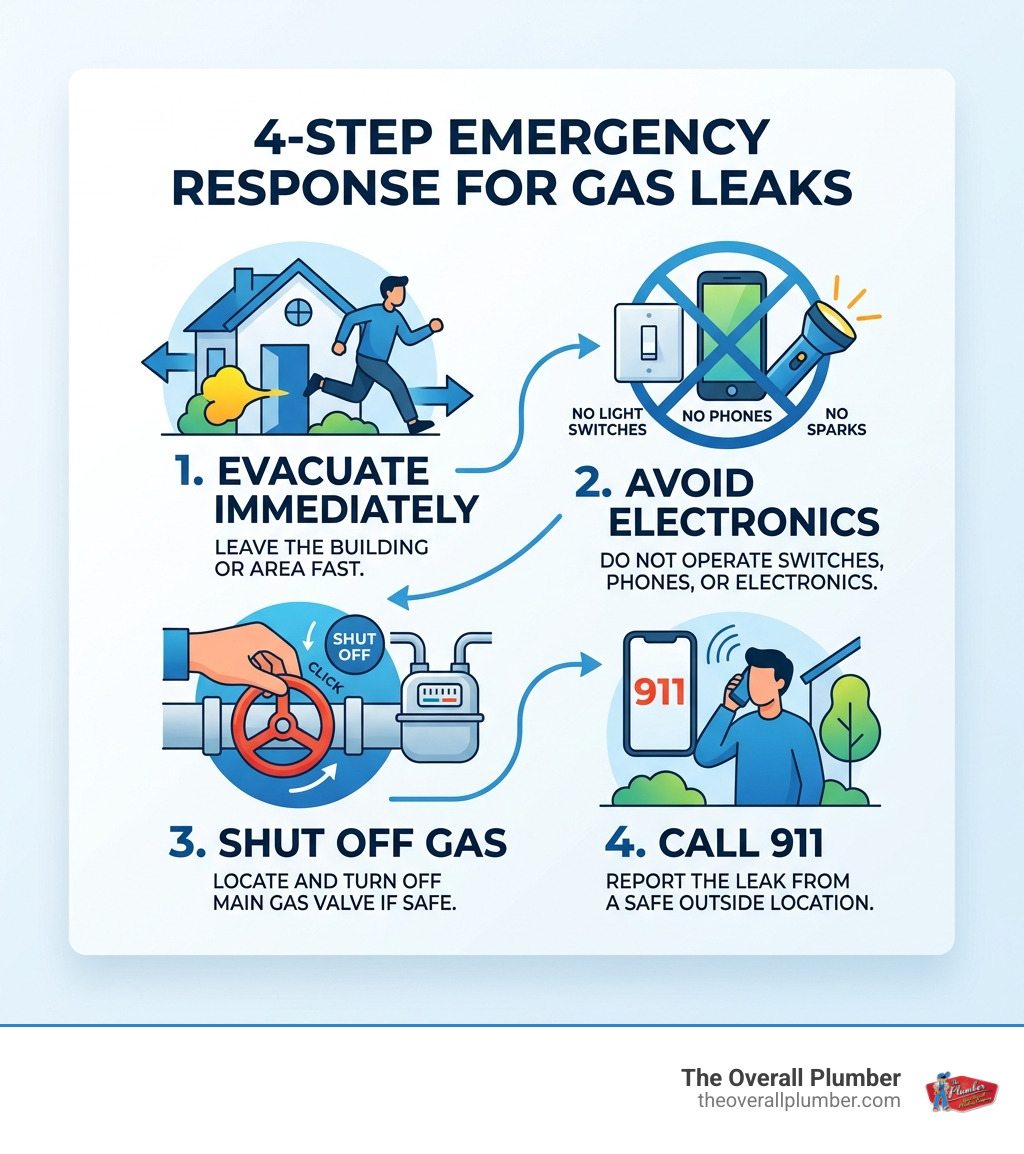
- Smell rotten eggs or hear hissing? Evacuate immediately, avoid all switches and electronics, and call 911 from outside.
- Common signs you need repair: sulfur odor, dead plants, bubbling water near buried lines, rising gas bills, or dizziness indoors.
- Average repair cost: around $598, with most jobs falling between $271 and $935.
- Repair time: most jobs take 1 to 6 hours; complex underground repairs can take 1 to 3 days.
- Who does the work: licensed plumbers handle indoor gas lines; your utility company handles the main supply line up to the meter.
- Never DIY: gas line work without a license is illegal, dangerous, and can void your home insurance.
A faint smell near the stove. A soft hissing sound from behind the wall. These small signs can be easy to brush off – but they are often the first warning that a gas line problem is developing. Natural gas itself is odorless, but utility companies add a chemical called mercaptan to give it that distinct rotten egg smell so leaks can be detected early. For a general overview of how natural gas is used and handled, this resource can be helpful. Even so, not everyone picks up on the odor, especially those with sinus issues or reduced smell sensitivity. That is why knowing the full range of warning signs matters.
Gas lines power some of the most essential appliances in your home – your stove, water heater, furnace, and fireplace. When something goes wrong, the stakes are high. Leaks can lead to fire, explosion, or carbon monoxide buildup. Acting fast and calling the right professional is the only safe path forward.
I am Dayton Whitworth, a second-generation plumber with hands-on experience in gas line repair across Greater Brazoria County, Galveston County, Houston, and the surrounding Gulf Coast communities. In this guide, I will walk you through four proven methods professionals use to fix gas lines fast so you know exactly what to expect when you call.
Emergency Response and Professional Gas Line Repair
When it comes to natural gas, there is no such thing as a “small” emergency. In the Texas heat of April 2026, we see a lot of wear and tear on systems due to humidity and soil shifting. If you suspect a leak, your first priority isn’t the repair—it’s safety.
The sulfur smell (that classic rotten egg scent) is your primary warning. However, you might also hear a distinct hissing or whistling sound near a gas appliance or a wall. If you notice these, do not flip a light switch, do not use your phone inside, and do not try to find the leak yourself. Evacuate everyone—including pets—and call 911 and your utility company from a safe distance.
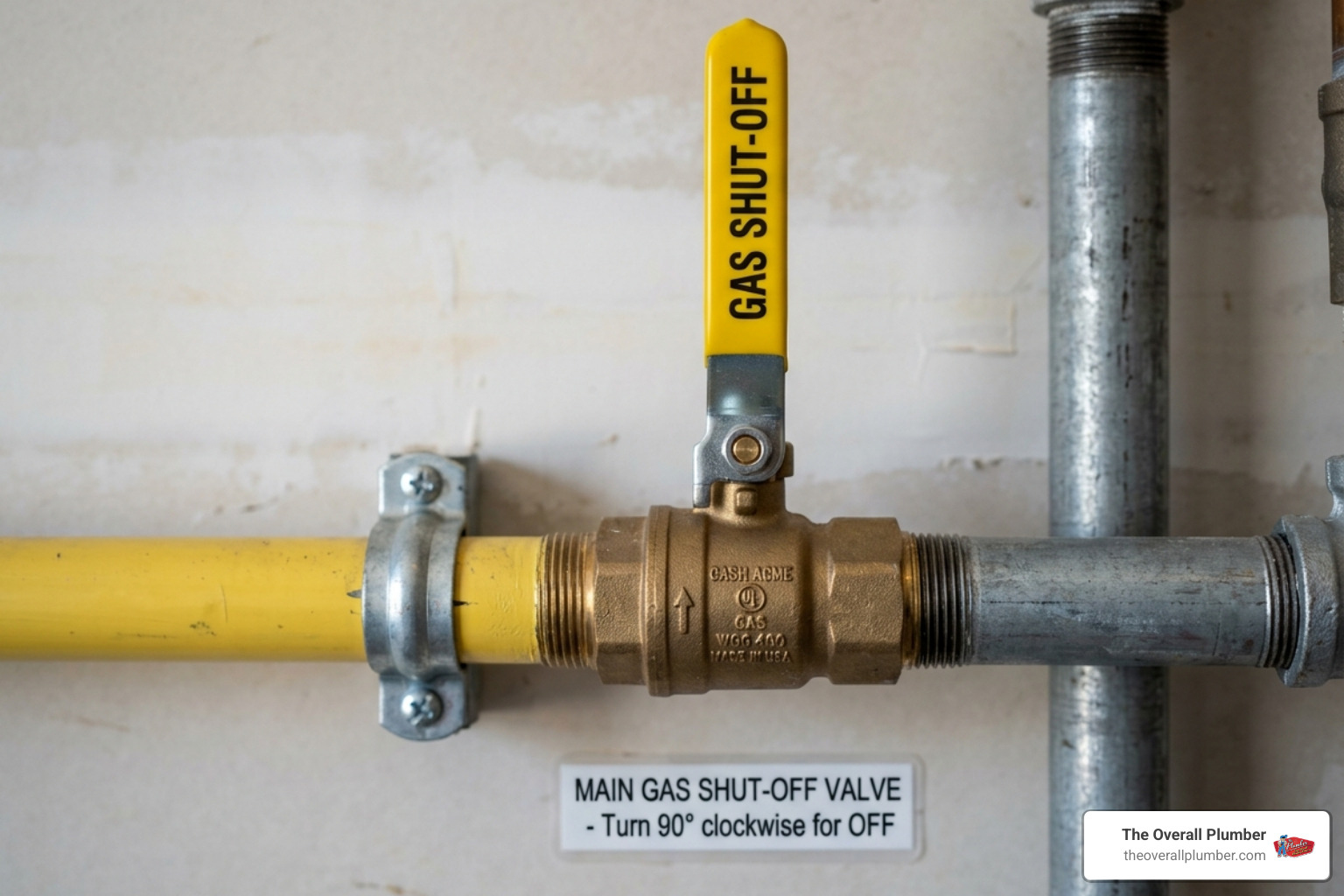
Once the utility company has turned off the gas at the meter and declared the area safe to enter, that is when we come in. While the gas company is responsible for the main supply lines, the homeowner is responsible for everything from the meter into the house. Our team at The Overall Plumber specializes in Gas Line Repair Services to get your home back to normal. We ensure every technician is a Certified Plumber for Gas System Testing, providing the expertise needed to handle these high-stakes situations.
Identifying the Need for Gas Line Repair
It isn’t always a dramatic hissing sound that gives a leak away. Sometimes, the signs are much more subtle. Here in areas like Pearland and League City, we often see these “silent” indicators:
- Dead Vegetation: If you have a patch of grass or garden plants that are dying in a straight line despite plenty of water, you might have an underground leak. The escaping gas displaces the oxygen the roots need.
- Bubbling Standing Water: After a Texas rain, look for bubbles in puddles near your gas meter or along the path of your underground lines.
- High Utility Bills: A sudden, unexplained spike in your gas bill often points to a slow, constant leak.
- Physical Symptoms: If you or your family members experience unexplained dizziness, nausea, or “flu-like” symptoms that disappear when you leave the house, you could be dealing with carbon monoxide or a slow gas leak.
- Pilot Light Issues: If your water heater or stove pilot light frequently goes out or has a yellow flame instead of a crisp blue one, it’s time for an inspection.
Method 1: Electronic Leak Detection and Joint Sealing
The fastest way we find and fix minor leaks is through precision diagnostic tools. We don’t just wander around sniffing the air; we use advanced technology to pinpoint the exact source of the problem.
We utilize ultrasonic equipment and electronic sniffers (highly sensitive handheld detectors) that can pick up gas concentrations far below what the human nose can detect. For accessible pipes, we often use the tried-and-true “soap-bubble test,” where a special solution is applied to joints—if it bubbles, we’ve found the leak.
Once the leak is located at a joint or fitting, the repair involves:
- Tightening fittings: Sometimes, vibration or house settling loosens a connection.
- Applying Pipe Dope: We use professional-grade pipe thread sealant to ensure a gas-tight seal.
- Gasket Replacement: Worn-out seals in appliance connectors are a common culprit.
- Pressure Testing: We always perform a rigorous pressure test after any repair to ensure the system is 100% sealed.
Modern Methods for Fixing Gas Lines Fast
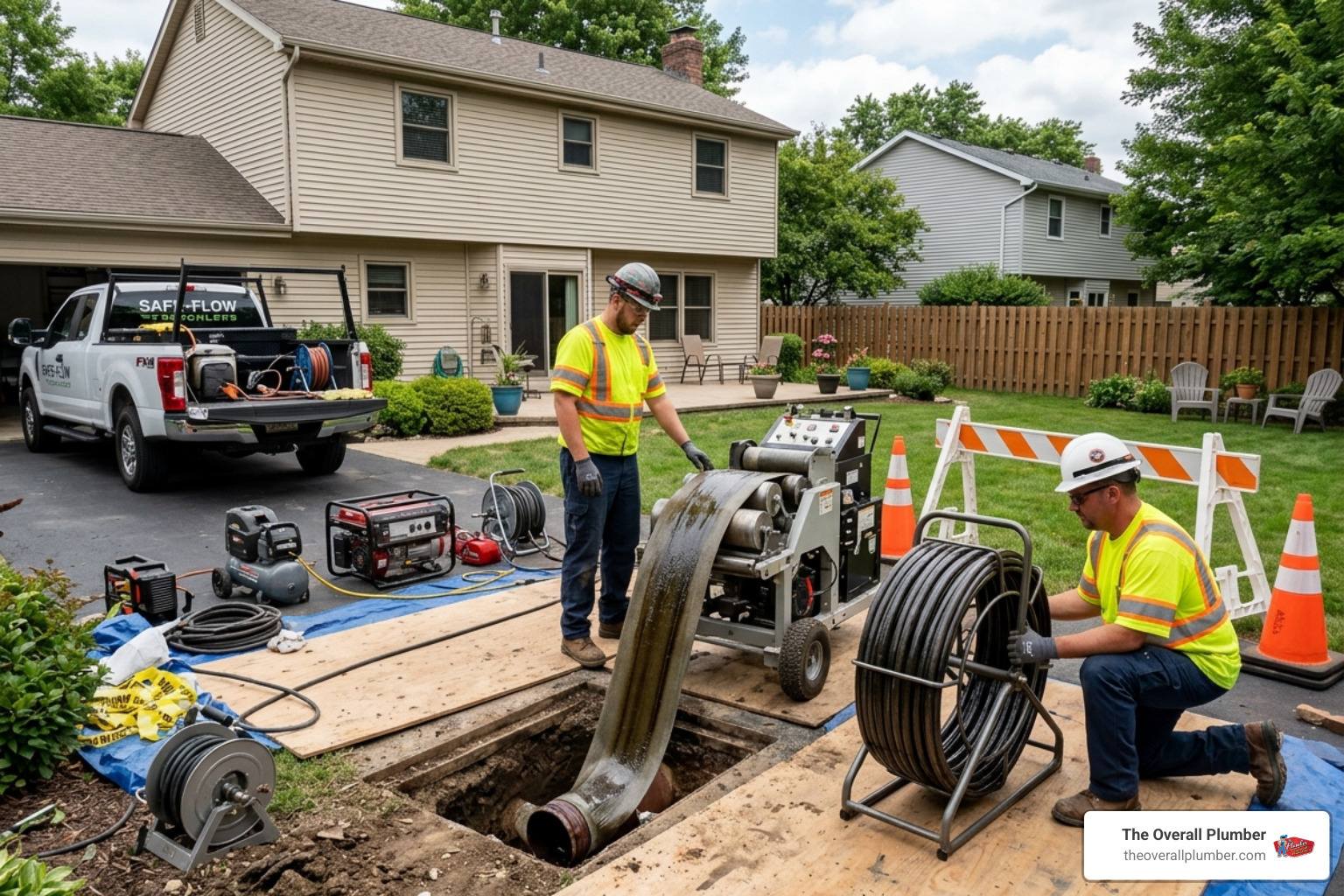
In the past, fixing a buried gas line meant digging a massive trench through your beautiful Houston landscaping or under your driveway. Thankfully, technology has advanced. We now offer Expert Gas Line Solutions that prioritize speed and minimal disruption where code-approved methods and site conditions allow.
Method 2: Trenchless Gas Line Repair Technology
For some underground piping projects, trenchless methods can reduce disruption in places like Clear Lake and Santa Fe. Depending on the pipe material, location, code requirements, and the extent of the damage, a professional may recommend options that limit excavation compared with a full traditional trench.
These approaches can be faster and more cost-effective in the right situation because they may reduce the need for heavy machinery and major landscaping restoration. However, the exact repair method must always be selected by a licensed professional based on inspection findings and local code compliance.
Method 3: Sectional Pipe Replacement and Upgrades
Sometimes, a single section of pipe is too corroded or damaged for a simple seal. In these cases, we perform a sectional replacement. We remove the compromised portion – often older black steel pipe that has deteriorated over time – and replace it with approved modern materials.
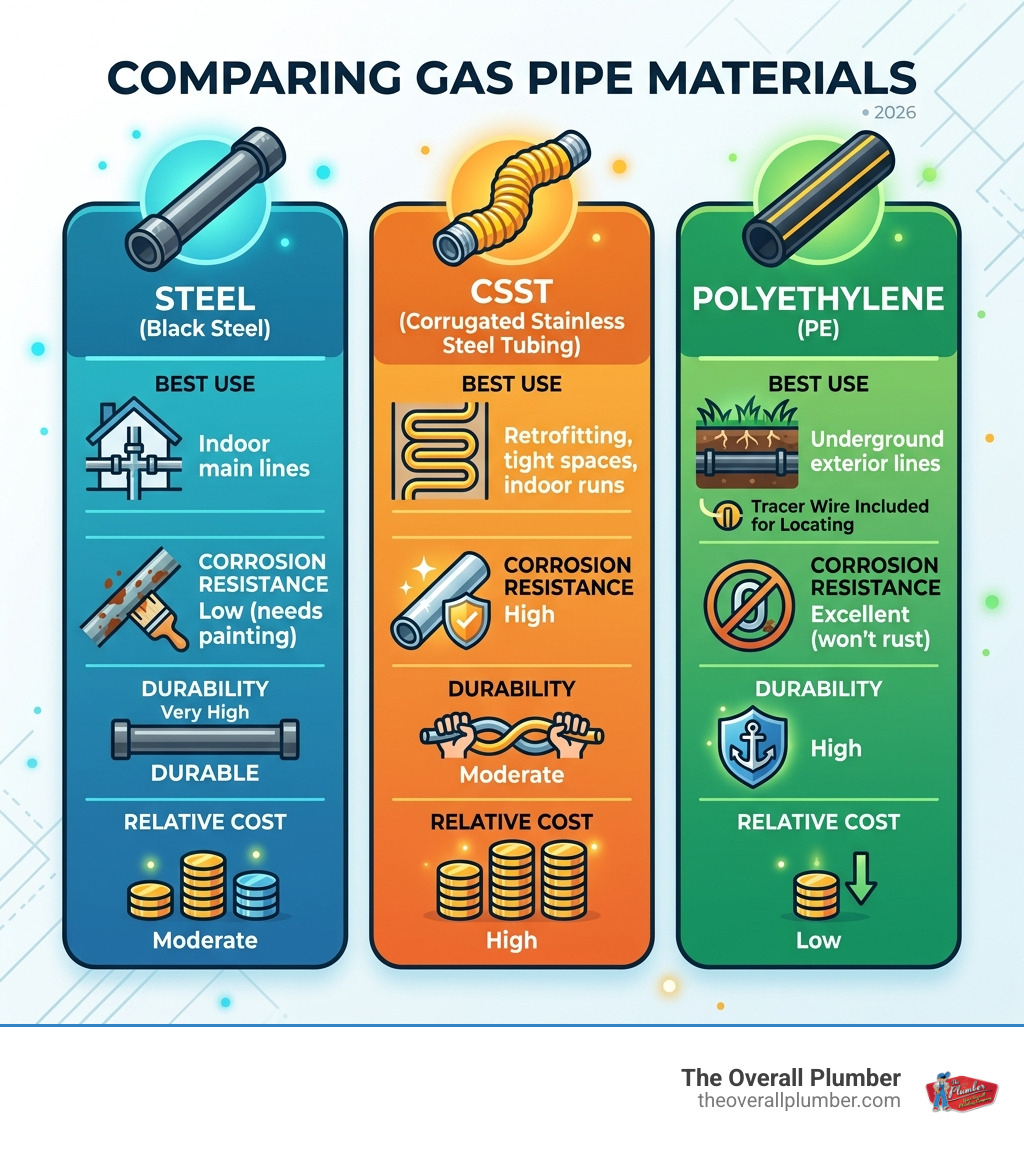
We frequently use CSST (Corrugated Stainless Steel Tubing) or Flexible Gas Lines for indoor runs where permitted because they are easier to route through tight spaces and can reduce the number of joints. For underground lines, Polyethylene (PE) is commonly used because it resists rust. When required, we include a tracer wire so the line can be more easily located in the future. After any major replacement, we facilitate a Centerpoint Gas Pressure Test to satisfy local codes and ensure safety.
Comprehensive Component Replacement and Appliance Integration
A gas system is more than just pipes. It includes a variety of safety and regulation components that must work perfectly to keep the gas flowing at the right pressure.
Method 4: Appliance-Specific Line Upgrades and Capping
As of April 2026, many homeowners in the Galveston and Harris County areas are adding whole-home generators to deal with storm-related power outages. This requires specialized gas line repair and installation.
This method involves:
- Manifold Systems: Creating a central hub to distribute gas to multiple high-demand appliances.
- High-Pressure Regulators: Ensuring your generator or pool heater gets the exact volume of gas it needs without starving your stove or water heater.
- Sediment Traps: Installing these small pipe extensions near appliances to catch moisture and debris before they can clog your equipment.
- Capping Unused Lines: If you’ve switched to an electric stove, we safely cap the old gas line to prevent future leaks.
Comparing Gas Pipe Materials for Longevity
Choosing the right material is vital for the longevity of your repair. Here is how the most common materials stack up:
| Material | Best Use Case | Corrosion Resistance | Durability | Relative Cost |
|---|---|---|---|---|
| Black Steel | Indoor main lines | Low (needs paint) | Very High | Moderate |
| CSST | Retrofitting/Appliances | High | Moderate | High |
| HDPE/PE | Underground | Excellent | High | Low |
| Galvanized Steel | Older homes (Outdated) | Moderate | High | Moderate |
The Cost and Logistics of Professional Gas Line Services
Budgeting for a gas line repair doesn’t have to be a mystery. While every home in La Porte or Friendswood is different, we can look at the industry averages for April 2026. The national average for a repair is approximately $598, with most simple fixes ranging from $271 to $935.
Labor rates for a qualified plumber typically fall between $45 and $200 per hour. However, at The Overall Plumber, we offer repair services with no trip charges and no overtime fees, which can save you significantly during an emergency.
Factors Affecting Repair Pricing in 2026
Several variables can move your final estimate up or down:
- Accessibility: A leak behind a finished basement wall or deep underground will cost more to reach than a leak at an exposed joint in the attic.
- Material Costs: Prices for steel and copper can fluctuate, impacting the cost per linear foot.
- Permit and Inspection Fees: Most cities in our service area, like Pasadena and Houston, require permits for gas work, which can cost between $50 and $300.
- Emergency Dispatch: While we don’t charge overtime, many companies add a premium for after-hours calls.
- Restoration: If we have to cut drywall or dig in your yard, you’ll need to factor in the cost of those repairs as well.
Why DIY Gas Line Work is Prohibited
I cannot stress this enough: Never attempt to fix a gas line yourself. In Texas, and specifically in the counties we serve, gas work requires a specialized license for a reason.
- Explosion Risk: A tiny mistake in threading or sealing can lead to a catastrophic build-up of gas.
- Fire Hazards: Gas is highly flammable; even a small spark from a DIY tool can ignite a leak.
- Insurance Denial: If you perform your own gas work and a fire occurs, your insurance company will likely deny your claim because the work wasn’t done by a licensed professional to code.
- Legal Consequences: It is actually illegal in most jurisdictions to perform gas line work without the proper certifications and permits.
Frequently Asked Questions about Gas Line Safety
Who is responsible for fixing gas lines?
The responsibility is split between the utility provider (like CenterPoint Energy) and the homeowner. The utility company is responsible for the main supply lines in the street and the gas meter itself. Everything from the “outlet” side of the meter into your home—including all underground lines in your yard and the pipes inside your walls—is the homeowner’s responsibility to maintain and repair.
How long does a typical gas line repair take?
Most standard repairs, such as fixing a leaky joint or replacing an appliance connector, are completed in 1 to 6 hours. If the job involves trenchless technology or replacing a short section of pipe, we can usually finish in a single day. Complex jobs involving extensive excavation or whole-house repiping may take 1 to 3 days.
Can I patch a hole in a gas line myself?
Absolutely not. You might see “gas-rated” tapes or epoxies at a hardware store, but these are intended for very specific, temporary industrial uses—not for residential pipe repair. Patching a hole is a recipe for disaster. A damaged pipe must have the compromised section removed and replaced with new material by a professional.
Schedule Your Expert Gas Line Service Today
At The Overall Plumber, we understand that a gas issue is a major stressor. That’s why we offer priority scheduling and satisfaction guarantees to give you peace of mind. Whether you need a simple leak fix, a Certified Plumber for Gas System Testing, or a complex installation for a new generator, our team is ready to help.
We serve neighbors across Brazoria County, Houston, Clear Lake, Santa Fe, League City, Texas City, La Porte, Friendswood, Pearland, Pasadena, Galveston, Harris County, and Galveston County. With our specialized equipment, including camera inspections and electronic detectors, we’ll get your gas system back in top shape fast.
If you suspect a gas leak or require professional maintenance, do not wait. Contact our licensed experts at (281) 668-8055 immediately to ensure your home remains safe and code-compliant.