


The Ultimate DIY Guide to Indoor Faucet Repair
Why Shower Faucet Repair Saves You Money and Water
Shower faucet repair is something most homeowners can tackle in under two hours with basic tools and the right replacement part. Here’s a quick overview of how to fix a leaking shower faucet:
- Shut off the water supply to the shower or the whole house
- Remove the handle by popping off the cap and unscrewing the set screw
- Take out the cartridge or stem using needle-nose pliers or a cartridge puller
- Replace the worn part — cartridge, washer, or O-ring
- Reassemble and test by slowly turning the water back on
A dripping shower faucet wastes more water than most people realize — and it shows up on your utility bill every single month. The good news is that most leaks come down to one worn-out part: a cartridge, a washer, or an O-ring. You don’t need to be a plumber to fix it.
This guide walks you through every repair type, from single-handle cartridge swaps to two-handle stem replacements and diverter fixes.
I’m Dayton Whitworth, a second-generation plumber serving the Greater Houston and Gulf Coast area, and shower faucet repair is one of the most common calls I get from homeowners who want to handle it themselves first. In the sections below, I’ll share exactly what I’ve learned from years of hands-on repairs so you can get it done right the first time.
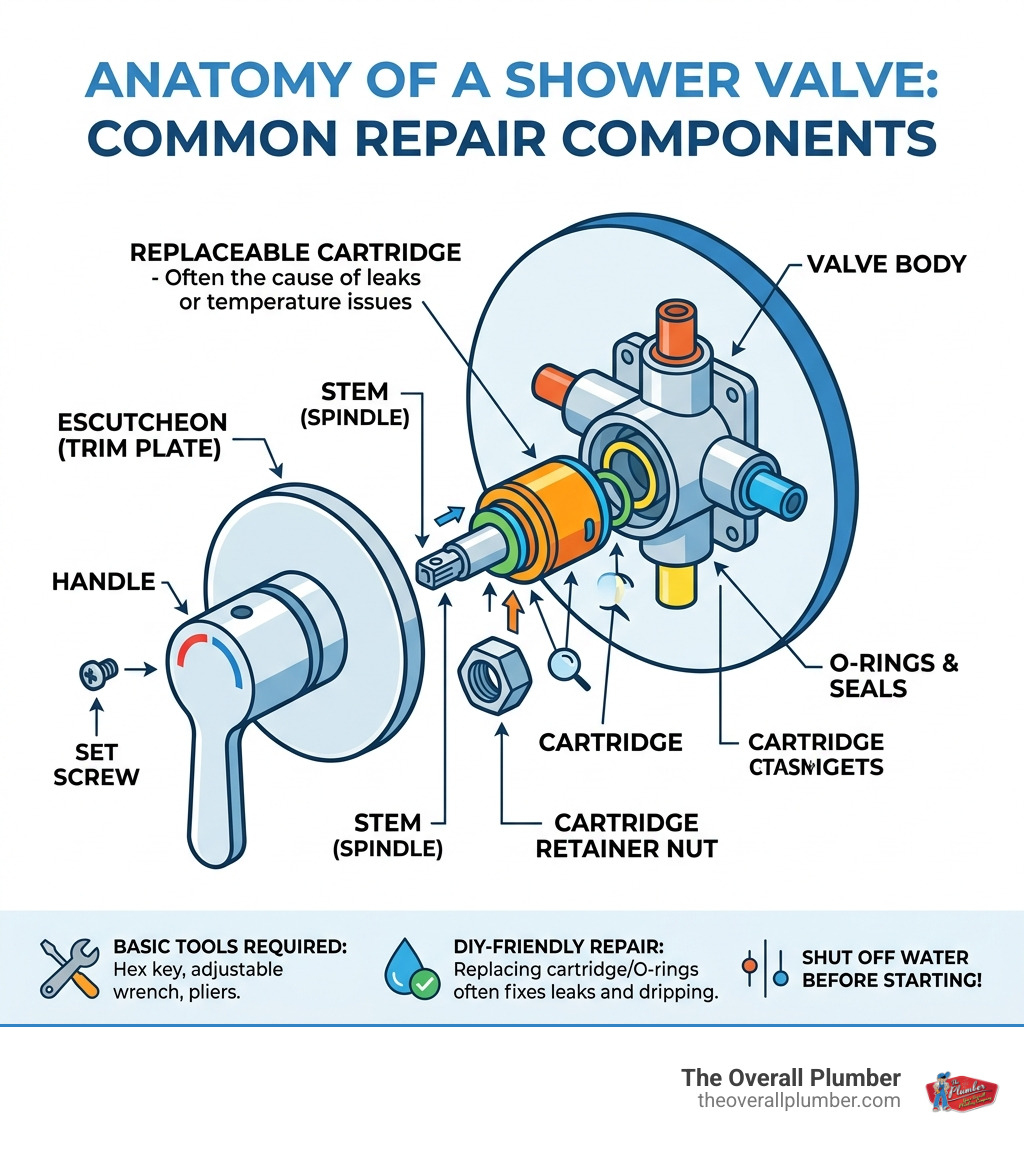
Preparing for Your Shower Faucet Repair
Before you grab your wrench and start twisting, preparation is the difference between a 30-minute fix and a frantic call for emergency service. In April 2026, modern plumbing standards emphasize safety and precision, especially in the humid coastal climates of League City and Galveston where mineral buildup can make parts stubborn.
Gathering Your Arsenal
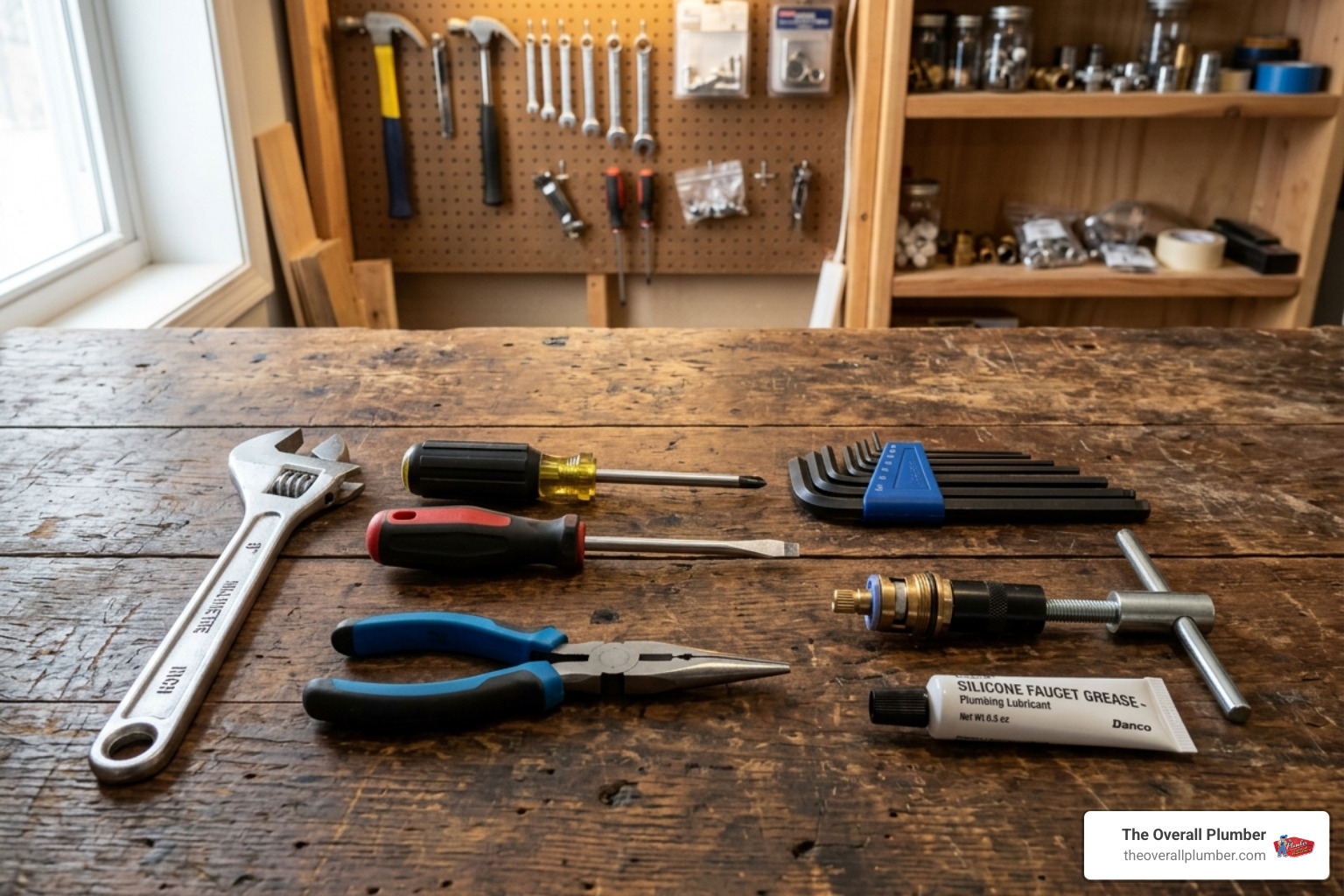
You don’t need a truck full of gear, but having these essential plumbing tools on hand will save you multiple trips to the hardware store:
- Hex keys (Allen wrenches): For those tiny set screws hidden under the handle.
- Adjustable wrench and Screwdrivers: Both Phillips and flat-head.
- Needle-nose pliers: Essential for pulling out clips and small gaskets.
- Cartridge puller: Highly recommended if you have a Moen or Delta faucet; it prevents you from cracking the plastic.
- Silicone faucet grease: To ensure the new seals don’t tear during installation.
Shutting Off the Water
Safety first! You must cut off the water supply before disassembling anything. If you don’t, you’ll be greeted by a high-pressure geyser the moment you pull the cartridge.
- Integral Stops: Check behind the large circular “escutcheon” plate on your shower wall. Many modern valves have small screws on either side of the center cartridge. Turning these clockwise shuts off water only to that shower.
- Main Supply Valve: If you don’t have integral stops, you’ll need to shut off the main water valve for the house.
- Relieve Pressure: Once the water is off, turn the shower handle to the “on” position to drain any remaining water in the pipes.
Pro Tip: Always cover your drain with a towel or a rag. There is nothing more frustrating than watching a specialized brass screw or a tiny locking clip disappear down the pipe. For more on why these drips happen in the first place, check out our guide on Faucet Leaks. You can also find additional prep tips at How to Fix a Leaking Shower Faucet.
Identifying Your Faucet Type and Common Leak Causes
Not all showers are created equal. Identifying your faucet type is the first step in buying the correct replacement parts. In our service areas from Houston to Pearland, we typically see three main varieties.
Single-Handle Valves
These are the most common in modern homes. You use one lever or knob to control both temperature and flow. These usually contain a cartridge—a self-contained plastic or brass cylinder that regulates water.
Two-Handle and Three-Handle Systems
Found often in older homes in Santa Fe or Texas City, these use separate handles for hot and cold. A three-handle system includes a middle “diverter” handle to switch water between the tub and the showerhead. These usually use compression stems with rubber washers.
Comparison Table: Cartridge vs. Compression Stems
| Feature | Cartridge (Single-Handle) | Compression Stem (Two-Handle) |
|---|---|---|
| Common Failure | Internal seal wear or cracked housing | Worn rubber washer or O-ring |
| Repair Method | Replace the entire cartridge | Replace washers or the whole stem |
| Ease of DIY | High (with the right puller) | Moderate (requires deep sockets) |
| Brand Specific | Very specific to brand/model | Often universal sizes available |
Why is it Leaking?
- Worn O-rings: These small rubber loops seal the connections. Over time, they harden and crack.
- Mineral Buildup: In areas with hard water, calcium deposits can “score” the cartridge, allowing water to bypass the seals.
- Valve Seat Corrosion: If you have a compression faucet, the metal “seat” the washer presses against can become pitted, preventing a tight seal.
According to How to Fix a Leaky Shower Faucet, identifying the manufacturer (like Moen, Delta, or Glacier Bay) is vital because cartridges are rarely interchangeable between brands.
Step-by-Step Guide to Single-Handle Repairs
If your single-handle shower is dripping, the culprit is almost certainly the cartridge. Here is how we handle this at The Overall Plumber to ensure a leak-free result.
Removing the Handle and Trim
- Pop the Cap: Use a small flat-head screwdriver to pry off the decorative index button (the little plastic piece that says “H” and “C”).
- Unscrew the Handle: Use your hex key or screwdriver to remove the set screw. Pull the handle straight off. If it’s stuck due to mineral buildup, you can use a hair dryer to gently heat the metal and loosen the bond.
- Remove the Escutcheon: Unscrew the large plate against the wall. This gives you access to the valve body.
- Remove the Sleeve: There is often a metal sleeve (or “bonnet”) covering the cartridge. This usually slides off or unscrews by hand.
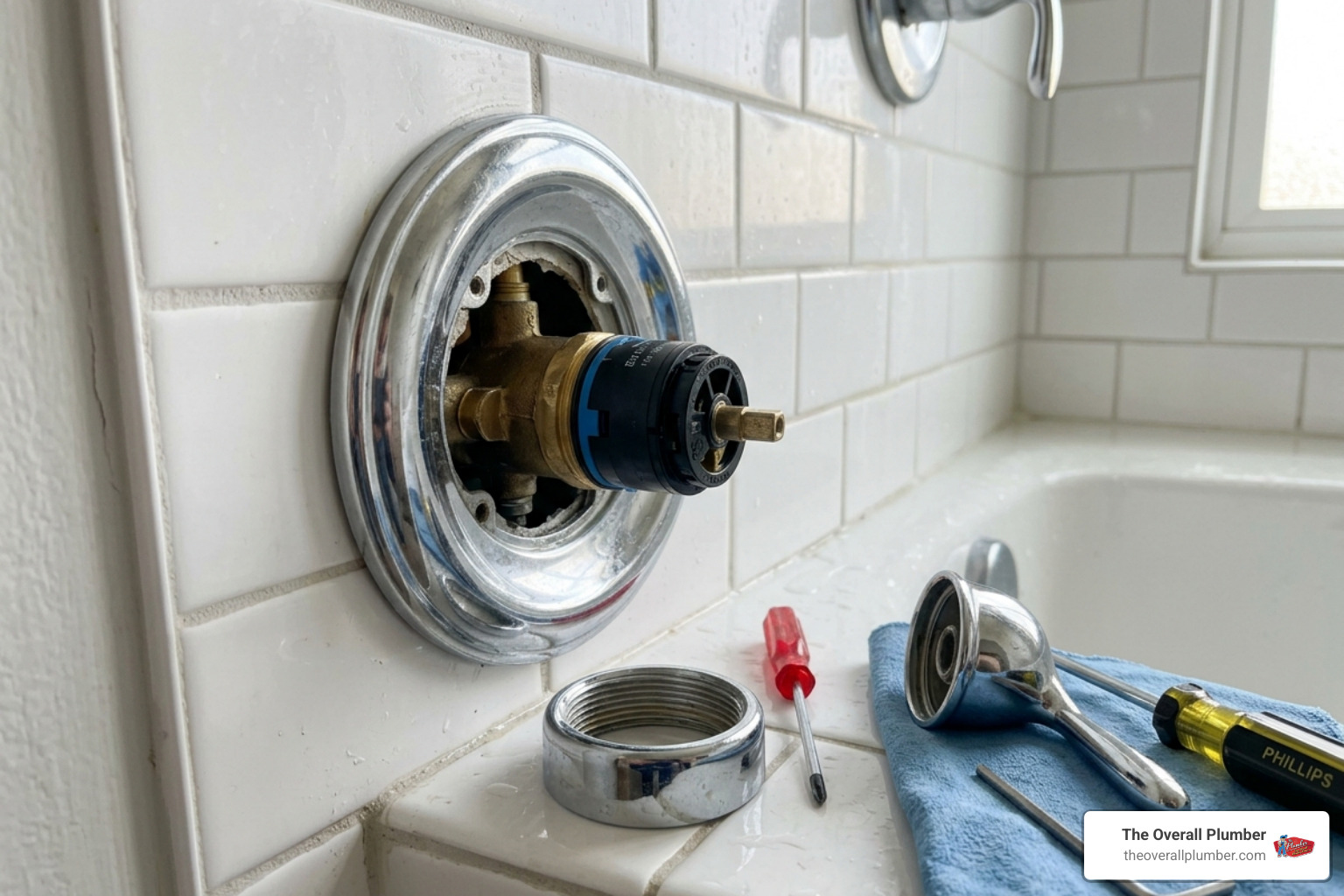
Replacing the Shower Faucet Repair Cartridge
This is the heart of the shower faucet repair.
- The Locking Clip: Most Moen and Delta valves use a small “U” shaped brass or plastic clip to hold the cartridge in place. Use your needle-nose pliers to pull this straight up. Don’t lose it!
- The Extraction: Use your cartridge puller or pliers to grip the stem of the cartridge. Pull firmly and straight out. If it resists, wiggle it slightly to break the seal.
- Clean and Flush: Before inserting the new part, look inside the valve body with a flashlight. Use a cloth to wipe out any debris. Briefly turn the water on just a tiny bit to flush out any loose minerals.
- Lube it Up: Apply a thin layer of silicone faucet grease to the O-rings of your new cartridge. This helps it slide in and creates a better seal.
- Alignment: Most cartridges have “ears” or notches that must align with slots in the valve body. If you install it upside down, your hot and cold water will be reversed!
For professional help with Residential Plumbing, we are always available to ensure your cartridge is seated perfectly.
Fixing Leaks in Two-Handle and Diverter Systems
If you have a classic two-handle setup, you aren’t usually replacing a cartridge. Instead, you’re servicing the “stem.”
Servicing the Valve Stem and Washers
- Disassemble the Handle: Similar to single-handles, remove the cap and screw.
- Remove the Stem: You will likely need a deep well socket wrench to reach the hex nut holding the stem inside the wall. Turn it counter-clockwise to remove the entire assembly.
- Check the Washer: At the end of the stem, you’ll see a small rubber washer held by a brass screw. If it’s flattened or shredded, replace it.
- Inspect O-rings: Replace any rubber O-rings on the stem body. Use a bit of thread sealant or Teflon tape on the threads before re-installing to prevent “packing leaks” (water coming out from behind the handle).
Having a Toilet Handle Loose often involves similar mechanical principles—worn parts needing simple replacement to restore tension and seal.
Troubleshooting the Shower Faucet Repair Diverter
Does water leak out of the showerhead while you’re trying to fill the tub? Or does the tub spout keep running when the shower is on? This is a diverter issue.
- The “Stacking Leak”: This happens when water intended for the tub “stacks up” in the pipe and spills out the showerhead. It’s often caused by using PEX pipe instead of copper for the tub drop, or a clog in the spout.
- Gate Replacement: Many tub spouts have a pull-up gate. If this is leaking, you can often unscrew the spout and replace the internal gasket, or simply replace the entire tub spout.
- Caulking: Once the repair is done, apply a fresh bead of silicone caulk around the base of the spout where it meets the wall. Let it dry for 48 hours before using the shower to prevent water from seeping behind your tiles.
Testing the Repair and When to Call a Professional
Once everything is reassembled, it’s time for the moment of truth.
The Right Way to Turn Water Back On
Don’t just blast the main valve open.
- Open a Faucet Elsewhere: Open a sink faucet nearby to let air escape the lines.
- Slow Restoration: Slowly turn the water supply back on. This prevents “water hammer,” a pressure surge that can damage your new seals.
- Check for Leaks: Watch the handle and the showerhead. If you see a drip, you may need to tighten the bonnet nut or re-seat the cartridge.
- Set Anti-Scald: Most modern cartridges have a “temperature limit stop” — a small plastic ring you can adjust. Ensure the maximum temperature is set to 120 degrees Fahrenheit to prevent accidental burns, especially for children and seniors.
When to Call The Overall Plumber
While DIY is great, some situations require a pro:
- The Cartridge Snaps: If the cartridge breaks off inside the valve, specialized extraction tools are needed.
- Wall Leaks: If you see dampness on the wall behind the shower, the valve body itself might be cracked or a pipe joint may have failed.
- No Shutoff: If your home’s main shutoff valve is frozen or broken, don’t force it.
- Soldering Needed: If you need to Plumber Install New Fixtures and the old valve must be cut out and a new one “sweated” (soldered) in, it’s time to call us. We offer a satisfaction guarantee and expert plumbing services with no overtime fees throughout Harris and Galveston County.
Need help with a stubborn leak or a broken shower valve? Contact The Overall Plumber today or call us at 281-668-8055 to schedule service.
Frequently Asked Questions about Shower Leaks
Why does my showerhead drip after the water is turned off?
If it drips for 30 seconds and then stops, it’s just residual water draining from the showerhead. If it drips constantly, the valve or cartridge behind the handle is failing and needs a shower faucet repair.
How do I find the right replacement cartridge for my brand?
The easiest way is to take the old cartridge with you to a hardware store in League City or Pearland. Many brands like Moen or Delta have model numbers stamped on the valve body behind the escutcheon plate. You can also use “stem finder” tools available online.
What should I do if the faucet handle is stuck?
Mineral deposits from our local Texas water can “weld” metal parts together. Use a 50/50 mix of white vinegar and water to dissolve the scale, or use a specialized handle puller tool. Never hammer the handle, as you can damage the delicate valve body inside the wall.