


Why a Running Toilet Is Costing You More Than You Think
Fixing your toilet fill valve is one of the most effective ways to stop wasting water and money at home. A constantly running toilet can waste up to 200 gallons of water per day — that’s over 6,000 gallons a month — and it all traces back to a small part inside your tank.
Here’s how to fix a toilet fill valve in a few basic steps:
- Shut off the water supply by turning the shutoff valve clockwise behind the toilet.
- Drain the tank by flushing and holding the handle down.
- Remove the old fill valve by disconnecting the supply line and unscrewing the mounting nut under the tank.
- Adjust the height of the new fill valve so the water level mark sits about half an inch below the top of the overflow tube.
- Install the new valve, hand-tighten the mounting nut, and attach the refill tube.
- Turn the water back on, let the tank fill, and check for leaks.
Most homeowners can complete this repair in 30 minutes or less for $15–$40 in parts — compared to $150–$350 for a professional service call.
The good news: this is one of the most beginner-friendly plumbing repairs you can do. No special skills required. Just a few basic tools and a replacement valve from your local hardware store.
I’m Dayton Whitworth, a second-generation plumber serving Houston and the Gulf Coast, and fixing toilet fill valves is one of the most common repairs I see homeowners either tackle themselves or call us in to handle. Read on and I’ll walk you through everything you need to know to get it done right.
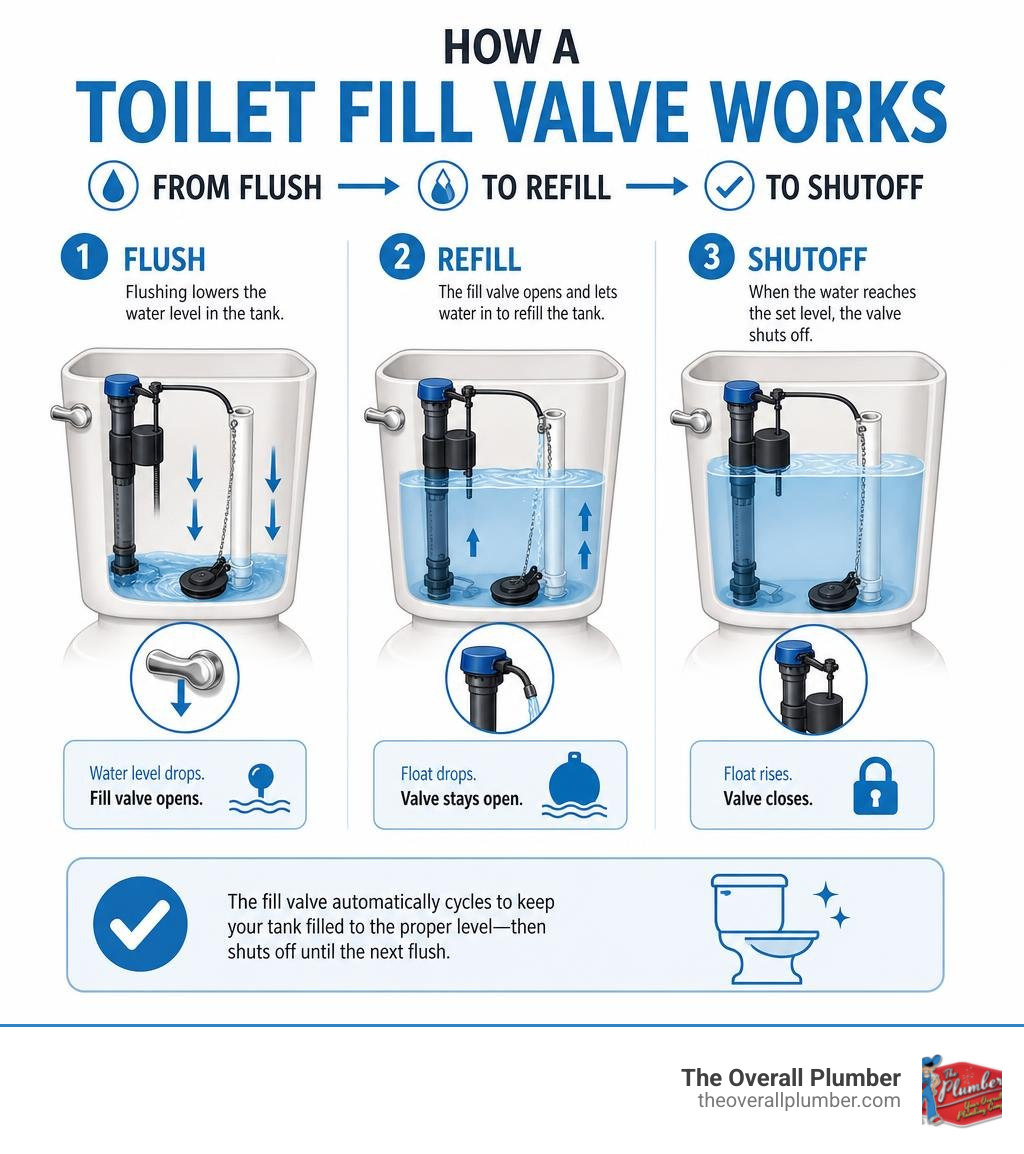
Fixing toilet fill valve terms made easy:
Diagnosing a Faulty Toilet Fill Valve
Before you start unscrewing parts, it helps to understand what the fill valve actually does. Located on the left side of your toilet tank, the fill valve is the tall mechanism responsible for refilling the tank with water after every flush. When it stops working correctly, your toilet may run continuously, fill incredibly slowly, or make strange, annoying noises in the middle of the night.
Across the United States, over 1 billion gallons of water are wasted every single day due to leaky toilets, and faulty fill valves are a primary culprit. Left unchecked, a running toilet can quietly add $50 or more to your monthly water bill. By taking a few minutes to inspect the tank, you can determine whether you are dealing with a minor adjustment issue or if a full replacement is required.
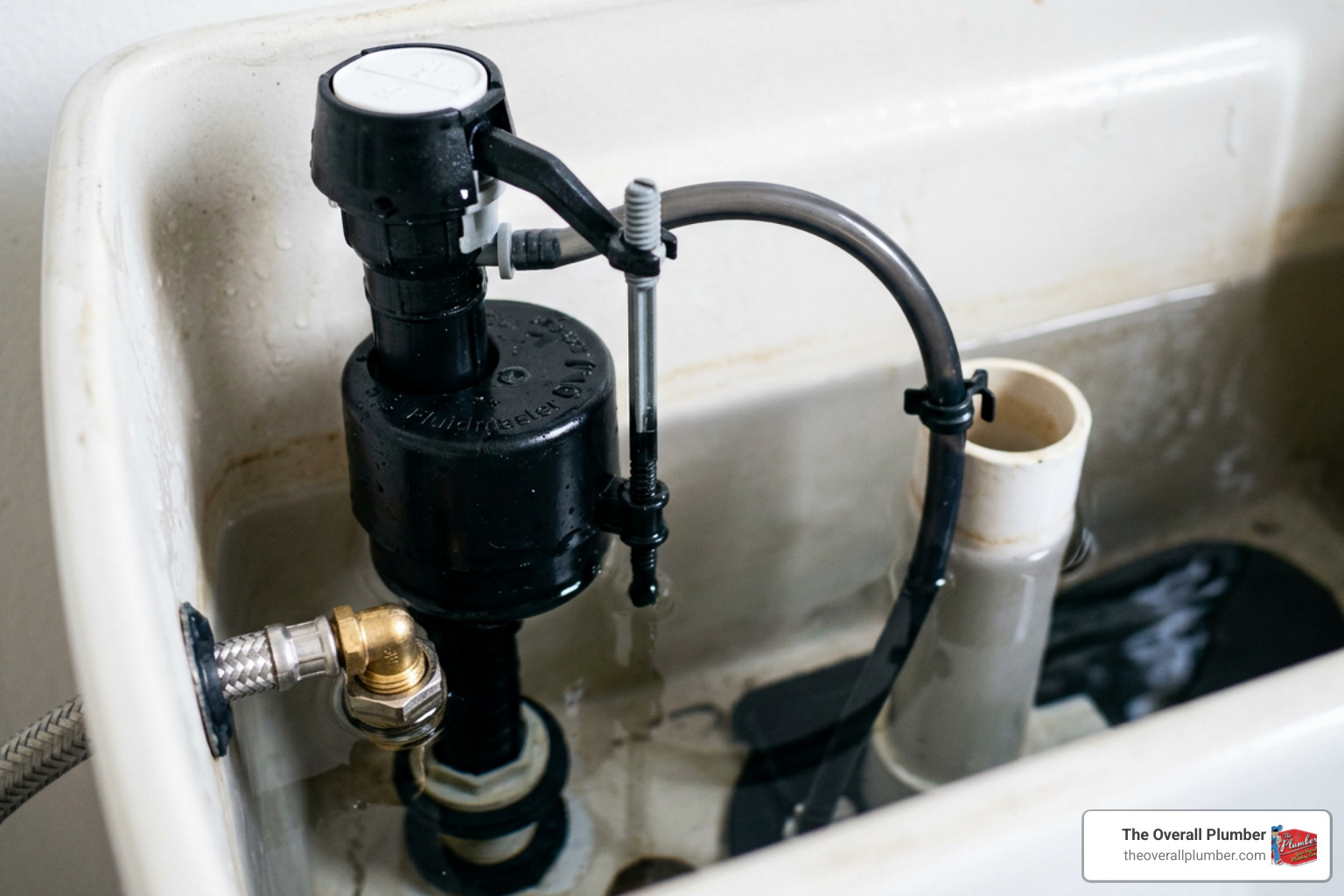
To get a clear picture of what is happening inside your tank, take off the ceramic lid and set it safely on a towel. Flush the toilet and watch the mechanism work. If you want a deeper dive into the anatomy of these parts before moving forward, check out The DIYer’s Guide to Toilet Fill Valve Replacement | Family Handyman for a comprehensive visual breakdown.
Signs That Fixing Toilet Fill Valve Parts Is Necessary
How do you know if your fill valve is actually broken or just acting up? Here are the most common warning signs that your fill valve has reached the end of its useful life:
- The toilet runs constantly: If you hear water trickling or rushing into the tank long after the flush cycle should have ended, the valve is failing to shut off.
- A high-pitched whistling or screaming noise: This often points to a worn-out internal diaphragm seal or a valve clogged with mineral scale.
- Painfully slow refills: If it takes ten minutes for your tank to fill back up, the valve inlet is likely restricted by sediment.
- Phantom flushing: This is when the toilet suddenly starts refilling for a few seconds even though no one has flushed it. While this is often caused by a bad flapper, a faulty fill valve can also be the trigger.
- An unexplained water bill spike: If your water bill suddenly jumps, a silent leak in your toilet is the first place you should look.
If you suspect your toilet has a leak but don’t see water on the floor, the issue is likely internal. For more details on protecting your bathroom from hidden moisture damage, read our guide on how to Stop the Swamp with a New Toilet Seal.
Testing for Hidden Leaks
Sometimes a toilet leak is completely silent. To confirm if your fill valve or flapper is leaking water down the drain, you can perform a simple, five-minute diagnostic test using basic household items.
Get some dark food coloring or toilet dye tablets. Drop about 10 to 15 drops of food coloring directly into the toilet tank. Do not flush the toilet. Wait about 15 to 20 minutes, then look into the toilet bowl. If you see colored water seeping into the bowl, you have an active leak.
If the water level in the tank is resting right at the top of the open overflow tube, water is spilling over because the fill valve is failing to shut off. If the water level is below the overflow tube but the color still leaked into the bowl, your flapper is likely the main culprit. For additional troubleshooting tips on slow-filling tanks and seal issues, refer to the Toilet Tank Won’t Fill Up Or Is Slow To Fill – Fluidmaster guide.
Choosing the Right Replacement Valve
If your diagnostics point to a dead valve, it is time to purchase a replacement. Fortunately, modern toilet fill valves are highly standardized. You do not need to know your exact toilet model number to find a part that works.
Most homes in our service areas — from the historic homes of Galveston to the newer builds in Pearland and League City — use standard gravity-flush toilets. For these, a universal-fit, adjustable-height fill valve is the perfect solution. These valves can be adjusted to fit tanks of various depths, usually ranging from 9 to 14 inches.
When shopping, you will generally choose between a bottom-entry valve and a side-entry valve. Here is a quick comparison to help you understand the differences:
| Feature | Bottom Entry Fill Valve | Side Entry Fill Valve |
|---|---|---|
| Water Connection | Connects through the bottom of the tank | Connects through the side of the tank |
| Commonality | Standard in 95% of modern U.S. toilets | Found in older homes or specialized European designs |
| Noise Level | Very quiet (fills from the bottom up) | Can be noisier as water splashes from the side |
| Installation | Easy DIY project with standard tools | May require tighter clearances near the wall |
If you are planning a larger bathroom upgrade or want to see how minor repairs compare to a full system upgrade, take a look at our Toilet Installation Cost Guide for Every Budget.
Key Features to Look For
When you are browsing the plumbing aisle, keep these essential features in mind to ensure you buy a high-quality, code-compliant part:
- Universal Fit: Look for packaging that explicitly states “Universal.” Brands like Fluidmaster (especially the 400A series) and Korky dominate about 80% of the U.S. market and will fit almost any standard two-piece toilet.
- Anti-Siphon Design: This is a crucial safety feature. An anti-siphon valve prevents toilet water from being sucked back into your home’s clean drinking water supply in the event of a sudden drop in municipal water pressure.
- Critical Level (C.L.) Mark: High-quality valves feature a “C.L.” stamp on the plastic body. By plumbing code, this mark must sit at least 1 inch above the top of the tank’s overflow tube to prevent backflow.
- Float Style: Older toilets used a copper or plastic ball on a long metal arm. Modern valves use a compact plastic cup float that slides up and down the main valve shaft. These are far more reliable, quieter, and take up much less space inside the tank.
Step-by-Step Guide to Fixing Toilet Fill Valve
Now that you have your replacement part, let’s get to work. Replacing a bottom-entry fill valve is a straightforward task that requires only a few basic household tools.

Before you begin, gather the following items:
- An adjustable wrench (or channel lock pliers)
- A small bucket or shallow container
- A large sponge and a few old towels
- Your new universal fill valve kit
- A flashlight (to help you see under the tank)
Safety Note: Never use plumbing sealants, pipe dope, or Teflon tape on the plastic threads of your new fill valve. These products can lubricate the plastic too much, leading to overtightening, cracked plastic parts, and major water leaks. For a detailed overview of the installation process, you can also consult How to Install a Toilet Fill Valve (DIY Step-by-Step Guide) – Quoteroot.
Preparing and Draining the Tank
To prevent a soggy bathroom floor, you must completely isolate and drain the water inside the toilet tank before removing any parts.
Locate the water shutoff valve on the wall behind or beneath your toilet. Turn the handle clockwise until it stops. If the valve is old or stiff, turn it gently to avoid snapping the stem. For more tips on handling this step safely, see our guide: Stop the Flow: A Guide to Installing Your New Toilet Shut-Off Valve.
Once the water is off, flush the toilet and hold the handle down to force as much water as possible out of the tank. There will still be about an inch of water left at the bottom of the tank. Place your shallow bucket under the water connection beneath the tank, then use your sponge to soak up the remaining water from the bottom of the tank, squeezing it out into your bucket or the toilet bowl until the tank is completely bone-dry.
Removing the Old Valve
With the tank empty, you can safely disconnect the old hardware.
Slide your bucket directly under the water supply connector. Using your hand or an adjustable wrench, unscrew the supply line nut from the bottom of the fill valve shank. A small amount of residual water will drip out of the line, which your bucket will catch.
Next, locate the plastic locknut securing the fill valve shank to the underside of the toilet tank. Unscrew this locknut by turning it counterclockwise. If it is stuck, use your pliers gently to break it loose. Once the locknut is removed, pull the old fill valve straight up and out of the tank. Be sure to remove the old rubber shank washer as well — never reuse an old rubber washer, as it will likely leak.
Installing and Adjusting the New Valve
Before dropping the new valve into place, you must adjust its height to match your specific tank.
Hold the new valve next to your overflow tube inside the tank. Rotate the threaded shank of the new valve to adjust its overall height. You want the top of the fill valve cap to sit about 3 inches higher than the top of the overflow tube. More importantly, make sure the molded “Critical Level” (C.L.) mark on the valve body is positioned exactly 1 inch above the top edge of the overflow tube.
Once adjusted, slide the new rubber shank washer onto the bottom of the valve shank, ensuring the tapered side faces downward toward the tank hole. Insert the valve shank through the hole in the bottom of the tank.
From underneath the tank, thread the plastic mounting nut onto the shank. Hand-tighten the nut clockwise until it is snug against the porcelain. Give it an extra quarter-turn by hand. Do not use pliers or wrenches on this nut; overtightening can easily crack the fragile porcelain tank.
Next, attach the small rubber refill tube to the nipple near the top of the new fill valve. Clip the opposite end of the tube to the top of your overflow tube using the provided plastic clip. Make sure the tube directs water straight down into the overflow pipe, but do not push the tube down into the pipe itself, as this can create a siphon that keeps your toilet running constantly.
Finally, reconnect the water supply line to the bottom of the fill valve shank. Hand-tighten the connection, then turn the water shutoff valve counterclockwise slowly to restore water flow. Let the tank fill, and carefully inspect the underside of the tank with a dry paper towel to ensure there are no slow drips. If you are considering replacing the entire toilet due to age or multiple failing parts, you can learn more about what to expect in The Complete Guide to Toilet Replacement Cost.
Troubleshooting and Post-Installation Tips
Once your new valve is in place, you are ready to fine-tune the system. A successful installation ends with a quiet tank, a quick fill cycle, and absolutely zero leaks.
After the tank fills completely and the valve clicks shut, look at the water level. The water should rest about half an inch to one inch below the top of the overflow tube. If the water is too high (spilling into the overflow tube) or too low (causing a weak flush), locate the adjustment screw on the side of your float cup. Turn the screw clockwise to raise the water level or counterclockwise to lower it. Flush the toilet a few times to test your adjustments.
Common Mistakes When Fixing Toilet Fill Valve Units
Even experienced DIYers can make minor mistakes that lead to leaks or poor performance. Keep these common errors in mind to ensure your repair holds up over time:
- Overtightening connections: Porcelain is incredibly brittle. Overtightening the mounting nut under the tank can crack the toilet, requiring a complete toilet replacement. Hand-tighten only.
- Using plumber’s tape: Using Teflon tape on the plastic threads of a fill valve can prevent the rubber gasket from sealing correctly, causing slow, persistent leaks.
- Siphoning through the refill tube: If you shove the rubber refill tube deep down into the overflow pipe, it will siphon water out of the tank and down the drain, causing the fill valve to cycle on and off endlessly. Always use the provided clip to keep the tube suspended above the overflow pipe opening.
- Incorrect valve height: If the valve is set too low, the water level will not reach the proper height for a strong flush. If set too high, the float cannot rise enough to shut off the water, leading to a continuously running toilet. For visual reference on avoiding these errors, you can check out How to Replace a Fill Valve – The Home Depot.
When to Call a Professional Plumber
While fixing a toilet fill valve is highly manageable for most homeowners, some plumbing situations require professional expertise. You should put down the wrench and call us if you experience any of the following:
- A seized shutoff valve: If the water shutoff valve behind your toilet is completely stuck, rusted, or starts leaking when you touch it, do not force it. We can quickly replace the valve without risking a major burst pipe.
- Severe pipe corrosion: If your supply lines are rigid metal or show heavy green corrosion, attempting to disconnect them can rupture your home’s main plumbing lines.
- A cracked toilet tank: If you notice hairline cracks in the porcelain tank or bowl, the toilet is structurally compromised and must be replaced immediately to prevent catastrophic water damage.
- Wall-mounted or specialty toilets: If you have a wall-hung toilet with an in-wall carrier tank, accessing and repairing the fill valve is a complex job that requires specialized tools.
At The Overall Plumber, we serve homeowners throughout Brazoria County, Galveston County, and Harris County, including Houston, League City, Friendswood, and Pearland. We provide expert repairs with no trip charges, satisfaction guarantees, priority scheduling, and no overtime fees. If your DIY project hits a snag, we are here to help get your bathroom back in order quickly—call us today at (281) 668-8055. Discover more about how we handle these issues on our Toilet Replacement Services page.
Frequently Asked Questions About Toilet Fill Valves
How long does a toilet fill valve typically last?
A standard toilet fill valve typically lasts between 5 and 7 years. However, this lifespan can vary significantly depending on your local water quality.
If you live in an area with hard water or high mineral content, sediment and calcium scale can build up inside the valve’s delicate internal seals, causing it to fail closer to the 5-year mark. Additionally, using chemical chlorine bleach cleaning tablets inside the toilet tank will quickly degrade the rubber seals and plastic components, cutting the valve’s lifespan in half. To maximize the life of your plumbing, avoid drop-in tank cleaners and stick to bowl-only cleaning products.
Can I replace a fill valve without replacing the flapper?
Yes, you can absolutely replace just the fill valve without touching the flapper. However, because both parts are made of rubber and plastic and are subjected to the exact same water conditions, they tend to wear out at around the same time.
If your fill valve has reached the end of its lifespan, your flapper is likely not far behind. Many professional plumbers recommend installing a complete toilet rebuild kit — which includes a new fill valve, flapper, and tank-to-bowl gasket — to save you from having to drain the tank and perform another repair a few months down the road.
Why is my toilet still running after replacing the fill valve?
If your toilet continues to run after you have installed a brand-new fill valve, check these three common issues in order:
- The float height is set too high: If the float is set too high, the water level will rise above the top of the overflow tube before the float can shut off the valve. Turn the adjustment screw counterclockwise to lower the float.
- The refill tube is siphoning water: Ensure the rubber refill tube is clipped to the top of the overflow pipe and not pushed down inside it. If it is pushed inside, pull it out and re-clip it.
- The flapper is leaking: If the water level is correct but the toilet still cycles on and off, your old flapper is likely failing to create a tight seal against the flush valve seat, allowing water to slowly leak into the bowl. Replacing the flapper will resolve this issue.