

A Leaking Toilet Flapper Is Costing You Money Right Now
A flapper replacement toilet repair is one of the easiest DIY fixes a homeowner can do — no special tools, under $10, and about 15 minutes of your time.
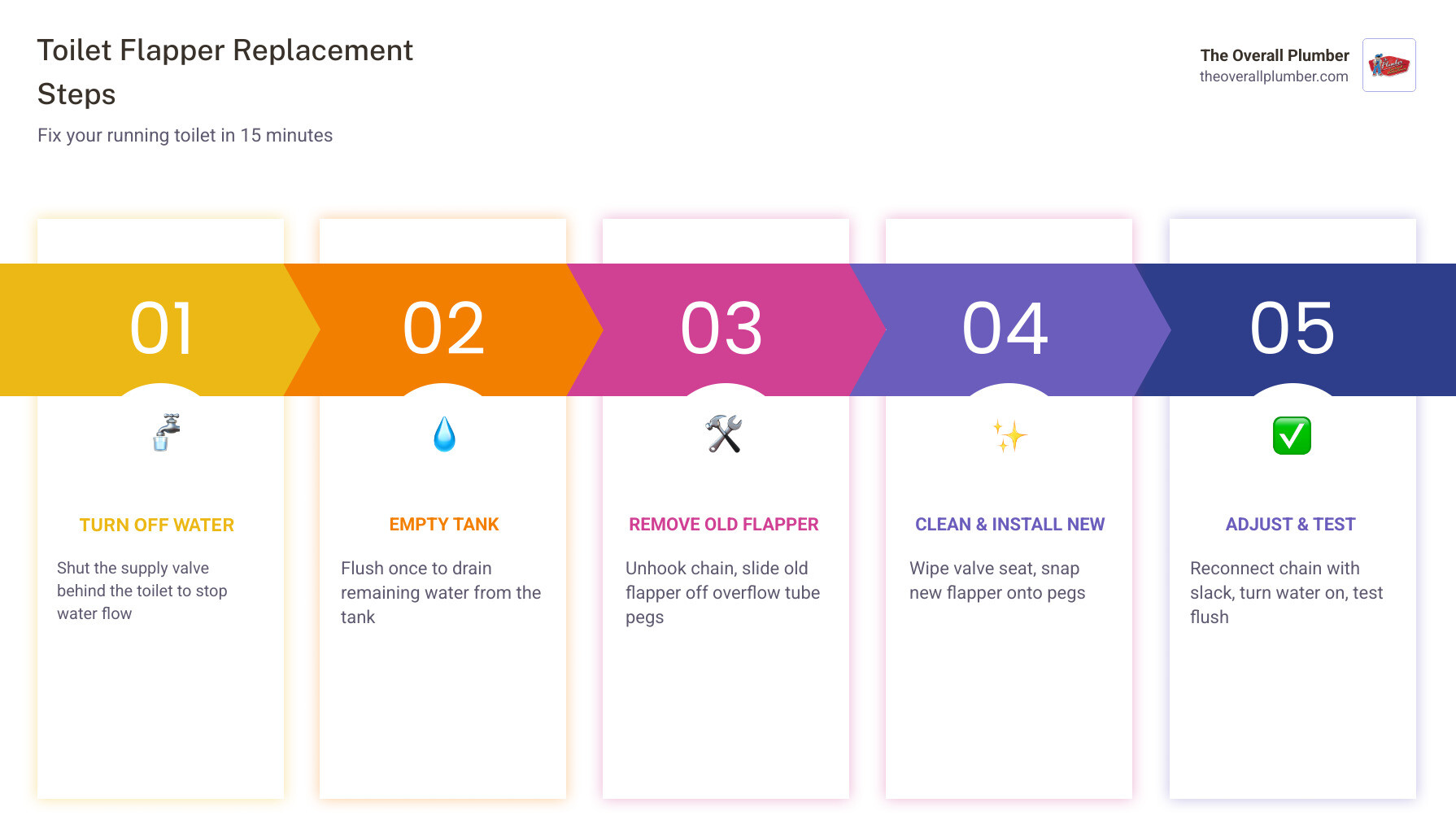
Here’s how to replace a toilet flapper fast:
- Turn off the water supply valve behind the toilet
- Flush to empty the tank
- Unhook the chain from the flush lever
- Slide the old flapper off the overflow tube pegs
- Wipe the valve seat clean
- Snap the new flapper onto the pegs
- Reconnect the chain with a little slack
- Turn the water back on and test the flush
That’s it. If your toilet is running, making noise, or flushing on its own, the flapper is almost always the cause. A worn or warped flapper can waste up to 200 gallons of water per day — and cost you hundreds of dollars a year on your water bill.
This guide walks you through every step, from spotting the problem to choosing the right part and installing it correctly.
I’m Dayton Whitworth, a second-generation plumber serving Houston and the Gulf Coast, and I’ve replaced countless flappers as part of routine toilet repairs for homeowners dealing with exactly this kind of silent water waste. Keep reading for everything you need to get this flapper replacement toilet fix done right the first time.
Signs You Need a Flapper Replacement Toilet Project
It is late at night in your home in League City or Pearland, and you hear it: a faint, eerie, hissing sound coming from the bathroom. No, your house isn’t haunted. What you are hearing is a running toilet, and the most likely culprit is a degraded toilet flapper.
The toilet flapper is the round, rubber disc at the bottom of your toilet tank. It acts as a gatekeeper, sealing the water inside the tank until you press the flush handle. When you flush, the lift chain pulls the flapper up, allowing water to rush into the bowl. Once the tank empties, the flapper settles back down over the flush valve seat, sealing it so the tank can refill.
Over time, constant exposure to water, harsh minerals, and chemical cleaners causes this rubber seal to warp, crack, or become brittle. When this happens, water silently trickles out of the tank and down into the bowl.
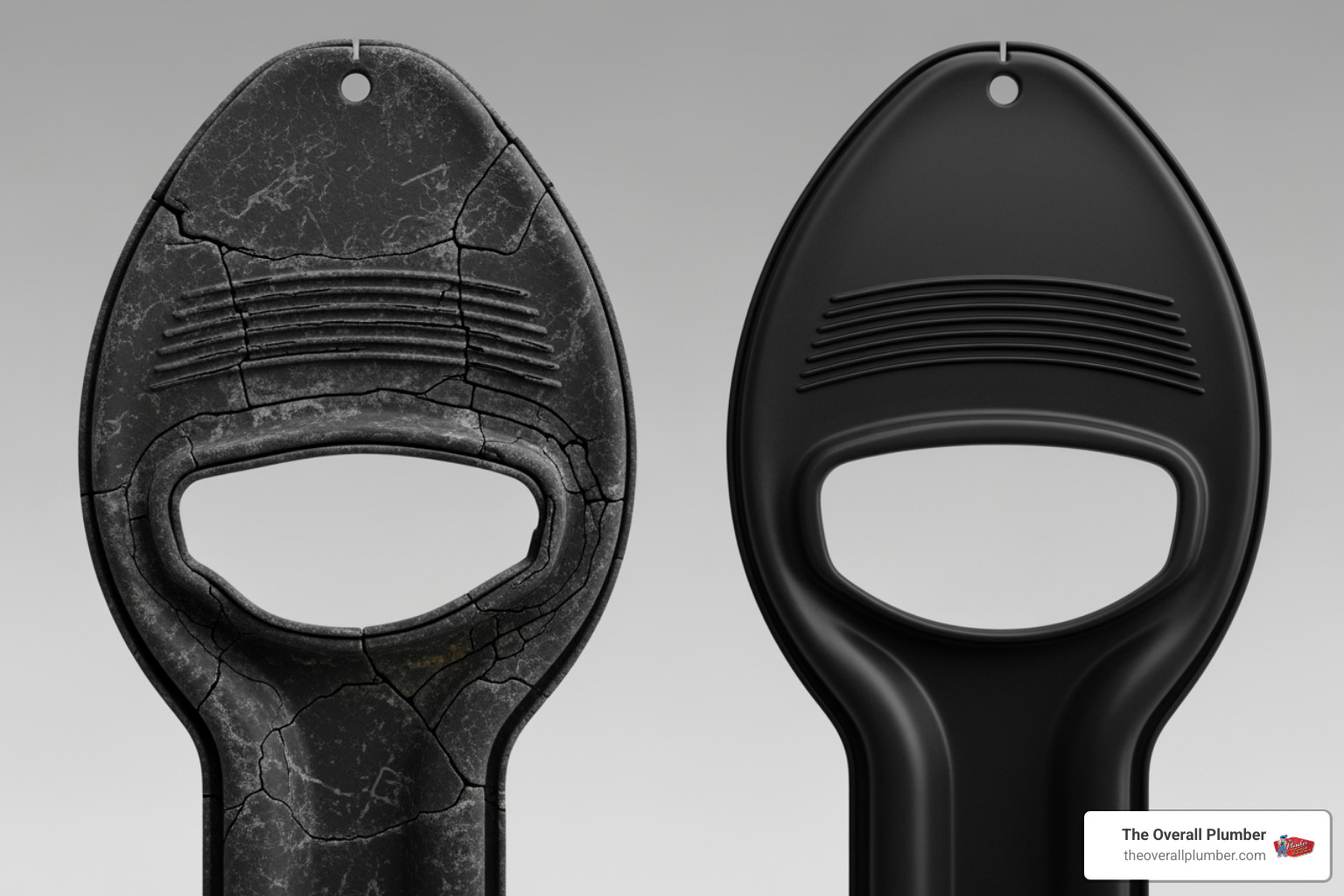
Here are the most common signs that it is time for a flapper replacement toilet project:
- The Toilet Runs Constantly: If your toilet never seems to stop running, or if it cycles on and off every few minutes, your flapper is failing to create a tight seal.
- Ghost Flushing: Have you ever heard your toilet flush itself when no one is in the room? This happens because water has slowly leaked out of the tank through a bad flapper. Once the water level drops below a certain point, the float trigger activates the fill valve to top off the tank, creating a spooky “ghost flush.”
- Rippling Water in the Bowl: Look closely at the water inside your toilet bowl when the toilet is idle. If you see constant ripples or tiny streams of water running down the sides of the bowl, water is escaping past the flapper.
- Spiking Water Bills: A warped or poorly fitting flapper can waste up to 200 gallons of water a day. If you live in Galveston County or Harris County and notice your water bill creeping up unexpectedly, a leaking flapper is the prime suspect.
- The Jiggle Test: If you have to jiggle the flush handle to make the toilet stop running, the lift chain or the flapper itself is getting hung up. For more details on handle-related issues, check out our guide on how to fix a toilet handle loose situation.
How to Diagnose a Leaky Flapper (The Dye Test)
Before you head out to buy parts, you can easily confirm if the flapper is the source of your leak by performing a simple dye test. This test takes only a few minutes and requires no tools.
- Remove the toilet tank lid carefully and set it aside on a towel.
- Add 10 to 15 drops of food coloring (dark blue, red, or green work best) or a dye tablet into the water in the toilet tank. Do not flush the toilet.
- Wait 10 to 15 minutes.
- Look into the toilet bowl. If you see colored water seeping into the bowl, you have a leak. Because the flapper is the primary seal between the tank and the bowl, this confirms your flapper needs to be replaced. For a deeper look at this diagnostic process, you can read more on how to replace a toilet flapper in under 15 minutes – Home Plumbing Solutions.
Choosing the Right Replacement Flapper
Once you have confirmed that your flapper is leaking, the next step is selecting the proper replacement. Walk into any hardware store in Pasadena or Santa Fe, and you will find an entire aisle of toilet repair parts. Choosing the wrong one can lead to improper flush volumes, weak flushes, or a seal that still leaks.
To help you navigate your options, here is a quick comparison of the primary flapper designs:
| Flapper Feature | Solid Frame Flapper | Flexible Frame Flapper |
|---|---|---|
| Structure | Rigid plastic arms that do not bend. | All-rubber body that is highly pliable. |
| Best For | Standard 2-inch flush valves with mounting pegs. | Oversized valves or flush valves without pegs (uses an adapter ring). |
| Pros | Prevents twisting or misalignment; drops straight down every time. | Highly adaptable; fits a wider variety of older toilet configurations. |
| Cons | Will not fit flush valves that lack mounting pegs. | Can occasionally twist if the lift chain is pulled at an angle. |
When shopping, look for high-quality, durable options. For standard older toilets, a sturdy option like the Fluidmaster 501 Universal Solid Frame 2″ Flapper is excellent because the rigid frame prevents twisting. If you have a highly chlorinated water supply or use chemical tank cleaners, choosing a specialized, long-lasting option like the Korky 2″ Ultra 2X® Long Life High Performance Toilet Flapper will save you from doing this repair again anytime soon.
Sizing Your Flapper Replacement Toilet Part
The most critical factor in choosing a flapper replacement toilet part is the size of your flush valve.
- 2-Inch Flappers: These are the most common size, found in almost all toilets manufactured before 2005. If your toilet uses 3.5 gallons per flush (GPF) or more, it almost certainly uses a 2-inch flapper.
- 3-Inch Flappers: Many high-efficiency toilets (HETs) built after 2005 use larger 3-inch or even 4-inch flush valves to move water into the bowl faster using less total water (such as 1.28 or 1.6 GPF).
How to measure: You can determine your size by measuring the diameter of the drain hole at the bottom of your tank. If the opening is roughly the size of a baseball or orange, you need a 2-inch flapper. If it is closer to the size of a grapefruit, you need a 3-inch flapper.
If you are unsure, look inside your toilet tank for the manufacturer’s name and model number, which is usually stamped in black ink on the back wall of the tank. You can also find helpful video tutorials on social media, such as this quick DIY Home Repair Guide on TikTok, to visualize the differences in tank components.
Material Options for a Flapper Replacement Toilet Seal
Water quality plays a massive role in how quickly your toilet parts degrade. In coastal Texas areas like Galveston and Texas City, tap water can contain minerals and treatment chemicals that accelerate rubber degradation.
- Standard Rubber: Budget-friendly but highly susceptible to chlorine, bacteria, and hard water.
- Chlorazone II / Advanced Polymers: Materials engineered specifically to resist chlorine, chloramines, and chemical cleaners. Brands like Korky use these advanced rubbers to extend the lifespan of the seal up to ten years.
- Microban Protection: Some flappers, such as the Fluidmaster 504 Universal Flexible Frame 2″ Flapper, have antimicrobial protection built directly into the rubber to combat mold, mildew, and premature breakdown.
If you want a quick universal option that you can pick up locally during a grocery run, you might look for options like the Plumb Craft Universal Fit Toilet Flapper Replacement at H-E-B. Alternatively, if you prefer ordering a multi-pack online to have spares on hand, you can find a 2-Pack 2-Inch Toilet Flapper Replacement Kit on Amazon.
Step-by-Step Guide to Replacing Your Toilet Flapper
Now that you have your replacement part, it is time to perform the installation. You won’t need any special plumbing tools for this project, though a rag or sponge and a pair of scissors to trim the chain can be helpful.
Step 1: Turn Off the Water Supply
Locate the shut-off valve on the wall behind or beneath your toilet tank. Turn the handle clockwise until it stops. If you have an older, stiff valve that won’t budge, do not force it, as it could snap and cause a major leak. If your valve is old, leaky, or completely stuck, you may need to learn about installing a new toilet shut-off valve to keep your home safe from water damage.
Step 2: Drain the Tank
Press the flush handle down and hold it there until almost all the water drains out of the tank. A small amount of water will remain at the bottom, which is perfectly fine.
Step 3: Disconnect the Old Flapper
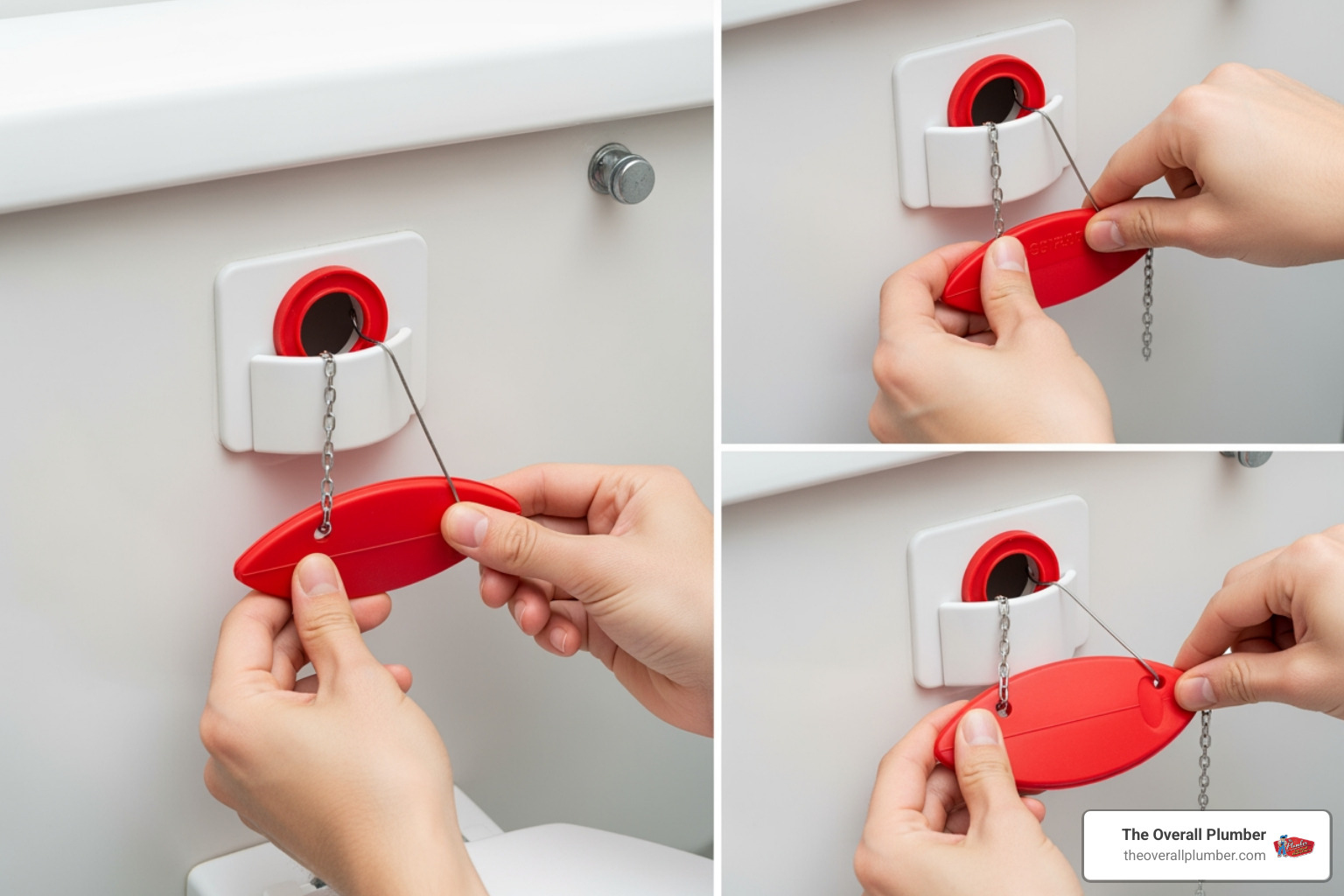
Unhook the lift chain from the flush lever arm. Next, locate where the flapper attaches to the vertical overflow tube. Slide the rubber ears of the flapper off the mounting pegs on either side of the tube. If your toilet uses an older style without pegs, your old flapper might be held in place by a ring that slides over the overflow tube; simply slide it up and off.
Step 4: Clean the Flush Valve Seat
Over time, algae, mineral scale, and rubber residue from the old decaying flapper can accumulate on the rim of the flush valve seat (the plastic or brass ring the flapper rests on). Take a damp rag or sponge and thoroughly wipe down this surface. A clean, smooth valve seat is absolutely essential for the new flapper to form a watertight seal.
Step 5: Install the New Flapper
Take your new flapper and align the rubber ears with the mounting pegs on the overflow tube. Push the ears onto the pegs until they snap or slide securely into place. If you are using a flexible frame flapper on a pegless tube, slide the adapter ring down over the overflow tube until it rests at the base.
Step 6: Connect the Lift Chain
Attach the new stainless steel chain to the flush lever arm. Make sure the chain hangs as vertically as possible above the flapper to ensure a straight upward pull when flushing.
Step 7: Turn On the Water and Test
Turn the shut-off valve counterclockwise to restore water to the tank. Let the tank fill completely. Flush the toilet a few times to observe the flapper’s movement. Watch to make sure it opens fully, floats momentarily, and then drops straight down to seal the drain without getting caught on the chain or the overflow tube.
Adjusting the Flapper Chain Length
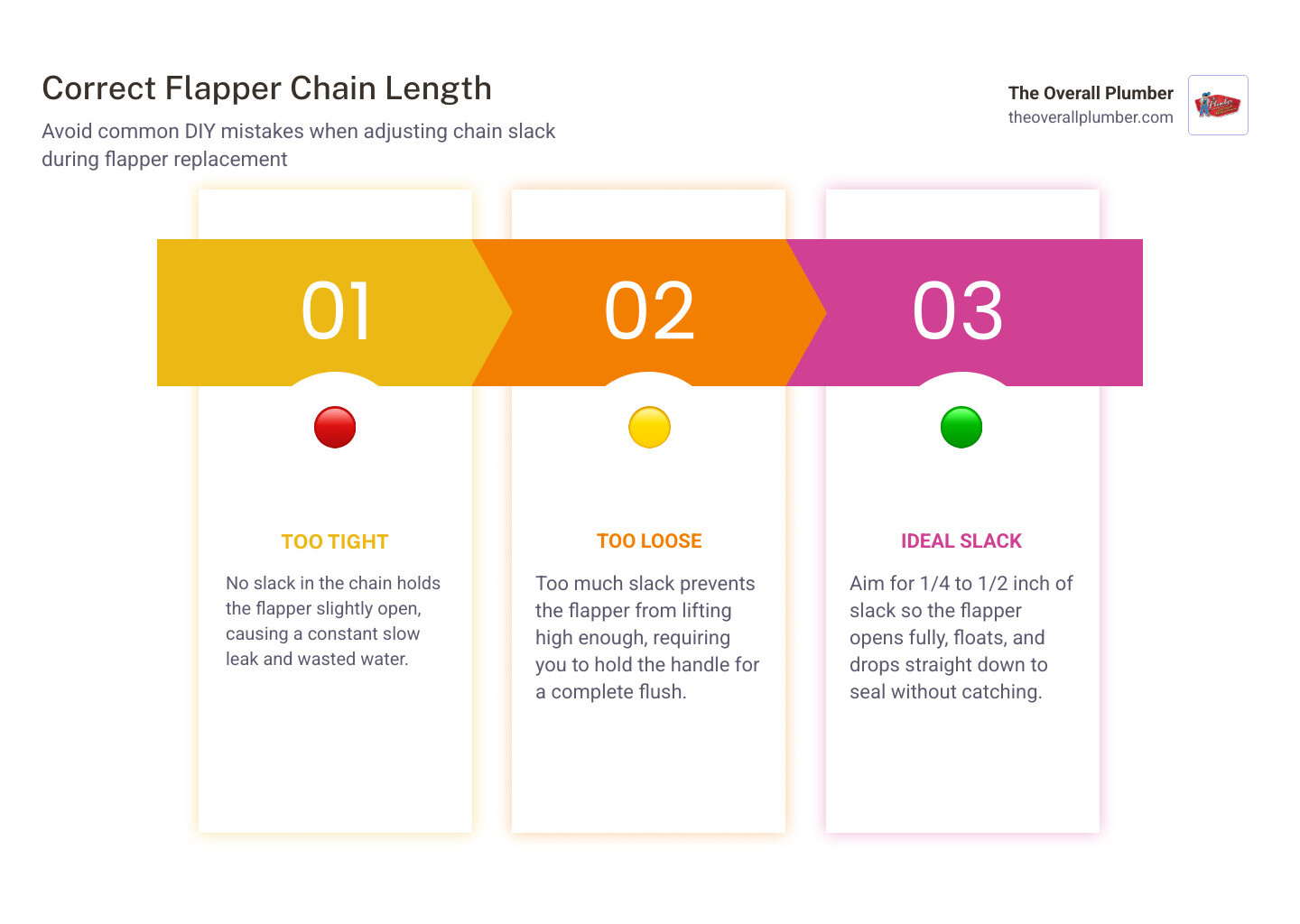
One of the most common mistakes DIYers make during a flapper replacement toilet project is setting the lift chain to the wrong length.
- If the chain is too tight (not enough slack): The chain will hold the flapper slightly open, preventing it from sealing completely. This results in a constant, slow leak.
- If the chain is too loose (too much slack): When you push the flush handle, the lever will lift the chain, but the flapper won’t raise high enough to float. You will have to hold the handle down to get a complete flush.
Ideally, you want about 1/4 inch to 1/2 inch of slack in the chain when the flapper is fully closed. If your new flapper has an adjustable dial, like the Korky 2″ Ultra High Performance Toilet Flapper, you can rotate the band to adjust how quickly the flapper closes. This is incredibly helpful for fine-tuning your flush volume to prevent double-flushing or weak flushes.
Troubleshooting and Preventing Future Toilet Leaks
If you have completed the installation but still hear water running, don’t panic. There are a few common issues that can cause persistent leaks:
- Corroded Valve Seat: If your flush valve seat is made of brass or old plastic, it can become pitted or corroded. No rubber flapper, no matter how new, can seal against an uneven, rough surface. If cleaning it doesn’t work, you may need to install a repair seat kit or replace the entire flush valve assembly.
- Kinked Chain: Ensure your chain is not catching on the handle rod or twisting. For older toilets, using a solid frame flapper like the Fluidmaster 506 Universal Flexible Frame 2″ Flapper can prevent alignment issues.
- Worn Tank-to-Bowl Gasket: Sometimes, what looks like a flapper leak is actually a failing seal beneath the tank. If you notice water pooling on the floor beneath the tank, you may need to read our guide on replacing a toilet seal to stop the dampness before it ruins your subfloor.
- Severe Clogs: If your toilet is running because of a backup further down the sewer line, you might need to learn how to unclog a toilet with a snake to restore proper flow.
To maximize the life of your new flapper, avoid using drop-in chemical bleach tablets inside the tank. While they keep the bowl clean, the highly concentrated chlorine sits in the tank water and eats away at rubber seals, plastic valves, and metal chains, causing them to fail prematurely.
Frequently Asked Questions About Toilet Flappers
How long does a toilet flapper last?
On average, a standard toilet flapper lasts between 3 to 5 years. However, this lifespan can be cut down to a year or less if you use harsh chemical tank cleaners or if your municipal water supply has high levels of chlorine or hard minerals. Under current May 2026 residential maintenance standards, we recommend checking your toilet tank components once a year for signs of softening, blistering, or warping.
Why is my toilet still running after replacing the flapper?
If your toilet continues to run after a flapper replacement toilet project, check the following:
- The chain is too tight: It is keeping the flapper suspended slightly above the seal.
- The valve seat is dirty or damaged: Clean it again, or check for physical cracks or mineral buildup.
- The refill tube is positioned incorrectly: The small rubber tube running from the fill valve should clip to the top of the overflow pipe, not be shoved deep down inside it, which can create a siphon effect.
Can I use in-tank bleach tablets with a new flapper?
We strongly advise against using drop-in chemical bleach tablets. The concentrated chlorine damages the rubber compounds of the flapper, causing it to warp and fail. In fact, using these chemical tablets will void the warranty on almost all major toilet fill valves and flappers. Instead, use bowl-clip cleaners or hands-free systems that inject cleaning solution directly into the bowl rather than letting it sit in the tank. You can learn more about proper toilet care by watching instructional videos, like this helpful municipal discussion on worn-out toilet flappers on Facebook.
Professional Plumbing Help When You Need It
While replacing a toilet flapper is an incredibly straightforward DIY task, sometimes toilet issues run deeper. If you have replaced the flapper and your toilet is still constantly running, leaking onto your bathroom floor, or if you suspect your entire toilet assembly is ready for an upgrade, our team at The Overall Plumber is here to help.
We proudly serve homeowners throughout Brazoria County, Houston, Clear Lake, Santa Fe, League City, Texas City, La Porte, Friendswood, Pearland, Pasadena, and Galveston. We provide professional toilet replacement services with satisfaction guarantees, priority scheduling, and absolutely no overtime fees or trip charges.
If you are considering upgrading to a modern, high-efficiency toilet, take a look at our toilet installation cost guide to find an option that fits your household budget perfectly. Call us today at (281) 668-8055 to speak with a professional plumber.