

Is a Sewer Line DIY Attempt Worth It? Here’s the Quick Answer
A sewer line DIY attempt can make sense in very limited situations — but most of the time, it leads to bigger problems and higher costs. Here’s a fast breakdown:
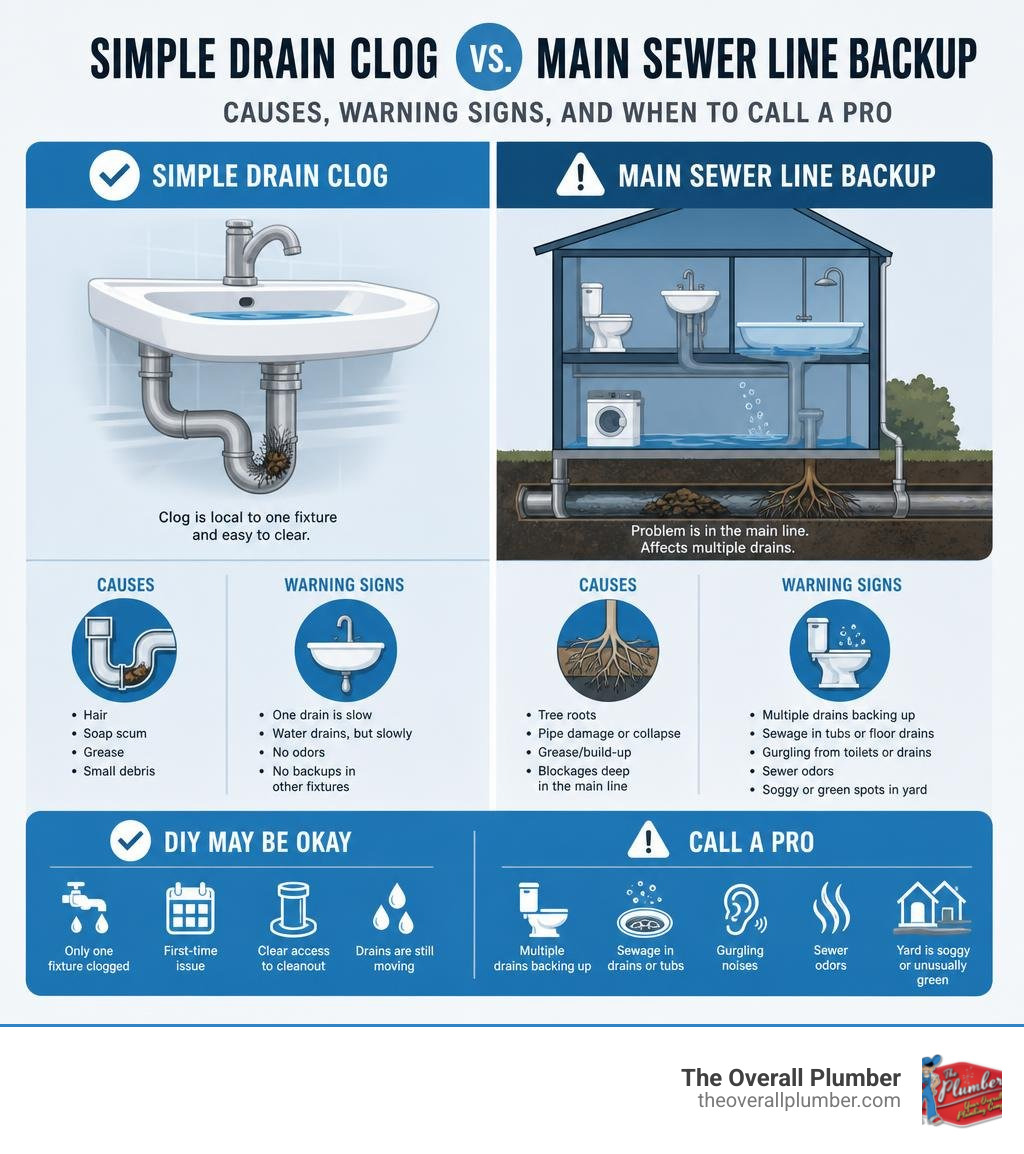
When DIY is reasonable:
- Only one fixture is slow or clogged
- It’s a first-time issue (not recurring)
- No sewage is backing up into drains
- You have safe, clear access to the cleanout
- The clog seems minor and drains are still moving
When you must call a professional:
- Multiple drains are backing up at the same time
- Sewage is appearing at floor drains or basement tubs
- You hear gurgling from toilets or drains
- The clog keeps coming back
- You notice sewer odors throughout the home
- There are soggy or unusually green patches in your yard
You don’t think about your sewer line until it backs up into your tub or basement floor drain. Then it becomes an emergency fast. And when that happens, the temptation to grab a snake or pour something down the drain is completely understandable.
But here’s the reality: DIY drain cleaning attempts cause an estimated $1.2 billion in preventable pipe damage every year in the United States. One wrong move — forcing an auger too hard, using the wrong chemical, or misjudging the severity of the clog — can turn a $300 fix into a $3,000 repair.
This guide will help you figure out exactly when it’s safe to try clearing a sewer line yourself, and when you need to put the tools down and call a licensed plumber.
I’m Dayton Whitworth, a second-generation plumber serving Greater Brazoria County, Galveston County, Houston, and the surrounding Gulf Coast, with hands-on experience diagnosing everything from minor sewer line DIY attempt failures to full main line collapses. I’ve seen how quickly a small clog can become a structural problem when handled incorrectly.
Understanding the Risks of a Sewer Line DIY Attempt
When faced with a stubborn backup, grabbing a shovel, renting a heavy-duty drain snake, or dumping a gallon of chemical cleaner down the pipe can feel like an empowering, money-saving choice. However, an amateur sewer line DIY attempt often introduces severe, expensive, and outright dangerous complications that far outweigh the cost of professional service.
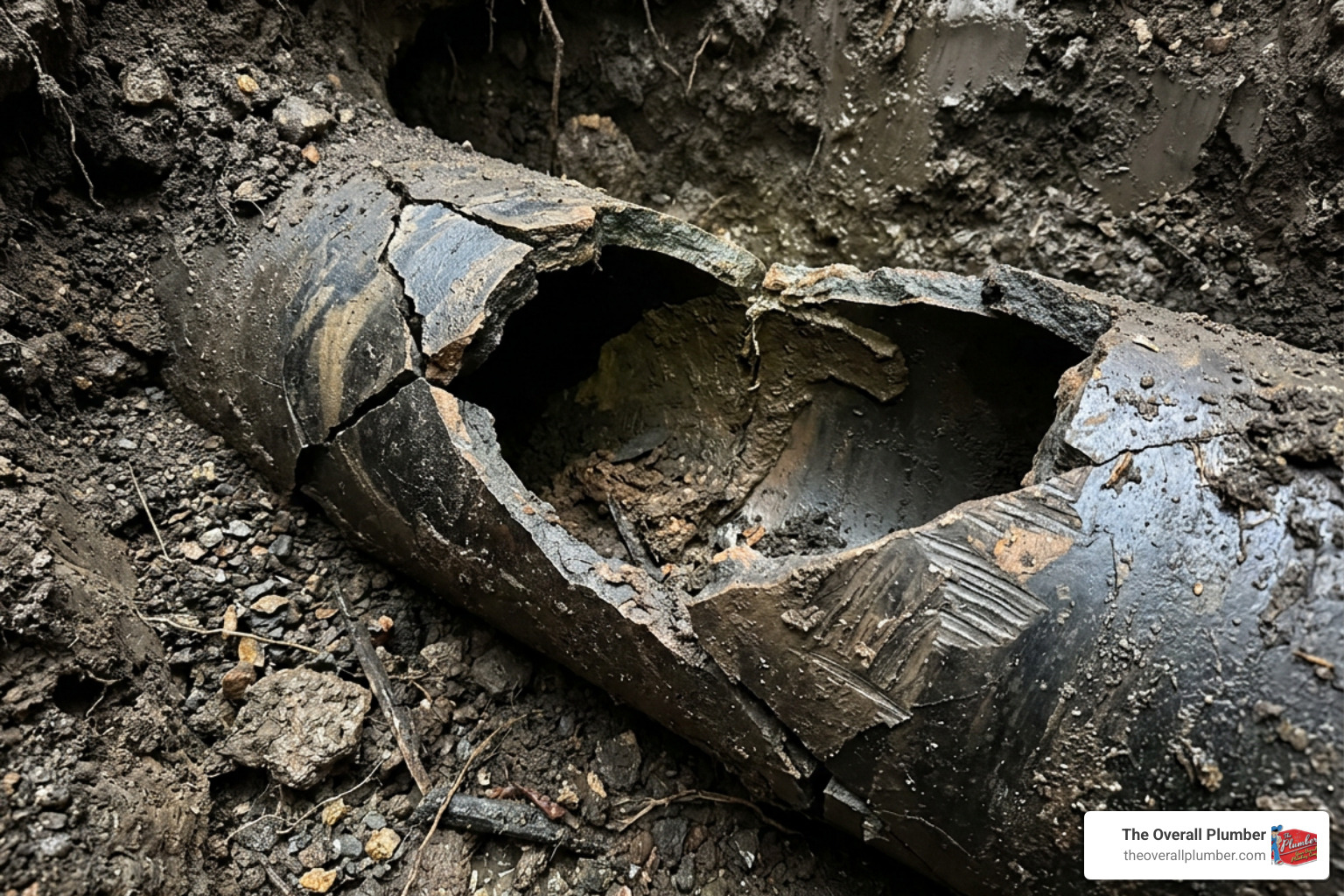
First and foremost is the very real threat of physical pipe destruction. Many homes across Houston, Pasadena, and Pearland still rely on older, fragile pipe materials like cast iron, clay, or Orangeburg (bituminized fiber). If you push a heavy-duty rental drain snake through these delicate lines with too much force, you can easily crack the pipe walls, punch holes through rusted cast iron, or completely collapse an already weakened pipe.
Chemical drain cleaners are another major culprit. These harsh acids and caustic bases generate intense heat and chemical reactions designed to eat through organic matter. Unfortunately, they also eat through your plumbing. When poured into a completely blocked line, these chemicals sit in one spot, corroding your metal pipes or softening plastic PVC joints, eventually causing hidden leaks behind walls or deep underground.
Beyond the physical pipes, we must talk about the severe health and safety hazards of handling raw sewage. Wastewater is a breeding ground for dangerous pathogens, including E. coli, Salmonella, and Hepatitis A. When an amateur cleanout cap is opened under pressure, raw sewage can spray outward, contaminating your skin, eyes, and surrounding property.
Furthermore, sewer lines trap highly toxic and combustible gases. Methane and hydrogen sulfide can accumulate in drains and cleanouts. Inhaling these gases can cause immediate dizziness, nausea, or even loss of consciousness. If you want to dive deeper into how these issues spiral out of control, read our guide on Sewer Line Problems And How To Avoid A Total Washout.
There are also significant legal, regulatory, and financial risks associated with a failed sewer line DIY attempt. In many Texas Gulf Coast municipalities, such as League City, Santa Fe, and Galveston, major sewer repairs require official trade permits and must pass physical site inspections before they can be buried. Attempting to dig up and patch your own line without a permit can result in heavy municipal fines.
Additionally, most homeowner insurance policies have strict clauses regarding negligence. If your insurer discovers that a massive sewage flood or structural foundation issue was caused by an unpermitted, amateur repair attempt, they will likely reject your insurance claim.
Worst of all, DIY excavation carries the risk of hitting buried utility lines. Striking a underground gas line or electrical conduit with a shovel or rented excavator can cause catastrophic neighborhood emergencies, leaving you financially liable for thousands of dollars in utility repairs. To understand the full scope of these liabilities, review this analysis on the Risks of DIY Sewer Line Repairs.
Common Causes and Warning Signs of a Main Sewer Line Blockage
Before you can decide whether to attempt a fix, you must understand what you are dealing with. A main sewer line is the single highway that carries all wastewater from your toilets, sinks, showers, and washing machines out to the municipal sewer system or your private septic tank. When this main artery is blocked, the entire home is affected.
To help you determine whether your issue is a simple, localized clog or a deep main sewer line emergency, we have put together this comparison table:
| Symptom | Localized Drain Clog | Main Sewer Line Blockage |
|---|---|---|
| Scope of Problem | Affects only one sink, tub, or toilet. | Affects multiple plumbing fixtures simultaneously. |
| Fixture Reactions | Running water in the sink has no effect on other drains. | Flushing a toilet causes water to bubble up in the shower or tub. |
| Gurgling Sounds | Occurs only at the clogged sink or drain. | Heard coming from toilets or floor drains throughout the house. |
| Odors | Minimal or localized to the food trap under the sink. | Strong, persistent sewage smells rising from multiple drains. |
| Lawn Changes | No visible changes to your property’s exterior. | Soggy, smelly, or unusually lush green patches over the sewer path. |
Understanding what causes these main line blockages can help you prevent them. In our coastal Texas region, several common culprits lead to major blockages:
- Tree Root Intrusion: Tree roots are responsible for approximately 50% of all residential sewer line blockages. Roots naturally seek out moisture and nutrients, finding their way into sewer lines through tiny hairline cracks or joint gaps. Once inside, they grow into dense, woody masses that completely choke off the flow of waste.
- Grease and Fat Buildup: Pouring warm cooking grease, oil, or fat down your kitchen sink is a recipe for disaster. As the grease cools, it solidifies along the pipe walls, catching hair, soap scum, and toilet paper until a rock-hard barrier forms.
- “Flushable” Wipes and Hygiene Products: Despite what the packaging claims, baby wipes, cleaning wipes, and feminine hygiene products do not break down in water like toilet paper. They remain intact, snagging on pipe imperfections and creating massive, solid blockages.
- Pipe Scale and Corrosion: Over decades, hard water minerals and rust build up inside cast-iron pipes, narrowing the internal diameter and creating a rough surface that snags passing debris.
Knowing where your lines run is crucial to diagnosing these issues. If you aren’t sure where to look, check out our step-by-step instructions in Sewer Lines 101 How To Locate Them to find your main cleanout access.
When a Sewer Line DIY Attempt Makes Sense
There are very specific, narrow scenarios where it is reasonable and safe for a homeowner to attempt a basic sewer cleanout. If you are experiencing a slow drain at a single fixture, and it is a first-time or highly infrequent issue, you can try some light troubleshooting.
First, ensure you have safe, clear access to your main sewer cleanout — usually a white PVC or black cast-iron pipe with a threaded cap sticking out of the ground near your foundation. If the cleanout is dry and has no standing water inside, the clog is likely localized to that single indoor pipe, rather than the main sewer line.
In this situation, you can attempt to use a simple, manual hand snake or a plunger. Always stand to the side when opening a cleanout cap, unscrewing it slowly in case there is backed-up pressure behind it. Gently feed the manual snake cable into the line until you feel mild resistance, then rotate the crank to catch and retrieve the hair or soap clog.
Never use power-assisted or truck-mounted rental snakes unless you have professional training. For a visual demonstration of how to safely access and handle a minor cleanout, you can watch this instructional guide on How To Clean A Main Line Sewer Blockage.
Red Flags That Mean You Must Stop Your Sewer Line DIY Attempt
You must know when to put down the wrench and step away. If your DIY efforts cross into any of the following “red flag” territories, continuing will only guarantee extensive property damage and a much higher repair bill:
- Multiple Backed-Up Fixtures: If using your washing machine causes water to pool in your master shower, or if flushing the toilet pushes raw sewage into your bathtub, the main line is fully blocked. Stop running all water immediately.
- Sewage in the Lowest Drains: If raw sewage is actively rising up through your basement floor drains, downstairs shower pans, or low-lying tubs, the system is backed up past its capacity.
- Extreme Resistance on the Snake: If you are feeding a plumbing snake into the cleanout and hit a hard barrier, do not try to force it. Forcing the cable can kink the steel line, trap your rental tool permanently inside the pipe, or smash through a fragile clay or cast-iron pipe joint.
- Recurring Backups: If you successfully snaked your line last week, but the exact same backup has returned today, you are not dealing with a simple clog. You likely have a structural issue, such as a collapsed pipe section, a severe sag (belly) in the line, or aggressive tree root intrusion that a basic snake cannot clear. To learn more about why temporary fixes fail so quickly, read our detailed breakdown: Sewer Line Backing Up Days After Snaking Here Is The Dirty Truth.
Professional Tools vs. DIY Equipment
The tools available to average homeowners at local hardware stores or rental yards are fundamentally different from the medical-grade diagnostic and cleaning equipment used by licensed plumbing specialists. Trying to clear a deep main line blockage with consumer-grade gear is like trying to perform surgery with a pocketknife.

The most critical tool in a professional’s arsenal is the high-resolution sewer inspection camera. These specialized, waterproof cameras are attached to flexible steel push-rods, allowing us to travel up to 400 feet inside your sewer pipes. As the camera moves through the line, it transmits real-time, high-definition video to a monitor, allowing us to see the exact cause, depth, and severity of the issue — whether it is a solid grease block, a cracked joint, or tree roots.
Without this visual diagnosis, any DIY attempt is completely blind guesswork. You can read more about how this technology saves you money in The Homeowners Guide To Sewer Camera Inspections.
When it comes to actually clearing the line, professionals rely on state-of-the-art hydro-jetting machines. While a standard rental snake merely punches a small hole through a soft clog, a hydro-jetter uses a specialized pump to blast water through the pipe at pressures up to 4,000 PSI.
This high-pressure water is delivered through rotating nozzle heads that scrub the entire inner diameter of the pipe clean. It completely pulverizes tree roots, slices through hardened grease, and strips away years of built-up mineral scale, restoring the pipe to its original flow capacity.
Because of the extreme pressures involved, hydro-jetting requires careful calibration based on the pipe’s material and age; otherwise, it can easily blow apart weakened pipe joints. For a deeper look at how this process works, see The Ultimate Guide To Drain Line Jetting.
Trenchless Pipe Lining: The Modern Alternative to Excavation
In the past, if a sewer camera inspection revealed a cracked, leaking, or root-damaged sewer line, the only solution was traditional excavation. This meant bringing heavy backhoes into your yard, tearing up your beautiful landscaping, destroying concrete driveways, and digging a massive, muddy trench from your house to the street.
The process was incredibly disruptive, took up to a week to complete, and left homeowners with thousands of dollars in yard restoration costs.
Fortunately, modern plumbing technology has given us a much better option: trenchless pipe lining, specifically Cured-in-Place Pipe (CIPP) lining. This innovative, “no-dig” technology allows us to completely rehabilitate your damaged sewer line without tearing up your lawn or breaking your concrete.
The process is remarkably elegant. First, we thoroughly clean the existing pipe using hydro-jetting to remove all roots, scale, and debris. Next, we take a flexible, fabric liner saturated with a high-strength, epoxy resin and insert it into the old pipe through an existing cleanout access point.
Once the liner is in place, we inflate it using compressed air, forcing the wet epoxy resin against the inner walls of the old, damaged pipe. The resin is allowed to cure and harden, creating a brand-new, seamless, structural pipe inside the old one.
This new pipe-within-a-pipe is completely smooth, eliminating the joints where tree roots typically enter, and has an expected service life of 50+ years.
Best of all, because trenchless pipe lining eliminates the need for heavy excavation, it typically saves homeowners 30% to 50% on their total project costs by completely avoiding expensive landscaping, driveway, and patio reconstruction. To see why this modern method is the ultimate way to protect your property, read Why Trenchless Sewer Line Replacement Is The Best Way To Save Your Yard.
Frequently Asked Questions About Sewer Line DIY Attempts
Can I clear a main sewer line clog myself?
While you can safely resolve minor, shallow clogs near the surface of an accessible cleanout using a basic hand snake, you should not attempt to clear deep, structural, or recurring main sewer line clogs yourself.
Without professional diagnostic cameras and high-pressure cleaning equipment, you risk permanently damaging your pipes, exposing your family to hazardous pathogens, and facing expensive emergency repairs.
How do I know if my main sewer line is clogged or just one drain?
The easiest way to tell is by looking at how many fixtures are affected. If only your kitchen sink is slow, it is a localized clog.
However, if multiple drains across your home are backing up, if flushing your toilet causes water to rise in your shower, or if you hear constant gurgling sounds from your plumbing fixtures, the blockage is definitely located in your main sewer line.
Is hydro-jetting safe for a homeowner to do as a DIY project?
No. Hydro-jetting equipment operates at incredibly high pressures (up to 4,000 PSI) that can easily cause severe personal injury, slice through skin, or destroy older, fragile residential pipes if not calibrated correctly.
Hydro-jetting requires specialized training, precise pressure adjustments based on the pipe’s age and material, and professional-grade safety gear. It should always be left to licensed plumbing professionals.
Protect Your Home and Call the Sewer Line Experts
At The Overall Plumber, we understand how stressful a sewer line backup can be. That is why we are dedicated to providing the highest quality drain cleaning, camera inspections, and trenchless repair services across Houston, Pearland, League City, Friendswood, Galveston, and the surrounding communities.
We stand behind our work with ironclad satisfaction guarantees, priority scheduling, and a strict policy of no overtime fees and no trip charges. We believe in keeping your home safe, clean, and flowing smoothly without breaking your bank.
If you are dealing with a stubborn sewer backup in July 2026, don’t risk a costly DIY mistake. Contact the licensed specialists at The Overall Plumber today to Schedule Professional Sewer Line Repair or give us a call directly at (281) 668-8055 for fast, guaranteed service.