


What Does It Cost to Repipe a House?
In 2026, most U.S. homeowners can expect a whole-house repipe to cost $4,000 to $15,000. The biggest price drivers are the number of fixtures, pipe material, and how easily a plumber can reach the old lines. Before comparing quotes, check whether each price includes permits, inspections, and wall repairs. A lower plumbing quote may not be the lower total cost.
I’m Dayton Whitworth, a second-generation plumber serving homeowners across Houston and the surrounding Gulf Coast. At The Overall Plumber, I use clear, upfront estimates to help homeowners understand repiping cost and what each quote covers.
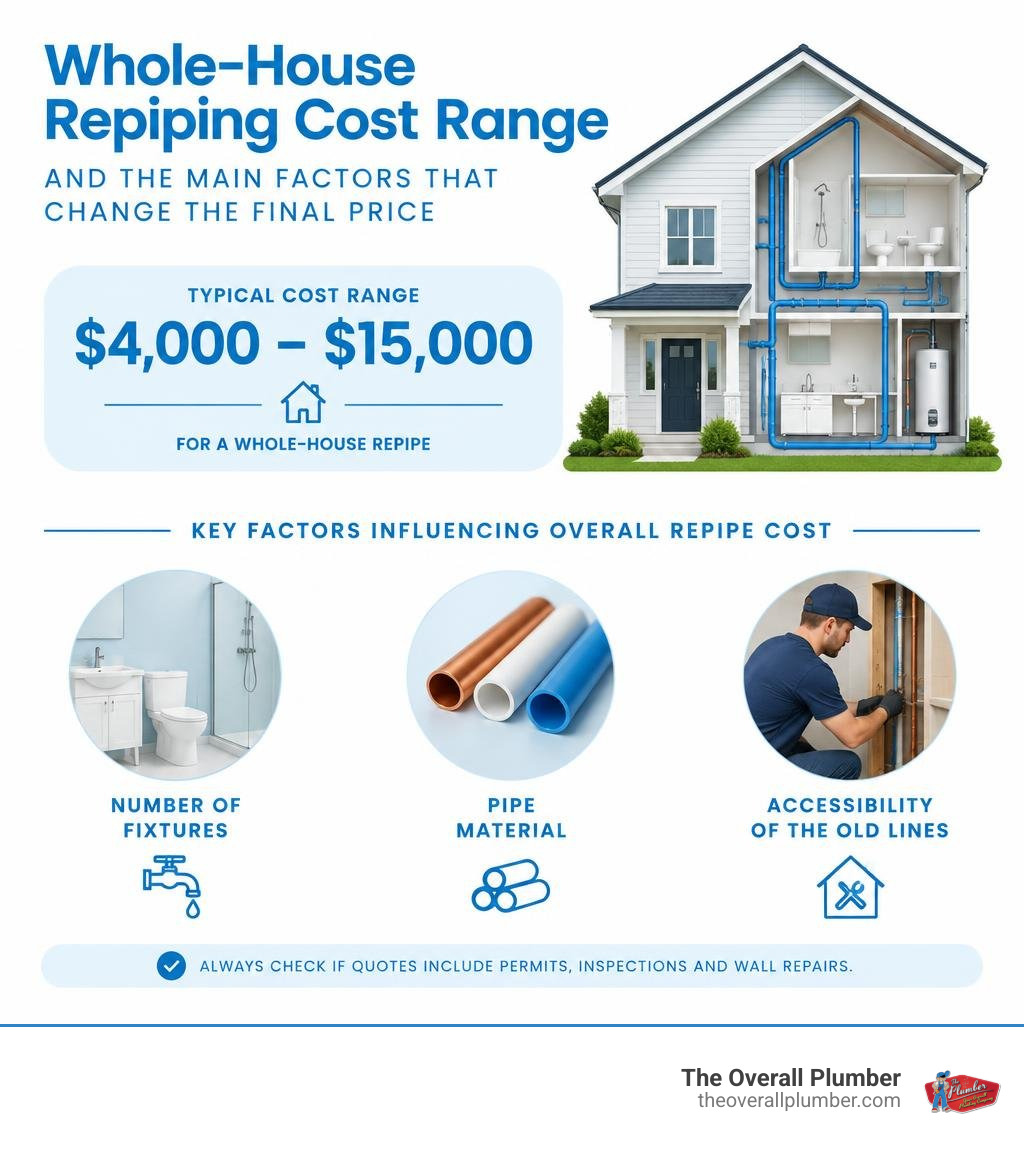
Key Factors Influencing Overall Repiping Cost
No two plumbing systems are identical. Across the country, a complete repipe can range from as little as $1,500 for small, straightforward layouts up to $15,000 or more for larger homes, with the typical project landing near $7,500 according to a national repiping cost guide. When calculating the final investment, several structural and logistical variables determine how much time, skill, and material your home requires.
Plumbing accessibility is often the biggest wild card. If your home sits on a crawl space or has an open, accessible attic, routing new supply lines is relatively straightforward. However, homes built on concrete slabs—very common across Houston, Pasadena, and Pearland—require plumbers to either tunnel under the foundation or run replacement lines overhead through attics and interior wall cavities.
Average Whole-House Repiping Cost by Square Footage
While overall square footage gives a helpful baseline, multi-story layouts and structural barriers change the total linear footage of pipe needed. Two-story homes require vertical runs between floors, demanding more labor and strategic drywall cuts than a single-story ranch of the identical square footage. Reviewing the cost to replumb a home in 2026 helps illustrate how footage and layout impact budgets:
| Home Size & Layout | Approximate Pipe Footage | Typical Cost Range (PEX) | Typical Cost Range (Copper) |
|---|---|---|---|
| Small Home / 1 Bath (under 1,200 sq ft) | 100 – 150 linear ft | $2,000 – $4,500 | $4,500 – $7,500 |
| Medium Home / 2–2.5 Baths (1,200 – 2,000 sq ft) | 150 – 250 linear ft | $4,000 – $7,500 | $7,000 – $11,500 |
| Large Home / 3+ Baths (2,000 – 3,500 sq ft) | 250 – 400 linear ft | $6,500 – $10,500 | $10,000 – $16,000 |
| Custom / Multi-Story (3,500+ sq ft) | 400+ linear ft | $9,000 – $15,000+ | $14,000 – $22,000+ |
Local market conditions also play a role. Whether you are pricing a project in Galveston County, looking at rates in League City, or reviewing pricing in Texas City, local permitting rules and foundation styles directly affect labor hours.
Material Breakdown: PEX vs. Copper Repiping Cost
Material selection creates an immediate split in overall project estimates. Rigid copper requires precision cutting, mechanical deburring, and torch soldering or specialized press-fittings at every turn. Flexible piping, by comparison, bends around framing members with continuous runs.
Understanding these differences is central to evaluating whole house repipe costs. On average, raw PEX tubing costs between $0.40 and $2.00 per linear foot, while copper pipe ranges from $2.00 to $8.00 per linear foot. Because PEX requires significantly fewer fittings and less time to snake through wall cavities, an installed PEX system typically runs $4,000 to $8,500, whereas an installed copper system for the identical home often runs $7,000 to $15,000.
Fixture Count and Labor Distribution
In residential plumbing, fixture count often influences labor more than square footage. Every dedicated point of use—including kitchen sinks, dishwashers, ice makers, toilets, showers, bathtubs, water heaters, and outdoor hose bibbs—demands individual supply runs, shutoff valves, and secure fixture tie-ins.
Labor represents roughly 70 percent of your total repiping bill. A home with four bathrooms and an outdoor kitchen requires substantially more labor than a large home with only two bathrooms. The tasks driving these labor costs include draining and isolating the old system, strategically cutting access holes, drilling framing plates, anchoring support brackets, pressure testing, and connecting valves.
Evaluating Pipe Materials: Durability, Lifespan, and Suitability
Selecting the right pipe material involves balancing up-front budget against water chemistry, local environmental factors, and expected service life.
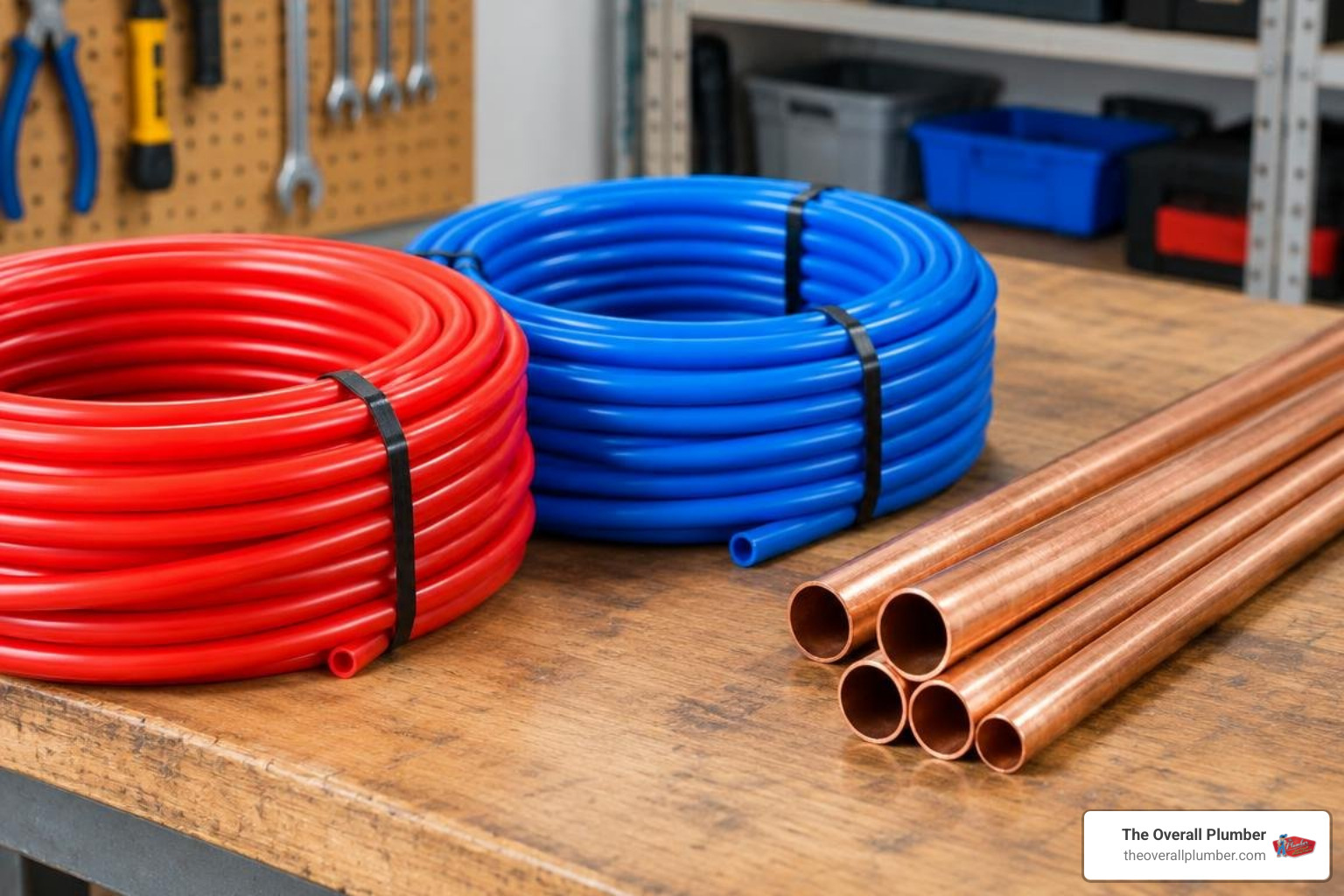
| Material | Material Cost / Linear Ft | Expected Lifespan | Best Water Conditions | Freeze Resistance |
|---|---|---|---|---|
| PEX (A/B) | $0.40 – $2.00 | 40 – 50+ years | Broad pH range, hard or acidic water | High (expands slightly before bursting) |
| Copper (Type L) | $2.00 – $8.00 | 50 – 70+ years | Neutral pH (7.0 – 8.0), low chloramines | Low (rigid metal bursts easily when frozen) |
| CPVC | $0.50 – $1.00 | 20 – 25 years | Neutral municipal water | Low (becomes brittle over time) |
PEX Tubing Performance
Cross-linked polyethylene (PEX) has become the residential standard for supply line retrofits. Its flexibility allows plumbers to pull lines through walls much like electrical wiring, drastically reducing the number of drywall cutouts needed.
PEX is naturally inert to hard water minerals and acidic water supplies, eliminating the risk of pitting corrosion. It also expands slightly if exposed to freezing temperatures, offering superior freeze resistance during cold snaps in areas like Friendswood and Santa Fe. Using a central manifold system allows dedicated lines to run directly to each fixture, providing balanced pressure throughout the home. Homeowners can read more about these benefits in our PEX plumbing installation guide.
Copper Piping Lifespan
Type L copper remains the gold-standard rigid piping option. It offers biostatic properties that naturally discourage bacterial growth inside the lines, resists UV degradation completely, and boasts a proven 50-to-70-year track record.
However, copper is vulnerable to low-pH acidic water and high concentrations of dissolved minerals, which can cause internal pitting and pinhole leaks over time. It also carries a higher material expense and requires longer installation timelines.
CPVC and Galvanized Pipe Considerations
Chlorinated polyvinyl chloride (CPVC) is an inexpensive rigid plastic alternative, but it presents distinct long-term drawbacks. Over decades of exposure to hot water and municipal disinfectants, CPVC tends to become brittle, making future modifications or emergency shutoffs prone to cracking.
Older homes often contain galvanized steel pipes, which corrode from the inside out and accumulate heavy mineral scale and rust. When older systems begin to fail, modernizing supply lines alongside cast iron pipe repair and PVC swaps ensures your entire plumbing network is protected for decades to come.
Spot Repair vs. Whole-Home Repipe: Identifying Systemic Pipe Failure
Knowing when to fix a single leak versus replacing the entire supply system saves thousands of dollars in water damage and repeated repair visits.
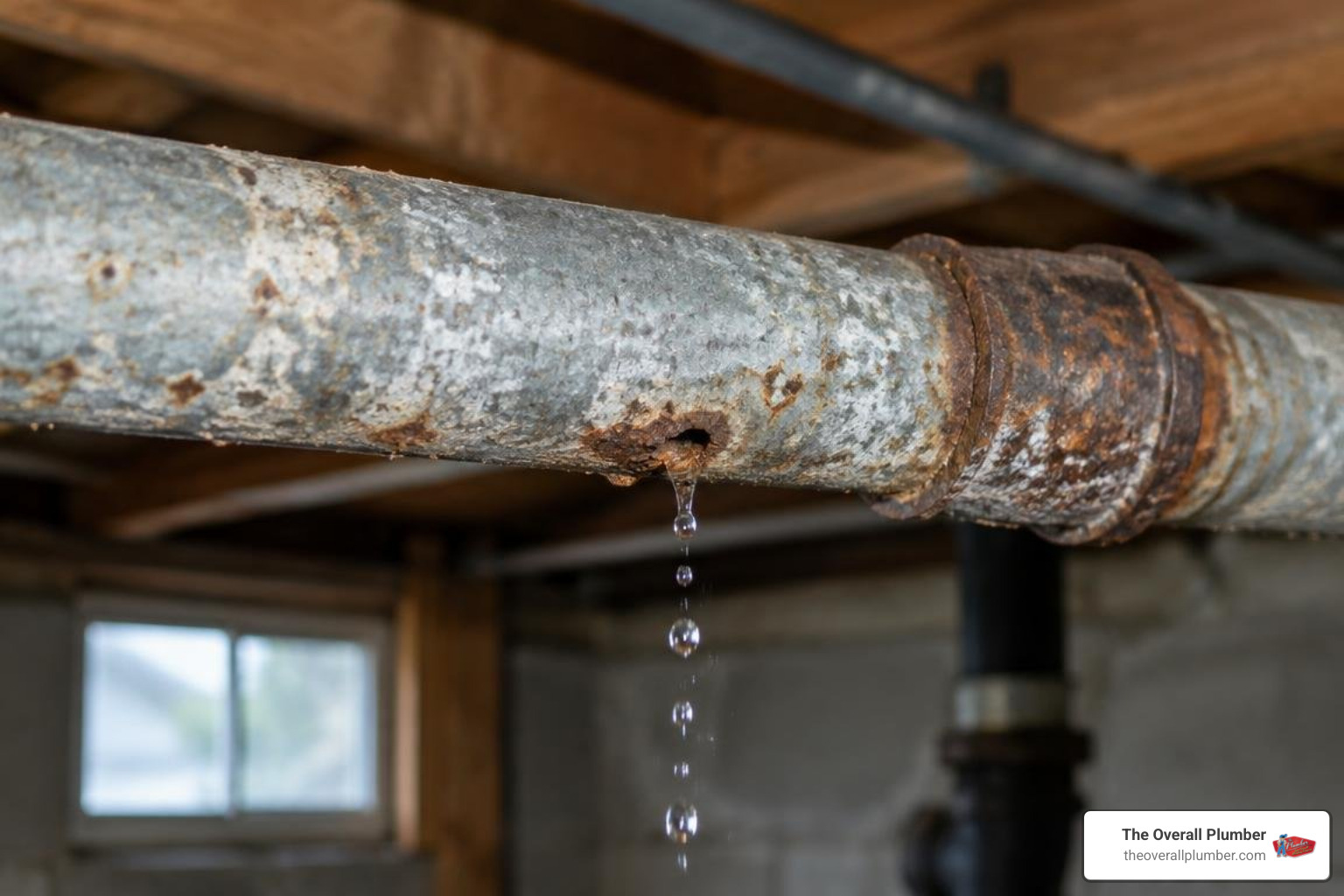
Warning Signs of Failing Plumbing
Plumbing failure rarely happens overnight. Look for these warning signs throughout your house:
- Discolored or Rusty Water: Brown, yellow, or reddish tint when you first turn on taps, indicating internal pipe rust.
- Dropping Water Pressure: Gradual pressure loss across multiple fixtures caused by mineral buildup choking pipe interiors.
- Persistent Pinhole Leaks: Multiple pinhole leaks appearing within a short time frame on copper or galvanized lines.
- Unexplained Moisture or Stains: Damp spots on drywall, warped baseboards, or warm spots on slab floors.
- Noisy or Banging Pipes: Severe rattling or water hammer caused by loose, degraded pipe supports and erratic line flow.
When multiple symptoms appear simultaneously, reviewing a practical guide to pipe replacement helps determine whether the failure is localized or widespread.
When Spot Repairs Cost More Long-Term
A single spot repair on an accessible line might cost a few hundred dollars. However, when pipes reach the end of their operational lifespan—typically 40 to 50 years for galvanized steel or failing copper—fixing one section simply shifts line pressure down to the next weakest point.
Chasing leaks with piecemeal patches creates cumulative plumbing bills, repeated drywall repairs, and continuous risk of catastrophic bursts that trigger expensive insurance claims. If your plumbing system is past its expected lifespan and experiencing recurring leaks, a planned whole-home repipe is the more economical, permanent solution.
Hidden and Additional Expenses in Home Replumbing
When budgeting for a plumbing replacement, you must account for secondary trades and municipal fees that go beyond raw pipe and fittings.
Drywall Repair, Painting, and Wall Restoration
Plumbers must cut small, strategic holes in drywall to access stud bays, shower valves, and connection points. Most plumbing contracts explicitly cover pipe installation, pressure testing, and cleanup, but exclude wall restoration.
Patching, taping, texturing, and painting these access openings generally adds $1,000 to $4,000 to your total project budget depending on wall finishes, ceiling heights, and paint matching. In cities like Houston, Clear Lake, and Pasadena, coordinating your plumbing team with an experienced drywall contractor ensures seamless restoration.
Permitting, Inspections, and Pipe Disposal
Legitimate repiping projects require municipal permits to ensure code compliance and homeowner safety:
- Plumbing Permits: City and county permit fees typically range between $50 and $500 depending on the project valuation and local fee schedules in Harris County or Galveston County.
- Code Inspections: A rough-in inspection and final pressure inspection are required by local building departments to verify proper installation before walls are closed.
- Pipe Disposal and Site Prep: Hauling away heavy scrap metal or degraded old pipes, combined with protective floor coverings, typically adds $100 to $500 to job overhead.
- Main Service Lines: If the connection between the municipal meter and the home is also failing, budgeting for main water line repiping alongside the interior replacement saves on consolidated equipment and labor fees.
Home Value, ROI, and Project Timelines
Upgrading aging plumbing delivers strong functional benefits and measurable return on investment when selling your home.
Resale Value and Return on Investment
Outdated plumbing systems, active leak histories, and polybutylene piping are common inspection dealbreakers during home sales. Unpermitted or failing plumbing frequently forces sellers into last-minute price reductions or repair concessions.
According to industry data on home improvement returns, whole-home repiping can recoup 60 to 80 percent of its cost at resale while eliminating buyer inspection friction. Upgrading your plumbing gives buyers confidence, lowers home insurance premiums, and removes major inspection obstacles.
Expected Project Duration and Household Disruption
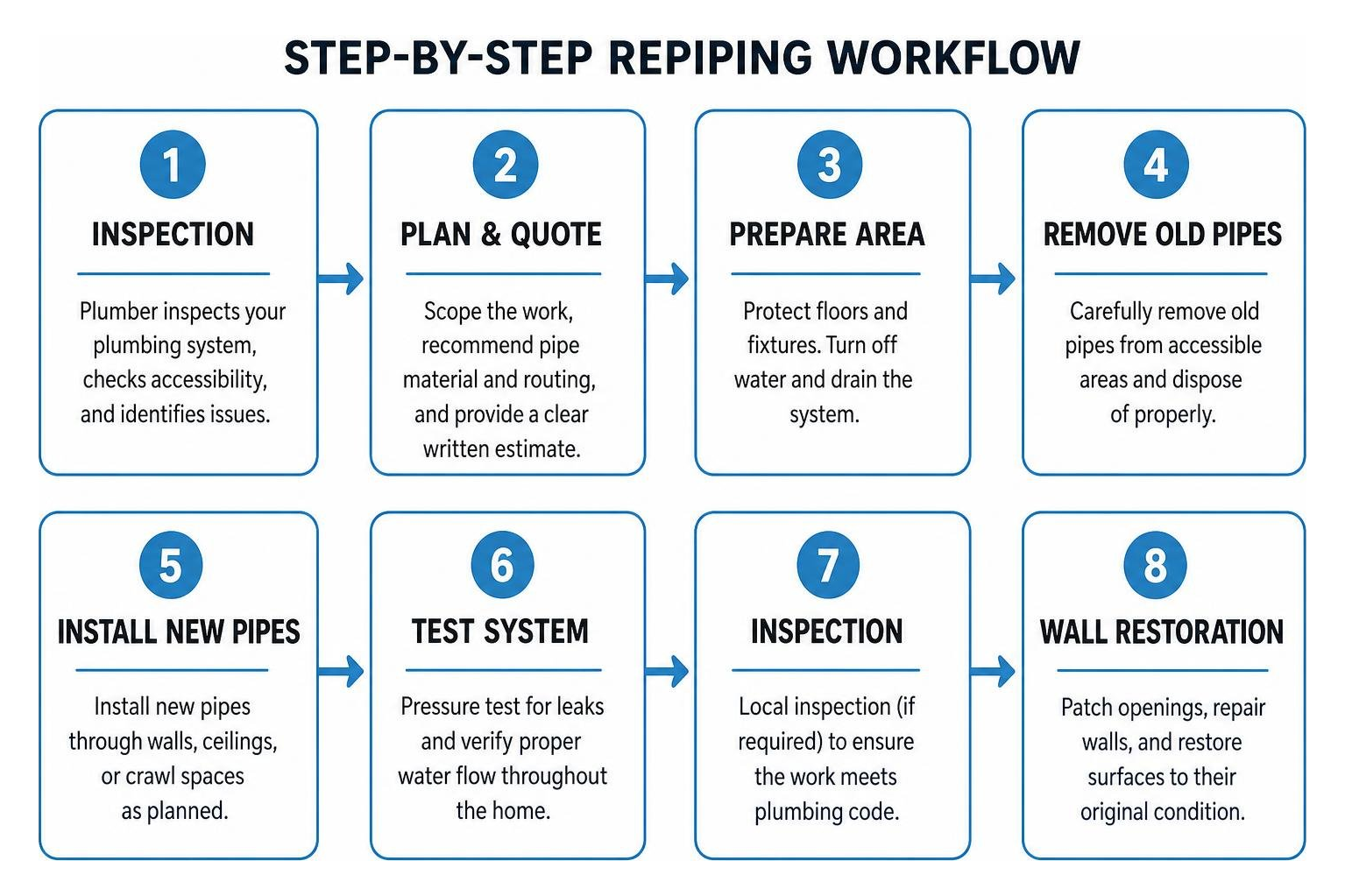
A professional whole-home repipe typically takes 2 to 5 business days:
- Day 1: Preparation & Rough-In: Floors and furniture are covered with protective drop cloths. Plumbers make targeted access cuts and begin pulling main trunk lines.
- Day 2–3: Branch Lines & Tie-Ins: Supply lines are routed to individual bathrooms, kitchens, and laundry areas. New shutoff valves and risers are installed.
- Day 4: Pressure Testing & Inspection: The new system is pressurized with air or water to pass rigorous municipal code inspections.
- Day 5: Tie-Over & Cleanup: The old system is permanently decommissioned, the new system is tied to the main supply, lines are flushed, and work areas are thoroughly cleaned.
Plumbing crews turn the main water supply back on at the end of each workday, ensuring your household retains working water and sanitation throughout the evening.
Frequently Asked Questions About Repiping
How long can a family live in the house during a whole-home repipe?
You can comfortably stay in your home during the entire project. Water is typically shut off only during active work hours (roughly 8:30 AM to 4:30 PM). Our crews ensure at least one functioning toilet and cold water station are fully operational every evening before leaving the site.
Does homeowners insurance cover the expense of whole-house repiping?
Standard homeowners insurance policies cover sudden, accidental water damage resulting from burst pipes, but they exclude the cost of repiping itself. Replacing aged or corroded pipes is classified as routine home maintenance and is the property owner’s financial responsibility.
What is the most cost-effective piping material for residential homes?
PEX (cross-linked polyethylene) is the most cost-effective option for residential plumbing. It costs roughly half the price of copper installed, requires fewer wall openings, installs in less time, resists hard water corrosion, and comes with manufacturer warranties lasting 25 years or longer.
If your home in Houston, League City, Pearland, Pasadena, or Galveston is experiencing recurring leaks or low pressure, contact The Overall Plumber at 281-668-8055 for upfront pricing, priority scheduling, and satisfaction-guaranteed repiping Houston homes.