


What Does It Really Cost to Replumb a Home in 2026?
The cost to replumb a home in 2026 typically falls between $4,000 and $15,000 for most single-family homes, with a national average near $7,500.
Here’s a quick breakdown by home size:
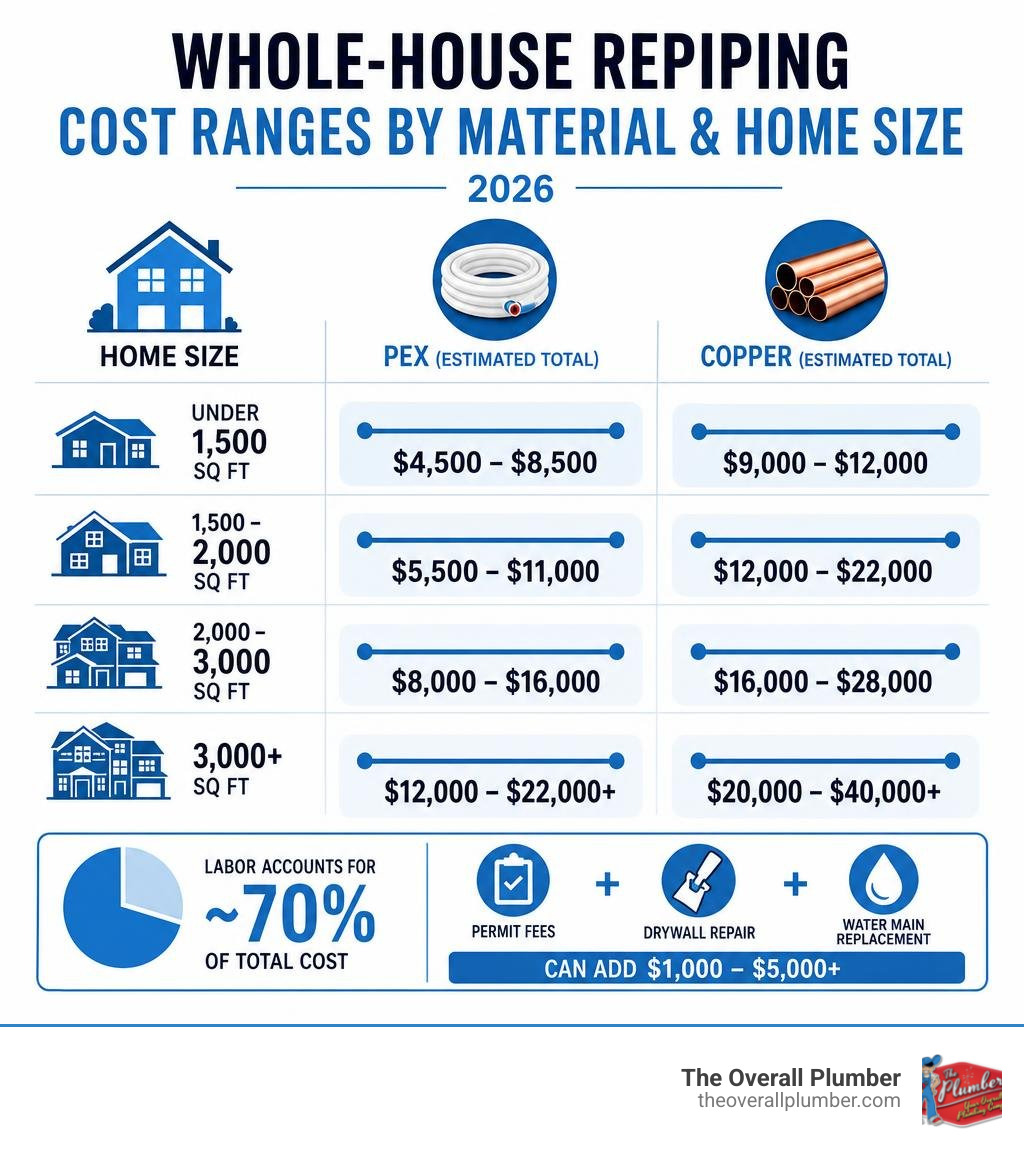
| Home Size | PEX (Estimated Total) | Copper (Estimated Total) |
|---|---|---|
| Under 1,500 sq ft | $4,500 – $8,500 | $9,000 – $12,000 |
| 1,500 – 2,000 sq ft | $5,500 – $11,000 | $12,000 – $22,000 |
| 2,000 – 3,000 sq ft | $8,000 – $16,000 | $16,000 – $28,000 |
| 3,000+ sq ft | $12,000 – $22,000+ | $20,000 – $40,000+ |
Keep in mind: labor alone accounts for roughly 70% of the total bill. And that base quote often leaves out permit fees, drywall repair, and water main replacement — costs that can add $1,000 to $5,000 or more.
If your home has old galvanized steel pipes, polybutylene lines, or you’re dealing with low water pressure and rusty water, a full replumb may be closer than you think. The good news is that modern materials like PEX last 50 to 100 years and cost significantly less to install than copper.
This guide walks you through every cost factor so you can budget accurately and avoid surprises.
I’m Dayton Whitworth, a second-generation plumber serving Greater Brazoria County, Galveston County, Houston, and the surrounding Gulf Coast — and I’ve seen how the cost to replumb a home can vary widely depending on foundation type, pipe material, and what’s hiding behind your walls. Let’s break it all down clearly.
Average Cost to Replumb a Home in 2026
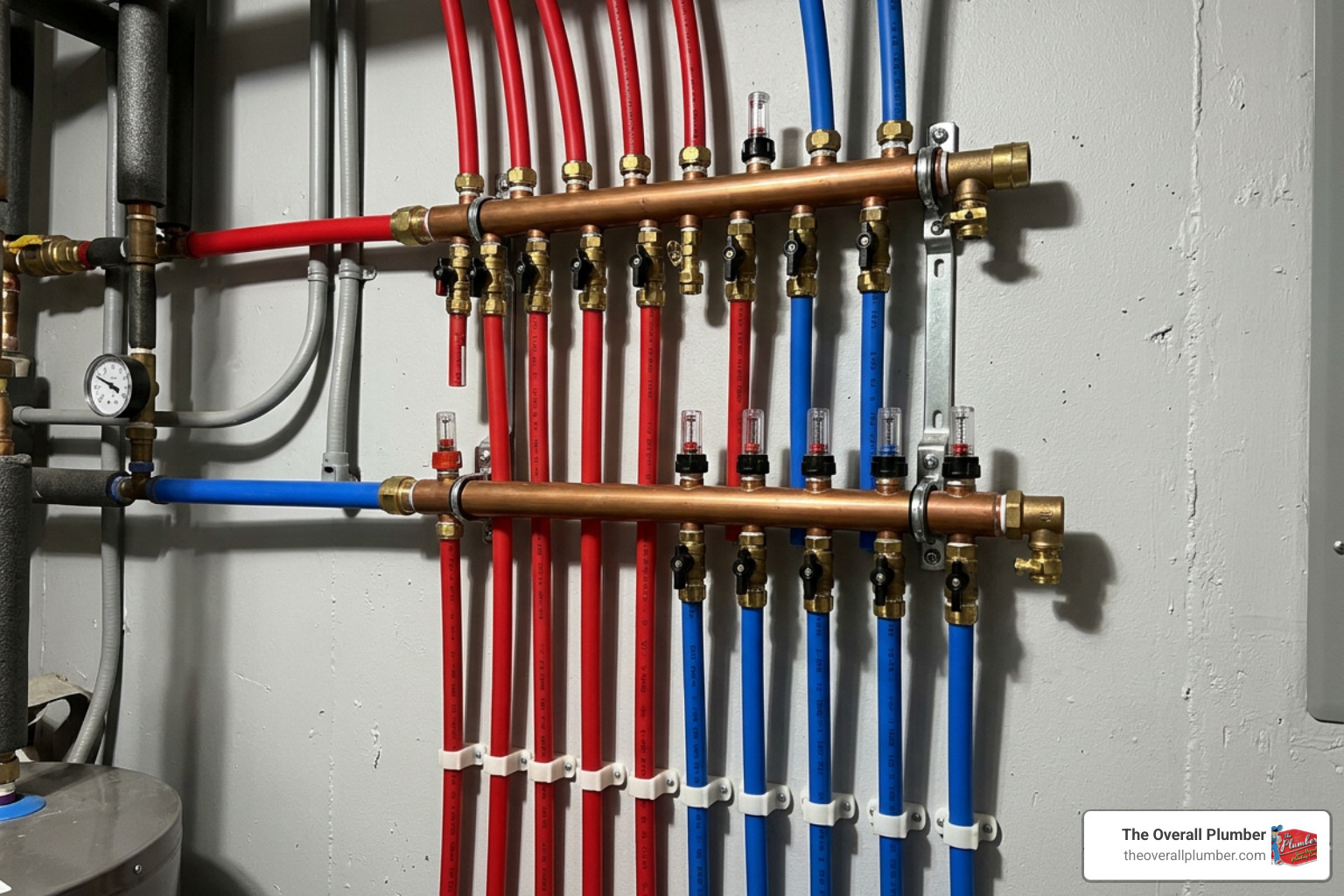
When you start looking into the cost to replumb a home, the numbers can feel a bit overwhelming. In 2026, the typical range for a complete whole-house repipe is $4,000 to $15,000, with most homeowners landing right around the $7,500 mark.
According to data compiled from hundreds of recent projects across our service areas—including Houston, Pearland, League City, and Galveston—the average cost of a standard residential repipe sits at approximately $6,785. For a modest home with 6 to 12 plumbing fixtures, you can generally expect to invest between $4,500 and $6,500 for a full PEX-A installation. Larger, multi-story properties with more extensive fixture counts typically range from $6,500 to $16,000.
To get a clearer picture of your specific layout, you can use tools like the House Repiping Cost Calculator 2026 | PEX vs Copper Cost to run your initial estimates.
It is important to understand that when we talk about the cost to replumb a home, we are referring to a complete replacement of your home’s water supply lines—the pressurized pipes that carry clean hot and cold water to your faucets, showers, and appliances. Labor is the primary driver of this expense, making up roughly 70% of your total project bill. This is because running new lines through finished walls, tight crawlspaces, or attics requires incredible precision, physical effort, and strict adherence to local building codes.
For a deeper dive into how these costs are structured and what to look out for, check out our guide on Everything You Need to Know About Whole House Repipe Costs.
Key Factors That Influence Your Repiping Budget

No two homes are built exactly alike, which means a plumbing quote for your neighbor’s house might look completely different from yours. When we inspect a home to provide a repiping estimate, we evaluate several major variables that dictate the final price.
- Total Fixture Count: In the plumbing world, a “fixture” is any point where water exits the system. This includes sinks, toilets, showers, bathtubs, washing machine hookups, water heaters, and outdoor hose spigots. On average, you can expect to spend about $1,200 per fixture for a complete repipe, depending on how far the piping must run to reach it.
- Accessibility: How easily can our crews reach your existing pipes? If you have an open crawlspace or an accessible attic, running new lines is significantly faster and less invasive. However, if your pipes are buried deep behind plaster walls or underneath a concrete foundation, the labor hours—and the cost—will rise.
- Local Permits and Inspections: To ensure your new plumbing meets municipal safety codes, we must secure building permits and schedule post-project inspections. Depending on whether you live in Houston, Pasadena, or League City, municipal permit fees can range from $50 to $800.
How Home Size and Layout Affect the Cost to Replumb a Home
Your home’s square footage and physical layout are directly tied to the linear footage of piping required to complete the job. A standard 1,500-square-foot ranch-style home will naturally require fewer materials and labor hours than a 3,000-square-foot, multi-story home.
Multi-story homes introduce unique challenges. Gravity-fed drainage and vertical supply stacks mean our team must cut access points into ceilings and run lines vertically through multiple floors. This added complexity can increase labor costs by 15% to 25% compared to a single-story home of the same square footage.
To explore how these layout variations impact pricing structures nationally, you can read the How Much to Re-Plumb a House? Complete Cost Guide for Homeowners – Crazzy Homes guide.
Foundation Type: Slab vs. Crawlspace Surcharges
Here along the Texas Gulf Coast—from Friendswood and Santa Fe down to Galveston—foundation type is one of the single biggest cost drivers in any repiping project.
If your home is built on a raised foundation or crawlspace, accessing the main trunk lines is relatively straightforward. Our plumbers can work underneath the home, minimizing the need to cut into your interior walls.
However, if your home is built on a concrete slab foundation (which is incredibly common in newer developments across Harris and Galveston Counties), we cannot easily access the pipes running underneath the concrete. In these scenarios, we must perform an “attic reroute.” This involves abandoning the old pipes beneath your slab entirely and routing brand-new PEX supply lines through your attic and down through the interior walls to reach your fixtures.
Because of the extensive labor required to fish lines through tight wall cavities and insulate them properly in hot Texas attics, slab foundations carry a 25% to 50% labor surcharge. To see how these structural complexities affect industry pricing models, check out the 2026 Plumbing Cost Benchmarks — Service, Repipe, Commercial | BuildCrux .
Pipe Material Comparison: PEX vs. Copper vs. CPVC
The material you select for your new plumbing system will have a major impact on both your immediate budget and the long-term durability of your home. Here is how the three most common pipe materials stack up in 2026:
| Material | Cost per Linear Foot (Installed) | Average Lifespan | Freeze Resistance | Installation Speed |
|---|---|---|---|---|
| PEX (Cross-linked Polyethylene) | $3.50 – $7.00 | 50 – 100 Years | Excellent (Expands without bursting) | Extremely Fast (Flexible lines, fewer fittings) |
| Copper | $8.00 – $14.00 | 50 – 70 Years | Poor (Rigid pipes can burst if frozen) | Slow (Requires soldering and wall access) |
| CPVC (Chlorinated Polyvinyl Chloride) | $4.00 – $8.50 | 50 – 75 Years | Fair (Can crack under extreme cold) | Moderate (Requires glue joints) |
While copper has long been considered the traditional “gold standard” of plumbing, modern PEX (specifically PEX-A) has become the preferred choice for roughly 75% of all residential repiping projects in 2026.
Choosing the Most Cost-Effective Material to Replumb a Home
For the vast majority of homeowners in our coastal Texas communities, PEX-A is the most cost-effective and practical material choice.
PEX is highly flexible, meaning it can be threaded through wall cavities much like electrical wiring. This flexibility allows us to complete a whole-house repipe with 30% to 50% fewer fittings than rigid copper or CPVC, which drastically reduces both labor hours and potential leak points. Furthermore, because PEX can expand and contract, it is highly resistant to bursting during those sudden, hard winter freezes we occasionally experience along the Gulf Coast.
Copper remains an incredibly durable option, but its high material cost and the labor-intensive soldering process make it 40% to 60% more expensive than PEX. Additionally, copper is susceptible to corrosion if your local water supply has acidic chemistry, and it carries a risk of theft during home renovations due to its high scrap value.
CPVC is slightly cheaper than copper, but it becomes brittle over time, making it prone to cracking under physical stress or temperature fluctuations.
To learn more about selecting the right materials for your specific bathroom or home layout, read our detailed breakdown on The Real Price of Repiping Your Bathroom and Home.
Hidden and Add-On Costs Often Excluded from Base Quotes
When comparing repipe bids, it is crucial to read the fine print. Many low-ball estimates only cover the “rough-in” plumbing work—meaning the physical installation of the pipes—while excluding essential finishing services. Here are the most common hidden costs that can catch homeowners off guard:
- Drywall Repair and Painting: To run new pipes, plumbers must cut access holes in your walls and ceilings. A standard 2,000-square-foot home may require anywhere from 10 to 30 drywall cuts. While we always minimize these openings, patching, texturing, and painting the drywall can add $1,500 to $4,000 to your total project cost if it isn’t included in your initial quote.
- Water Main Replacement: Your home’s interior repipe connects to the municipal water supply at your property line. If your main water line (running from the street to your house) is also made of failing galvanized steel or polybutylene, replacing it typically costs an additional $600 to $2,500.
- Permit and Inspection Fees: As mentioned, building permits are required by law for whole-house repiping. Ensure your contractor handles this process and includes the $200 to $800 permit fee in their written proposal.
- Water Heater Replacement: Since a repipe involves shutting off and draining your entire water system, many homeowners choose to replace their aging water heater at the same time to save on labor. A new traditional tank heater runs $800 to $1,800, while a high-efficiency tankless system can range from $2,000 to $5,000.
To map out these potential add-ons and calculate a realistic contingency budget, you can utilize the Plumbing Repipe Cost Calculator: Full, Branch, Main Line, Repair .
Warning Signs Your Home Needs a Full Repipe
How do you know when it is time to stop paying for individual leak repairs and invest in a full repipe? Your plumbing system will usually drop several hints before a catastrophic failure occurs. Keep an eye out for these common warning signs:
- Low Water Pressure: If your shower has turned into a sad trickle or it takes forever to fill your bathtub, mineral scale and rust may be choking the inside of your pipes, restricting water flow.
- Discolored or Rusty Water: If the water coming out of your taps has a red, brown, or yellow tint—especially after not using the plumbing for a few hours—your pipes are actively corroding from the inside out.
- Frequent slab leaks or pinhole leaks: If you are calling a plumber multiple times a year to patch leaks, your pipe walls have thinned to a critical point.
- Outdated Pipe Materials: If your home was built before 1970, it likely has galvanized steel pipes, which have a maximum lifespan of 50 years and are prone to severe internal rusting. If your home was built between 1978 and 1995, it may contain polybutylene (PB) pipes. These grey plastic lines are highly prone to sudden, catastrophic splitting and are a major red flag for insurance carriers.
Frequently Asked Questions About Repiping
How long does a whole-house repipe take?
For a standard 1,500 to 2,000-square-foot home using PEX, a professional crew can typically complete the plumbing installation in 1 to 2 days. Larger properties or copper installations may take 3 to 5 days.
The best part? You do not have to move out. We typically restore water service at the end of each workday, meaning your toilets and showers will be functional overnight.
Is it better to repair a single leak or repipe the entire house?
If your home has modern copper or PEX lines and you experience a single, isolated leak due to physical damage, a quick spot repair costing $200 to $400 is perfectly fine.
However, if your home has galvanized steel or polybutylene pipes and you have experienced two or more leaks in the last few years, continuing to patch them is a losing game. A full repipe eliminates the ongoing stress, protects your home from water damage, and installs a system designed to last for the next century.
Does homeowners insurance cover the cost of replumbing?
Generally, no. Homeowners insurance is designed to cover “sudden and accidental” water damage caused by a burst pipe, but it does not cover the preventative maintenance cost of replacing old, worn-out plumbing.
In fact, if your insurance carrier discovers that your home has polybutylene piping, they may threaten to drop your coverage or refuse to renew your policy until the system is fully replaced.
Schedule Your Professional Repipe Assessment
At The Overall Plumber, we understand that repiping your home is a major investment. That is why we are committed to making the process as smooth, transparent, and stress-free as possible for our neighbors across Brazoria County, Galveston County, and the Greater Houston area.
When you partner with us, you benefit from:
- No Trip Charges: We will come out to assess your home’s plumbing system without charging you just to show up.
- No Overtime Fees: Your project will be completed at the agreed-upon rate, even if the work extends into evenings or weekends.
- Satisfaction Guarantees: We stand behind the quality of our work, ensuring your new system is installed to the highest industry standards.
- Priority Scheduling: We work efficiently to minimize disruption to your daily routine, getting your water back on as quickly as possible.
Whether you need a camera inspection to assess the health of your lines or you are ready to plan a full PEX upgrade, our experienced team is here to help. Explore our specialized services for Repiping Houston Homes to see how we handle local residential projects.
Ready to upgrade your home’s plumbing system with durable, modern piping? Contact the licensed experts at The Overall Plumber today at (281) 668-8055 to schedule your comprehensive whole-house repipe assessment.