

Act Fast When an Underground Drain Pipe Breaks
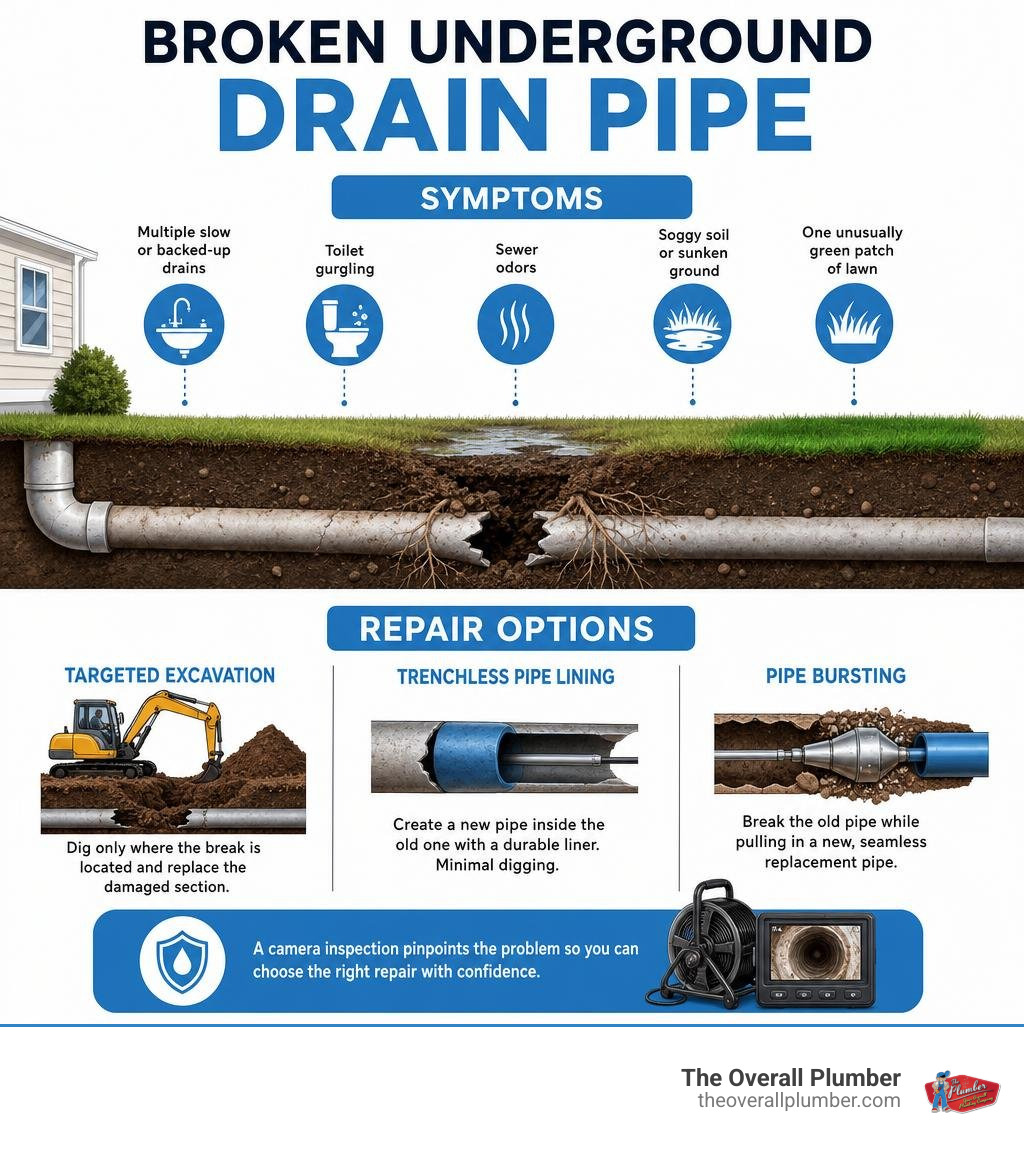
If you suspect a broken underground drain pipe, stop using water-heavy fixtures, keep people and pets away from wet or sunken ground, and arrange a camera inspection before digging. A sewer camera and locator can pinpoint the break, show whether roots, cracks, or a collapse are involved, and help you choose between a targeted excavation and trenchless repair.
Common early clues include several slow or backed-up drains, toilet gurgling, sewer odors, soggy soil, or one unusually green patch of lawn. Do not dig until underground utilities have been marked, and treat any trench deeper than 4 feet as a serious collapse hazard that may need professional protection.
I am Dayton Whitworth, a second-generation plumbing professional serving the Greater Houston and Gulf Coast area, with experience helping homeowners diagnose and repair a broken underground drain pipe. Next, we will cover the warning signs that tell you the problem is more than a routine clog.
Quick broken underground drain pipe definitions:
Warning Signs and Dangers of Subsurface Pipe Failures
Underground drainage failures rarely happen overnight; they announce themselves through subtle household disruptions before escalating into full-blown emergencies. When wastewater escapes into surrounding soil, the consequences extend far beyond a slow sink. Recognizing these symptoms early protects your property from severe structural instability.
- Foul Sewer Odors: Escaping sewer gases like hydrogen sulfide seep upward through soil, lingering around your foundation or inside crawlspaces.
- Soggy, Super-Hydrated Lawn Patches: A cracked subterranean line saturates the earth from below, creating squishy ground or patches of grass that appear abnormally lush and bright green.
- Persistent Toilet Gurgling and Backups: When wastewater cannot pass through a damaged pipe, trapped air bubbles back up into fixture traps, turning your toilet into an unwanted percussion instrument.
- Foundation Movement and Sinkholes: Sustained underground leaks wash away soil bedding, causing driveways, sidewalks, or home slab foundations to crack and settle.
- Unexplained Mold Growth: Sub-slab pipe fractures drive moisture directly into concrete foundations and baseboards, creating hidden colonies of toxic mold.
- Pest and Rodent Invasions: Even hairline cracks invite vermin into sewer laterals, providing an underground highway directly to your property.
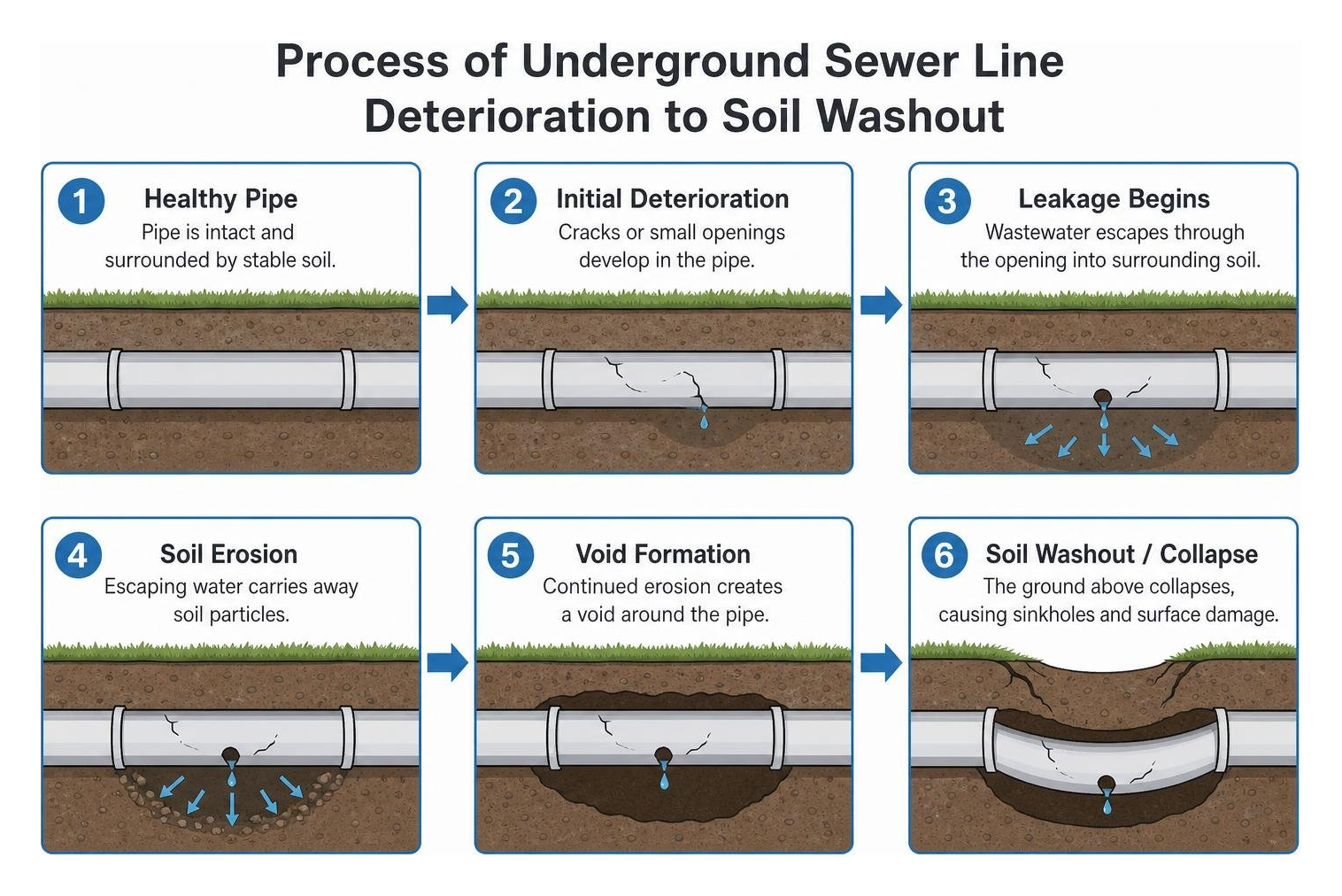
Neglecting subsurface leaks carries substantial risks. As water escapes, it erodes the structural base beneath your property, mirroring municipal infrastructure collapse risks that develop when main lines fail. Standard residential sewer pipes have an expected lifespan of 50 to 100 years. However, expansive clay soils, aggressive root intrusion, and heavy ground loading can cause premature failure.
Homeowners must also understand property boundaries: you are strictly responsible for maintaining and fixing the lateral line extending from your home up to the municipal connection or property line.
Non-Invasive Diagnostics and Site Assessment
Before picking up a shovel or breaking concrete, you must execute a non-invasive diagnostic assessment. Digging blind often damages buried gas, electrical, or communication lines, dramatically escalating repair expenses and creating life-threatening hazards.
The first step in any underground assessment is contacting 811 to have all public utility lines marked on your property. Once utilities are mapped, we conduct an exact structural evaluation to calculate pipe depth, inspect soil stability, and formulate an effective remediation plan.
How to Accurately Locate a Broken Underground Drain Pipe
Pinpointing an underground fracture without tearing up an entire lawn requires specialized diagnostic technology. Rather than relying on guesswork, modern plumbing relies on a high-definition Video Camera Sewer Line Inspection inserted directly through a cleanout.
The camera head features an integrated radio transmitter (sonde). As our technician guides the camera down the drain to the exact site of damage, a handheld electronic pipe locator above ground detects the sonde’s signal. This process provides:
- Exact lateral path mapping across your property.
- Precise depth calculations, revealing how deep the line sits beneath dirt or concrete.
- Visual identification of whether the pipe has suffered a hairline crack, root blockage, or total collapse.
While a magnetic locator can trace ferrous cast iron pipes, it cannot detect non-metallic pipes. An electronic sonde system delivers pinpoint accuracy across modern PVC, ABS, clay, and cast iron laterals alike, ensuring excavation is kept to the absolute minimum footprint required.
Evaluating Pipe Material and Failure Types
Proper remediation depends heavily on the host pipe material. Residential drains consist of several common materials, each with unique failure characteristics:
- Schedule 40 PVC (ASTM D2665): Modern standard for lateral drains. Failures typically stem from improper joint cementing, ground shifting, or excessive point loads that crush or snap the pipe.
- Cast Iron: Found in mid-century homes. Over decades, cast iron undergoes channeling (internal erosion along the pipe floor) and tuberculation. Homeowners facing this issue can benefit from our guide on fixing a broken cast iron drain pipe.
- Vitrified Clay Tile: Fragile and joined every few feet with mortar. Clay lines are exceptionally prone to root intrusion at joint collars and shear stress from shifting soil.
Knowing whether your issue is a localized offset joint, longitudinal split, or structural collapse dictates whether trenchless relining or traditional excavation is necessary.
Repair Solutions for a Broken Underground Drain Pipe: Trenchless vs. Traditional Excavation
When dealing with a broken underground line, homeowners generally have two pathways: modern trenchless technologies (no-dig) or traditional open-trench excavation.
| Feature / Metric | Trenchless CIPP / Pipe Bursting | Traditional Open-Trench Repair |
|---|---|---|
| Excavation Footprint | 1 to 2 small access pits | Continuous trench along pipe length |
| Landscape / Slab Impact | Minimal to none | High (requires concrete/yard restoration) |
| Project Timeline | Typically 1 to 2 days | 3 to 7+ days depending on depth |
| Material Lifespan | 50+ year structural warranty | 50 to 100 years (Schedule 40 PVC) |
| Structural Integrity | Seamless, joint-free, root-proof | Excellent (dependent on bedding quality) |
| Average Cost Impact | Higher upfront pipe cost; zero yard restoration | Lower plumbing cost; high surface rebuild costs |
Local jurisdictions maintain specific requirements for drain lateral connections; be sure to consult municipal line repair guidelines or your local municipal code before selecting a rehabilitation method.
Cured-in-Place Pipe (CIPP) Lining and UV Curing
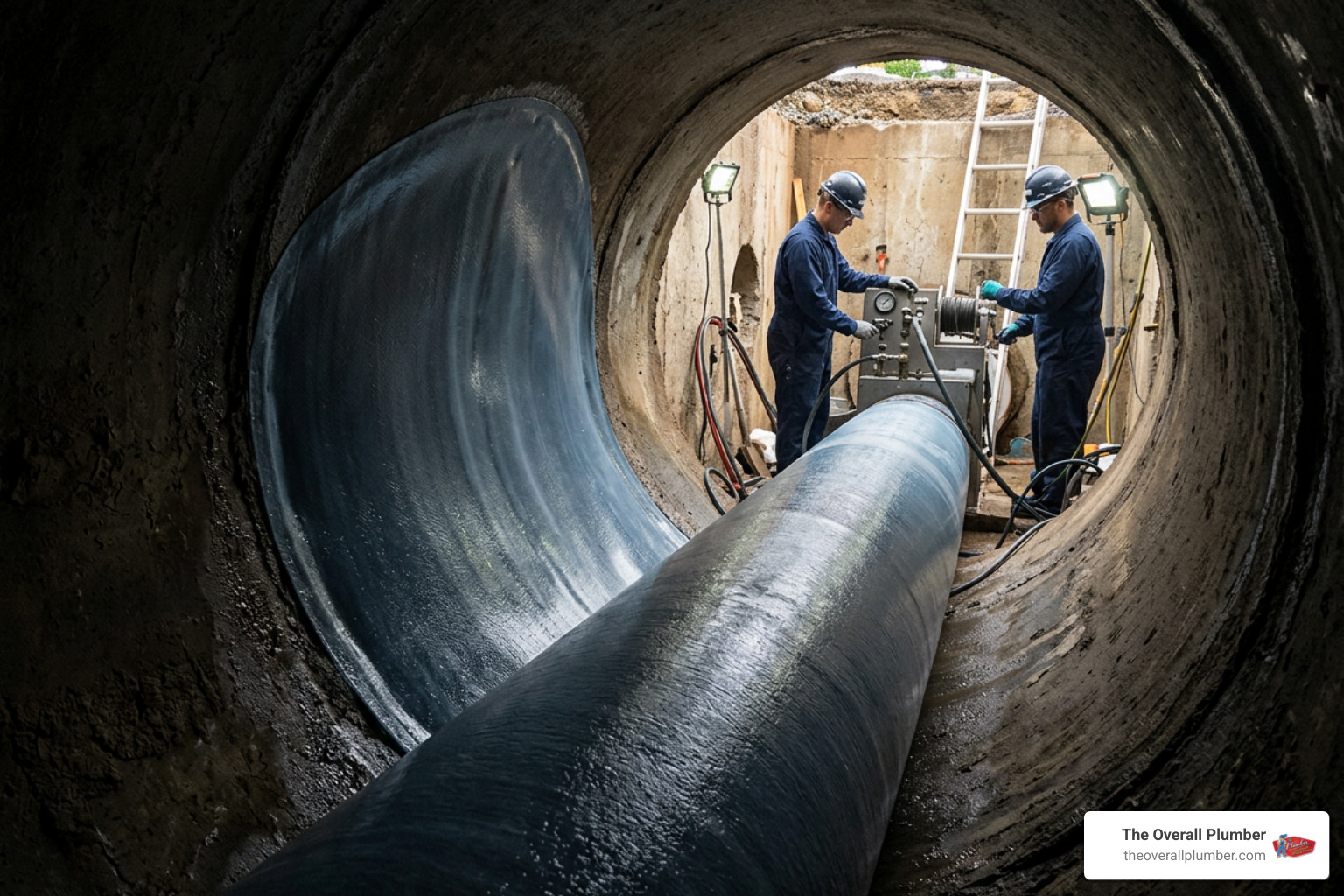
Cured-in-Place Pipe (CIPP) lining restores underground drainage without extensive digging. Technicians pull or invert a flexible, resin-impregnated felt or fiberglass liner into the damaged pipe using existing cleanouts or a small access pit. Once properly positioned, the liner is inflated against the host pipe walls and cured using hot water, steam, or advanced ultraviolet (UV) light technology.
UV-cured lining offers remarkable speed, completing structural curing in a fraction of the time required by ambient epoxy. The resulting smooth, jointless liner seals off cracks, bridges mechanical gaps, and resists root intrusion, restoring hydraulic flow capacity while sacrificing less than a quarter-inch of internal diameter. CIPP is ideal when the existing pipe retains at least 50% to 70% of its circular shape.
Pipe Bursting and Slip Lining
When an underground pipe is partially crushed, back-pitched, or structurally degraded beyond the capabilities of a CIPP liner, pipe bursting provides a non-invasive replacement strategy.
A high-powered hydraulic or pneumatic pulling machine pulls a heavy-duty bursting head through the failing host pipe. As the head moves forward, it shatters the old cast iron, clay, or PVC pipe outward into the surrounding soil while pulling a continuous, seamless High-Density Polyethylene (HDPE) pipe into place behind it. HDPE liners are completely immune to root penetration, resist chemical corrosion, and frequently carry 50-year manufacturer warranties. Discover Why Trenchless Sewer Line Replacement Is the Best Way to Save Your Yard to see if this approach fits your property layout.
Step-by-Step Manual Pipe Replacement and Trench Restoration
If you decide to manually replace an accessible section of damaged pipe, follow systematic plumbing procedures to maintain structural stability and prevent future settling.
Excavation Safety, Pipe Cutting, and Coupling Installation
In the United States, main sewer drains sit between 3 and 7 feet deep. Depths over 4 feet present severe trench cave-in risks; OSHA standards mandate proper sloping, benching, or hydraulic trench shoring before anyone enters the trench.
- Shut Off Water and Utilities: Close the main water supply and depressurize all home fixtures. Wear full PPE: waterproof gloves, eye protection, respirator, and sturdy boots.
- Dig Safely: Excavate the marked location, leaving at least 12 inches of working clearance around and beneath the pipe.
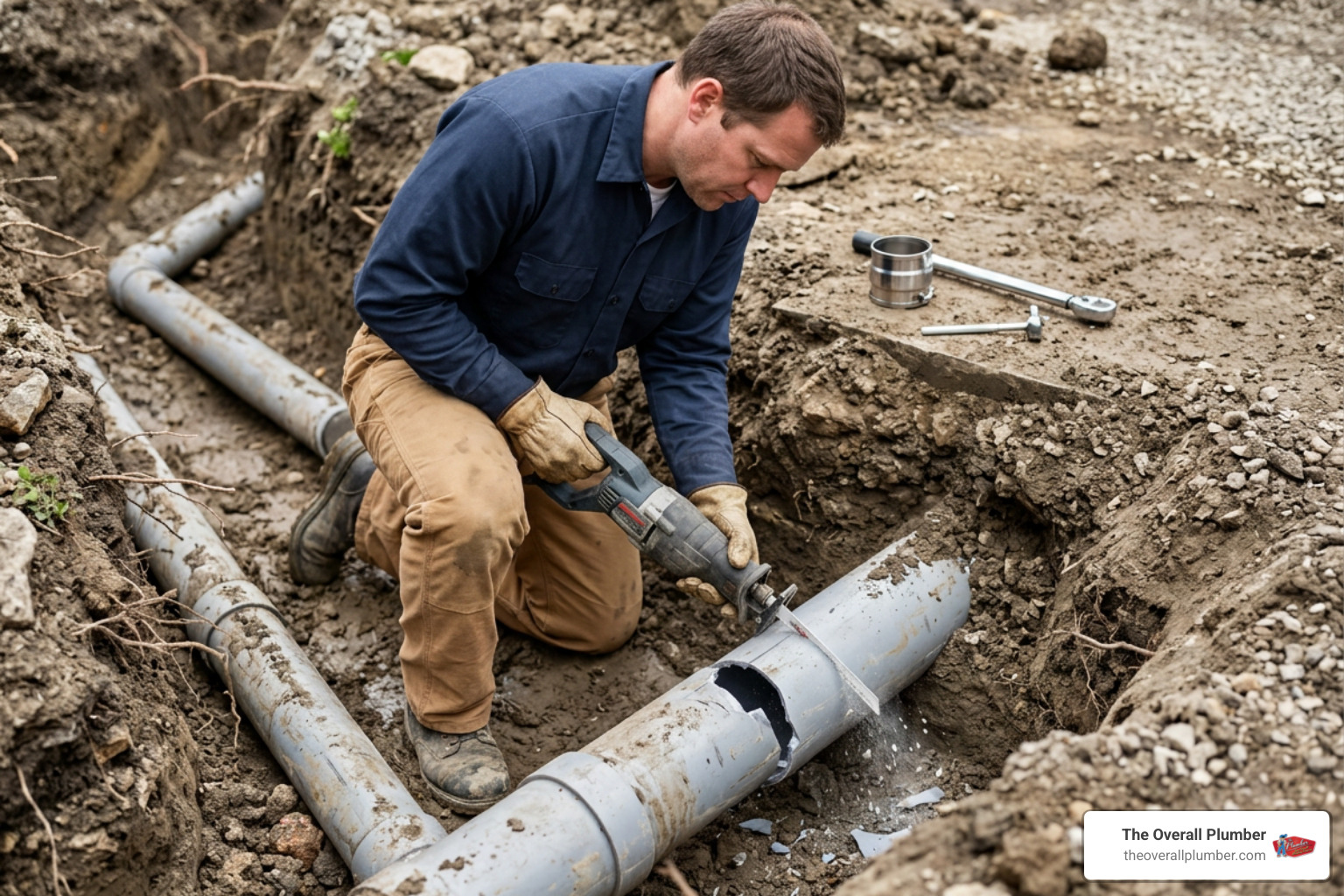
- Cut the Damaged Section: Using a reciprocating saw, cut out the cracked section at right angles. Remove burrs and rough edges using a deburring tool or emery cloth. If you need step-by-step guidance for minor fractures, read how to repair a crack in a PVC drain pipe.
- Install Replacement Section: Cut a matching length of ASTM D2665 Schedule 40 PVC. Connect the new piece to the existing line using heavy-duty, shielded transition couplings (such as shielded Fernco or Mission couplings).
- Torque Clamps to Spec: Tighten the stainless-steel bands with a torque wrench to exactly 60 in-lb to ensure a leak-free seal that resists soil shear forces.
Pipe Bedding, Compaction, and Backfill
Backfilling without adequate support is the leading cause of repeat sewer line breakage. Soil movement places point loads on unbedded pipe, causing it to crack or sag over time.
- Bedding and Haunching: Pour at least 4 to 6 inches of washed pea gravel or crushed stone directly under the pipe. Pack the aggregate firmly around the bottom half (the haunch) to eliminate voids and provide continuous support.
- Initial Backfill Layer: Add gravel until the pipe is covered with at least 6 inches of aggregate cushion.
- Layered Compaction: Backfill remaining native soil in 6-inch lifts, using a hand tamper or mechanical plate compactor on each layer before adding the next. This prevents trench settlement and depressions in your yard or driveway.
- Testing: Run high-volume water through the drain line before completing final grade restoration to confirm the repair is watertight under active drainage pressure.
Frequently Asked Questions About Underground Sewer Repairs
Can I use an unshielded rubber coupling for an underground main drain?
No. Unshielded all-rubber couplings lack the structural resistance needed for underground lateral lines. Without a heavy stainless-steel shear ring, shifting soils will cause the pipes to misalign, creating hydraulic dams, catching solid waste, and ultimately leading to joint failure. Plumbing codes require shielded (banded) transition couplings for buried sewer mains.
What is the average cost to fix a broken underground drain pipe?
The average cost to repair a 10-foot section of main drain typically ranges from $2,500 to $5,000 using conventional excavation, depending on burial depth, surface materials (concrete vs. lawn), and required trench shoring. Trenchless repairs generally run between $180 and $350 per linear foot, with total costs ranging from $3,500 to $20,000. However, trenchless methods eliminate thousands of dollars in yard, patio, or slab restoration expenses.
When is full excavation necessary instead of trenchless repair?
Full open-trench excavation is required when an underground pipe has completely collapsed, when the line has lost its structural grade (a severe belly or back-pitch where water runs backward), or when intersecting utilities make pipe bursting impossible. If a CIPP liner cannot physically navigate a crushed cavity, digging remains the only viable remedy.
Restoring Your Sewer Line with Long-Term Reliability
Need dependable, guaranteed Broken Pipe Repair? The Overall Plumber provides high-definition camera inspections, advanced auger cleaning, and complete drain restoration throughout Houston, Clear Lake, Santa Fe, League City, Texas City, La Porte, Friendswood, Brazoria County, and surrounding communities. Homeowners also get 100% satisfaction guarantees, priority scheduling, no overtime fees, and no trip charges.
Ready to resolve your underground drainage problem? Contact The Overall Plumber online to schedule your video camera inspection and receive an upfront, transparent repair plan.