


When a Repiping Service Is the Right Fix
A repiping service replaces failing water supply pipes throughout part or all of a home. It may be the right long-term fix if you have recurring leaks, rusty or discolored water, weak water pressure, or old galvanized pipes that are corroding from the inside.
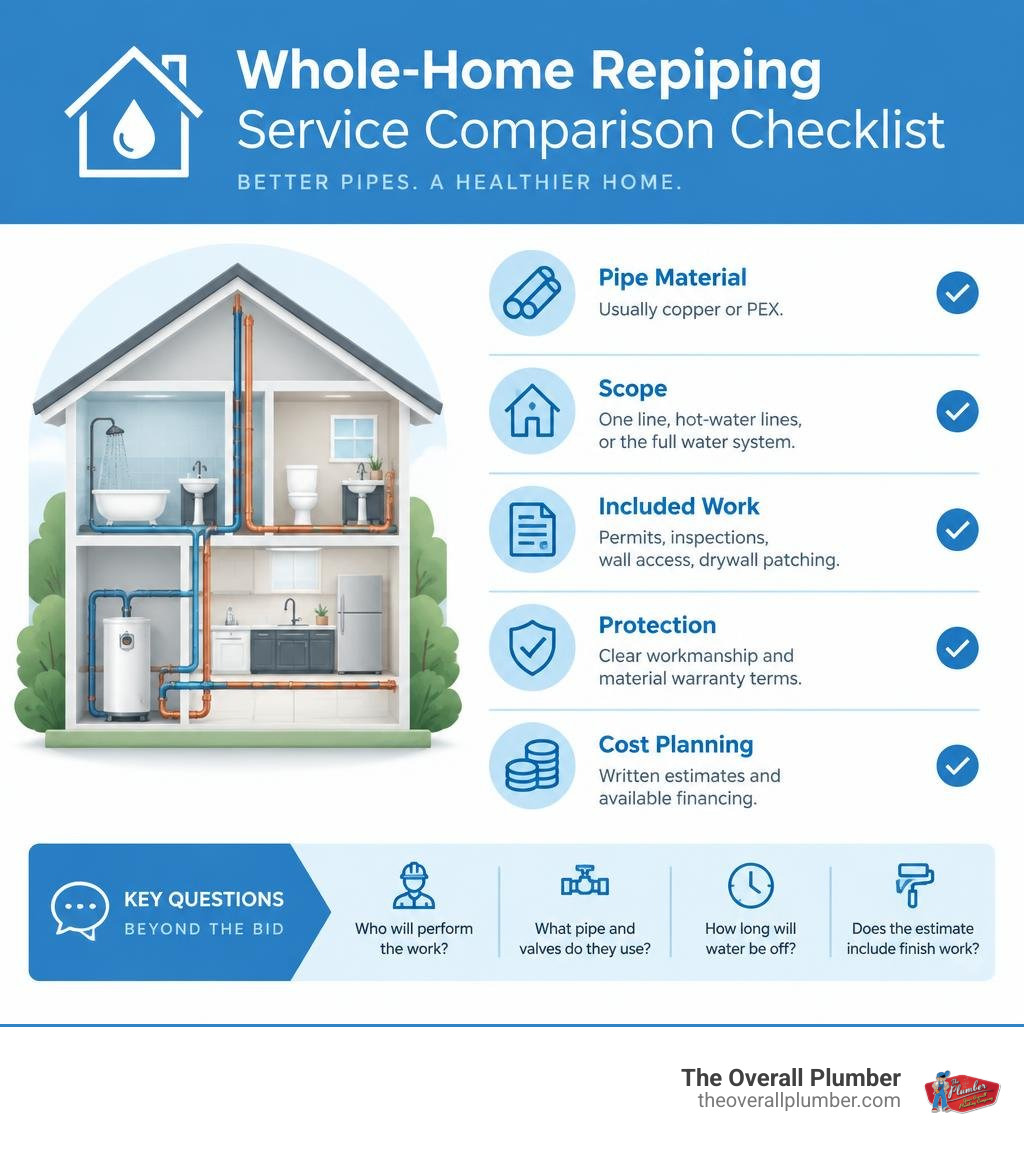
Rather than paying for repeated spot repairs, homeowners can compare a whole-home repipe based on:
- Pipe material: usually copper or PEX
- Scope: one problem line, hot-water lines, or the full water system
- Included work: permits, inspections, wall access, and drywall patching
- Protection: clear workmanship and material warranty terms
- Cost planning: written estimates and available financing
A good comparison looks beyond the lowest bid. Ask who will perform the work, what pipe and valves they use, how long water will be off, and whether the estimate includes the finish work needed after new lines are installed.
I am Dayton Whitworth, a second-generation plumbing professional serving the greater Houston and Gulf Coast area. Through full-service plumbing work, I help homeowners understand when a repiping service is a practical answer to recurring pipe breaks, water-flow problems, and aging plumbing systems.
Must-know repiping service terms:
Warning Signs That Indicate Your Home Needs Repiping
Plumbing systems do not last forever. Across Harris County and Galveston County, thousands of homes built several decades ago still rely on original piping systems that have passed their intended operational lifespan. When water distribution systems age, they deteriorate from the inside out, often hiding severe structural damage behind drywall or beneath foundation slabs until a major failure occurs. Reviewing a comprehensive house repiping cost and process guide helps clarify what to expect when these warnings emerge.
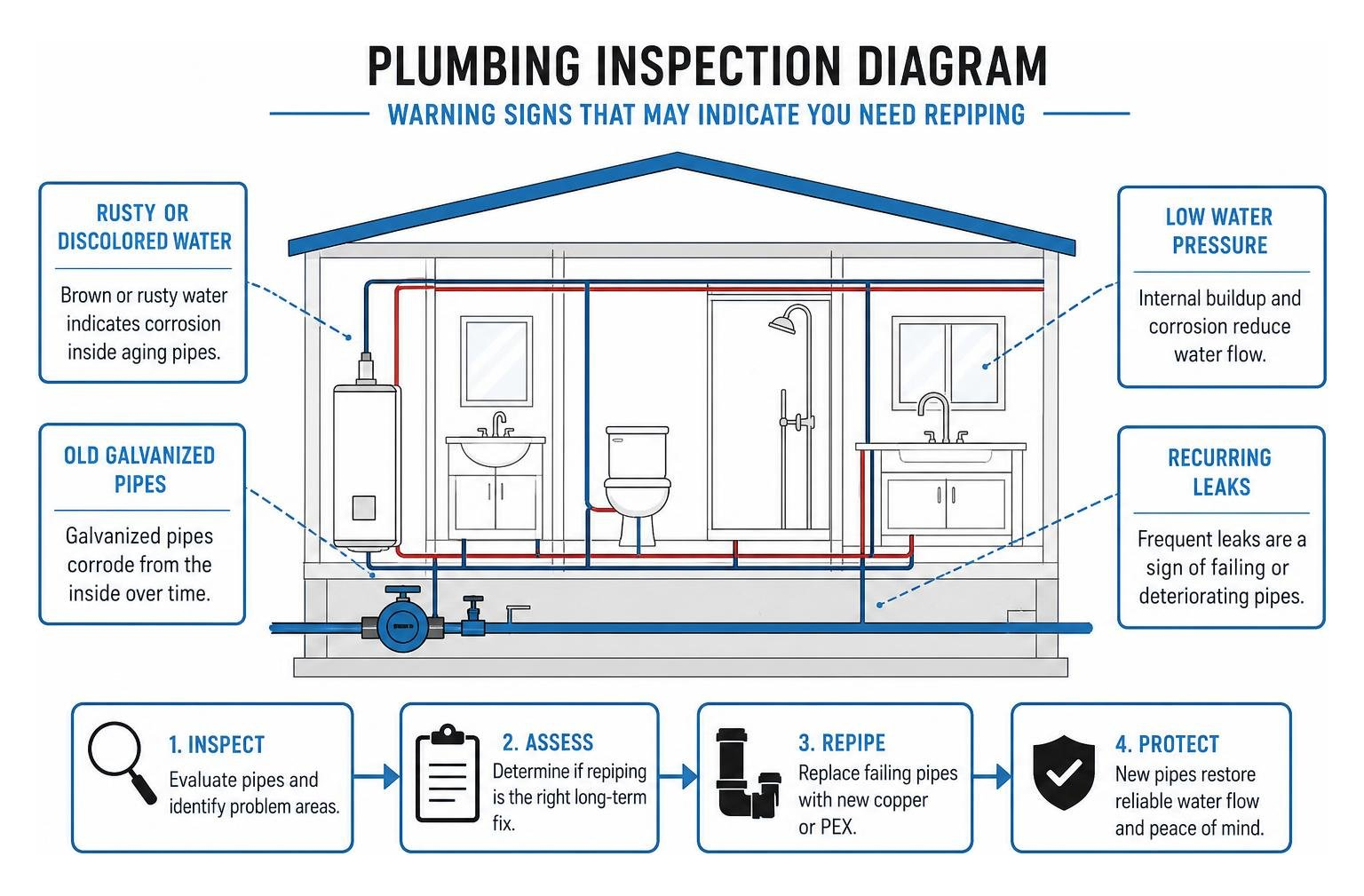
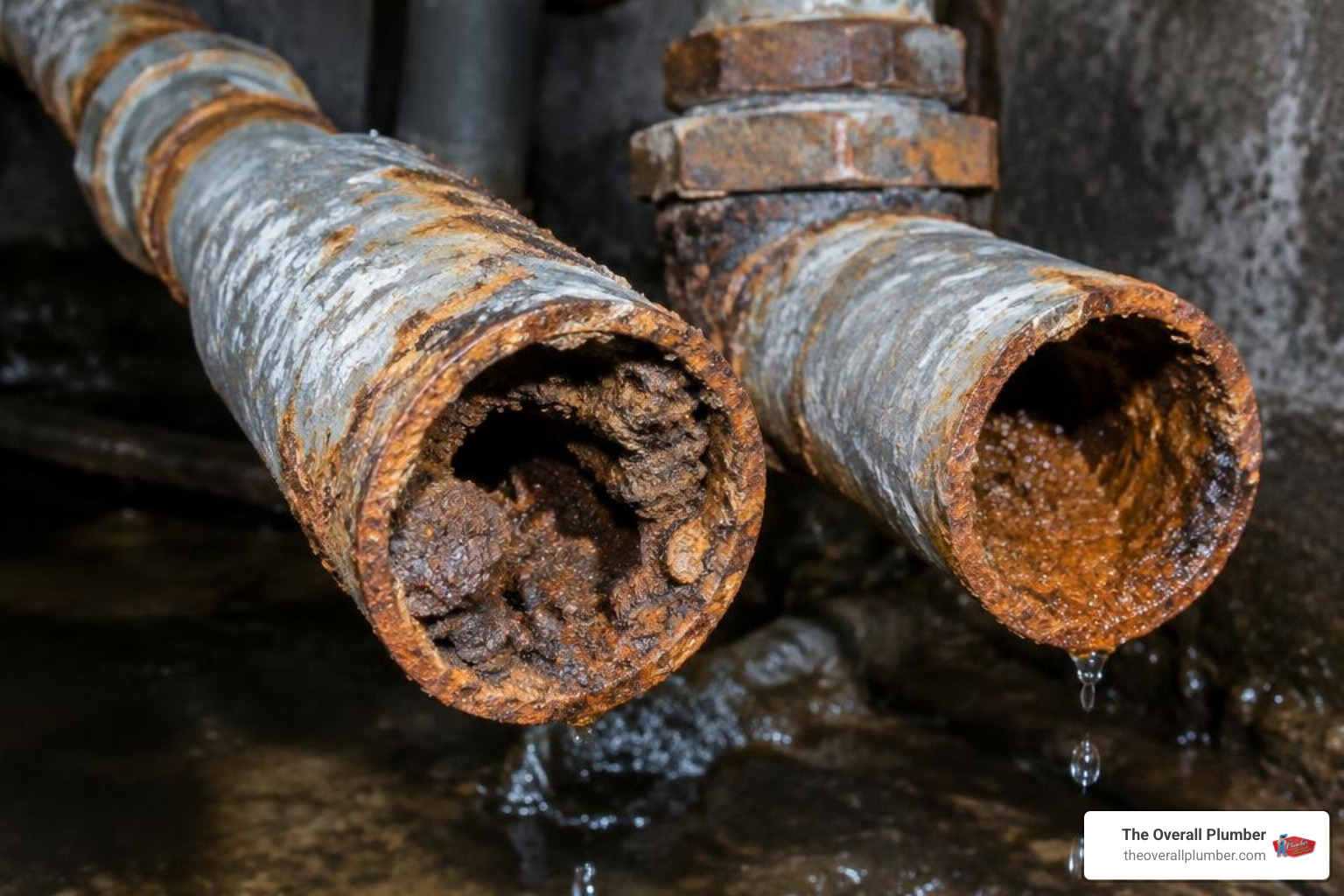
Galvanized steel was the standard material for residential water supply lines for much of the mid-20th century. Over decades of constant exposure to water and dissolved minerals, the protective zinc coating inside galvanized pipes erodes. Once this coating is gone, the underlying bare steel reacts with oxygen in the water, creating heavy rust scales, severe pipe corrosion, and internal blockages. This internal narrowing restricts water volume, leading to frustratingly low pressure at faucets and showerheads throughout the property.
Signs You Need an Urgent Repiping Service
Certain symptoms indicate that your water delivery network is on the verge of widespread failure:
- Frequent Leaks and Pinhole Ruptures: If you find yourself fixing multiple pinhole leaks within a few months, your piping system has reached the end of its structural integrity. Patching one leak simply diverts hydraulic pressure to the next weakest point in the line.
- Discolored, Brown, or Red Water: Turning on your faucet after hours of non-use to find red, yellow, or rusty brown water indicates severe internal pipe degradation and mineral buildup.
- Foul Odors or Metallic Tastes: Deteriorating pipes shed flakes of rust and chemical sediment directly into your drinking and bathing water supply.
- Slab Leaks and Unexplained Moisture: Wet spots on floors, warm floorboards, shifting foundations, or sudden spikes in monthly water bills often point to sub-slab plumbing failures that require prompt rerouting or whole-home repiping.
Water Heater and Main Line Indicators
Your water distribution network operates as an integrated system, meaning your water heater and main incoming line are directly affected by the condition of your internal pipes. The typical life expectancy of most tank-type water heaters is between eight and twelve years. When connected to corroded galvanized or degrading copper pipes, water heaters accumulate dense layers of sediment and rust flakes much faster. This buildup reduces heating efficiency, damages heating elements, and causes early tank rupture.
Upgrading to modern water heating systems—such as high-efficiency tankless water heaters, which can be up to 25% more energy-efficient than traditional tank units—requires clean, unrestricted water delivery to operate at peak performance. If your incoming supply line is clogged with rust or mineral scaling, consult the local guide to main water line repiping to understand how main supply integrity impacts whole-house flow and pressure.
Comparing Pipe Materials: Copper vs. PEX
Choosing the right material is one of the most critical decisions when planning a home repipe. Today, professional repiping projects primarily utilize two materials: rigid copper and cross-linked polyethylene (PEX). Both materials deliver exceptional longevity and water purity when properly installed by licensed specialists.
| Feature / Attribute | Type-L Rigid Copper | PEX-A (Cross-Linked Polyethylene) |
|---|---|---|
| Material Composition | Seamless rigid metallic tubing | Flexible thermoset polymer tubing |
| Expected Lifespan | 50+ Years | 50+ Years |
| Corrosion Resistance | Excellent (susceptible to acidic/pitted water) | Complete immunity to rust, corrosion, and scale |
| Freeze Tolerance | Moderate (can burst if water freezes solid) | Superior (expands slightly during freezes) |
| Wall Penetrations Needed | Higher (requires more access points for rigid runs) | Lower (snakes through wall cavities easily) |
| Material Cost | Premium / Higher | Budget-friendly / Moderate |
| Installation Speed | Moderate (soldered joints or press fittings) | Rapid (expansion fitting technology) |
Comparing Materials for Your Repiping Service
Type-L hard copper remains the gold standard for homeowners seeking a traditional, rigid metallic piping system. Made-in-America copper piping provides natural biostatic properties that inhibit bacterial growth inside water lines, resists UV degradation, and holds up against extreme heat near water heaters and boiler connections. However, copper requires soldered or pressed fittings at every turn, which increases installation time and labor costs.
Conversely, flexible PEX-A piping has transformed modern residential plumbing. PEX-A is manufactured using a cross-linking method that provides shape memory, allowing the pipe to expand and contract smoothly under stress. To understand why modern flexible tubing has become so popular, explore PEX plumbing fundamentals. Because PEX bends around framing studs, technicians require significantly fewer fittings behind walls, minimizing potential joint failure points while offering exceptional resistance to freeze-related splits.
Costs and Longevity Expectations
While copper materials carry a higher raw metal price that fluctuates with global commodities, PEX provides an economical alternative with matching 50-year longevity expectations. When estimating whole-house repiping expenses, labor accounts for a significant portion of the total investment. PEX allows for faster installation and fewer wall cutouts, reducing overall labor and post-project dry-wall repair costs compared to full rigid copper installations.
Evaluating What a Full Repiping Service Includes
A complete repiping project involves much more than simply running fresh lines through your home. A professional, turnkey repiping service manages the entire process from initial system design to final cosmetic cleanup.

Permitting, Wall Patching, and Inspection Workflows
A proper whole-home repiping workflow follows strict municipal guidelines and quality-control checkpoints:
- Permits and Code Compliance: Prior to touching a pipe, your contractor must pull all necessary building and plumbing permits from your local municipality to ensure the installation meets all current building codes.
- Precision Wall Openings: Experienced crews locate plumbing runs and make surgical drywall incisions rather than tearing open broad sections of wall. Technicians protect flooring and furniture with heavy drop cloths and plastic dust barriers.
- Line Installation and Valve Replacement: New hot and cold supply lines are run throughout the home. High-quality repiping includes replacing all emergency fixture shut-off valves and supply risers with premium quarter-turn stainless steel or low-zinc brass ball valves.
- Pressure Testing and Municipal Inspection: The completed system is pressurized with air or water and rigorously tested for pressure stability before a local building inspector signs off on the permit.
- Drywall Patching and Texture Matching: The final phase includes patching all drywall cuts, applying texture to match existing walls, and leaving the work area clean and debris-free.
Warranties, Guarantees, and Financing Options
A quality repiping job should come with ironclad warranties that protect your investment for decades to come. When evaluating estimates, verify that the plumbing contractor offers comprehensive workmanship guarantees alongside manufacturer material warranties.
Reputable companies often provide lifetime transferable warranties that carry over to future buyers if you sell your home, significantly increasing property market value. To help manage upfront expenses, many contractors offer flexible financing plans, such as promotional interest-free financing when paid within terms, making it easy to protect your property without compromising household cash flow.
Specialist Repipe Contractors vs. General Plumbers
While many licensed general plumbers can handle routine drain snaking or faucet replacements, whole-home repiping requires specialized logistics, tooling, and dedicated crew coordination.
- Specialized Tooling and Fast Execution: Whole-home repipes can often be completed in as little as 1 to 2 days when performed by dedicated repiping crews working in coordinated teams, whereas a solo general plumber may take several weeks.
- Bulk Material Sourcing: Dedicated repipe contractors maintain extensive inventories of made-in-America Type-L copper and certified PEX-A tubing, passing volume savings directly to the homeowner.
- Turnkey Drywall Repair: General plumbers frequently leave large drywall holes for the homeowner to patch independently. Dedicated repiping teams include professional drywall repair and texturing in their service agreements.
Key questions to ask any contractor before signing a repiping contract include:
- Do you secure all required municipal permits and manage building inspections?
- Are your plumbing technicians licensed, insured, and directly employed?
- Does your quote include patching, texturing, and cleaning up drywall openings?
- What specific brands, types, and grades of pipe and shut-off valves do you install?
- What written guarantees and transferable warranties cover your labor and materials?
Regional Considerations and Local Expertise
Plumbing infrastructure across the upper Texas Gulf Coast faces unique environmental challenges. The combination of expansive clay soils, high coastal humidity, and distinct municipal water chemistries accelerates external and internal pipe degradation. For properties located in the southwestern Houston metro area, our team provides tailored Sugar Land repiping services to resolve persistent water pressure loss.
Similarly, we deliver dedicated Pearland pipe replacement for older neighborhoods experiencing recurring slab leak risks. Closer to the coast, our League City repiping solutions address the corrosive effects of coastal moisture and municipal hard water on aging metallic lines. Our team proudly serves homeowners across Harris County, Galveston County, Brazoria County, Clear Lake, Pasadena, Friendswood, Texas City, La Porte, Santa Fe, and Galveston with transparent, upfront pricing, zero overtime charges, and comprehensive satisfaction guarantees.
Frequently Asked Questions About Whole-Home Repiping
How long does a whole-home repipe take?
When handled by a dedicated, multi-person repiping crew, a standard whole-home repipe is typically completed in as little as 1 to 2 days. The new water delivery lines are installed on the first day, followed by municipal pressure inspections, wall insulation replacement, drywall patching, and texture matching on the second day.
Can you live in your home during the repiping process?
Yes. Professional repipe specialists take care to ensure that your home remains livable throughout the project. Water service is typically shut off only during active daytime working hours, and technicians restore water pressure to your essential fixtures at the end of each workday so your household can shower, cook, and use the facilities overnight.
Does homeowner insurance cover whole-home repiping?
Standard homeowner insurance policies typically cover sudden, accidental water damage resulting from a burst pipe, such as drying out carpets or repairing water-damaged drywall. However, insurance policies almost never pay for the preventative replacement or repiping of aging, corroded pipes that fail due to normal wear and tear. Proactively replacing outdated plumbing prevents catastrophic flood claims and protects your property value.
To schedule a whole-home plumbing inspection or to discuss repiping options for your home, contact The Overall Plumber today.