


Best Toilet Tank Fill Valve Picks for Modern Toilets
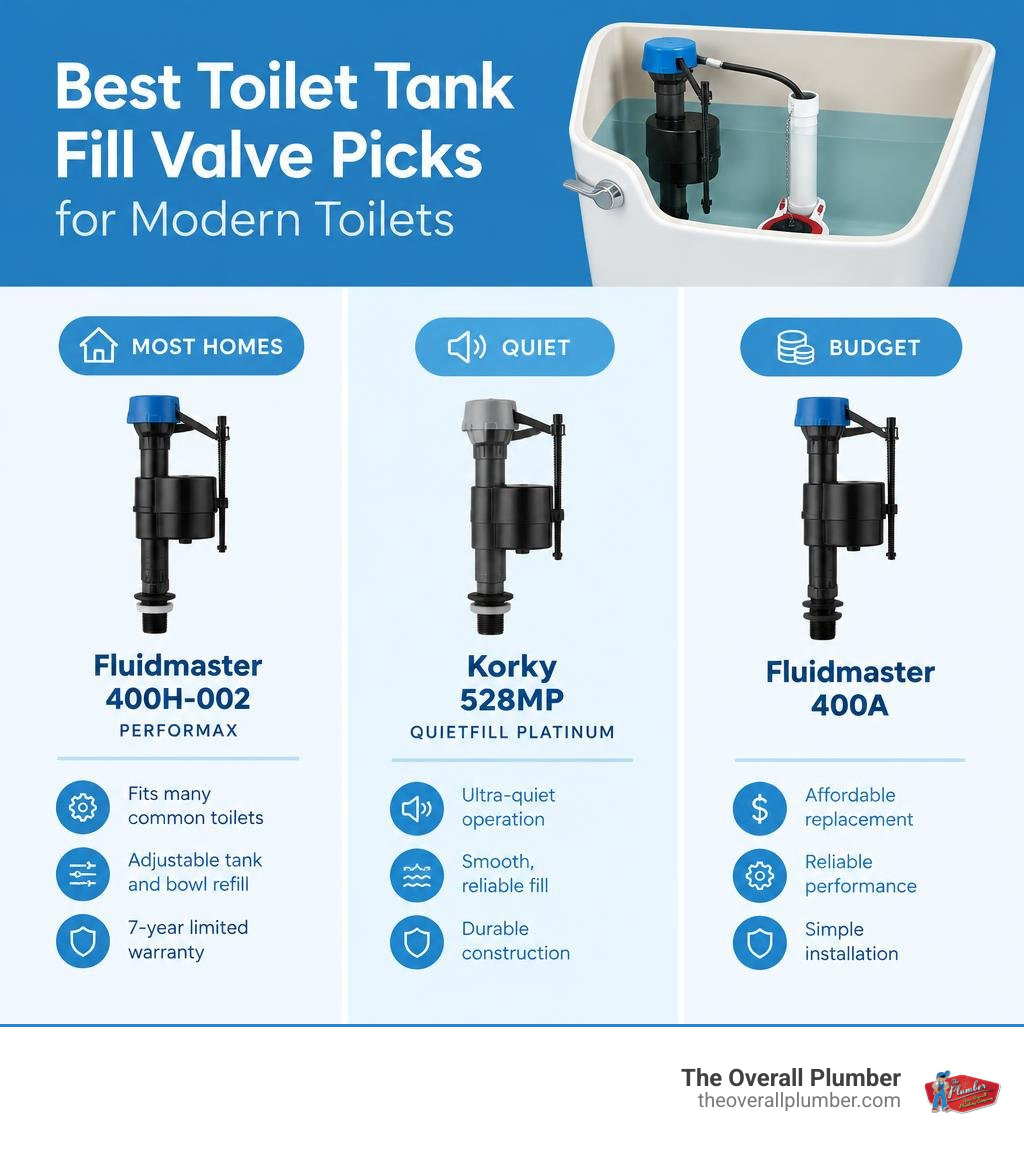
The best toilet tank fill valve for most homes is the Fluidmaster 400H-002 PerforMAX. It fits many common toilets, lets you adjust both tank and bowl refill, and has a seven-year limited warranty. For a bathroom near a bedroom, consider the Korky 528MP QuietFILL Platinum. For a low-cost replacement, the Fluidmaster 400A is a practical pick.
Before buying, check your toilet model and tank height. If the toilet keeps refilling, test the flapper too: a leak into the bowl can make a working fill valve turn on again and again.
I’m Dayton Whitworth, a second-generation plumbing professional serving homes across the Greater Houston and Gulf Coast area. My work in residential plumbing helps me focus on what matters when choosing the best toilet tank fill valve: a good fit, reliable shutoff, and easy adjustment.
Relevant articles related to best toilet tank fill valve:
A running toilet can waste between 20 and 200 gallons of clean water every single day. In over 80% of these cases, an aging or defective fill valve is the culprit. Swapping out a worn valve is an easy $10 to $30 upgrade that takes under 30 minutes, saving between $50 and $200 annually on municipal water utility bills across Texas.
How to Choose the Best Toilet Tank Fill Valve for Your Home
Choosing a new toilet fill valve comes down to matching the mechanism to your tank height, water quality, and household noise tolerance. The fill valve controls the flow of pressurized water from the shut-off supply stop into the tank and bowl after each flush.
| Model | Refill Speed | Noise Profile | Best For | Typical Price | Warranty |
|---|---|---|---|---|---|
| Fluidmaster 400H-002 | ~45 seconds | Whisper Quiet | High-efficiency & standard toilets | $15–$19 | 7 Years |
| Korky 528MP QuietFILL | ~50 seconds | Ultra-Silent | En-suite & bedroom-adjacent baths | $10–$14 | 5 Years |
| Fluidmaster 400A | ~60 seconds | Moderate Hum | Reliable, budget-friendly repairs | $9–$12 | 5 Years |
| Kohler GP1083167 | ~45 seconds | Silent Multi-Rate | OEM Kohler Class Five & VI | $20–$28 | 1 Year |
| Fluidmaster PRO45H | ~40 seconds | Heavy-Duty Quiet | Hard water & high-pressure systems | $22–$30 | 10 Years |
When fixing your toilet fill valve, looking at refill speed, noise level, and warranty coverage will keep your bathroom running smoothly for years.
Top Overall Performer: Fluidmaster 400H-002 PerforMAX
The Fluidmaster 400H-002 PerforMAX is our top recommendation for the vast majority of residential bathrooms. Engineered to replace older ballcock designs and standard valves, it fills a standard 1.6-gallon tank in approximately 45 seconds—a massive improvement over outdated units that take upwards of three minutes.
It features an integrated bowl refill adjustment dial. Modern high-efficiency toilets (HETs) using 1.28 gallons per flush require exact water volumes in the bowl to maintain a powerful siphon jet. The 400H lets you fine-tune the bowl refill volume without changing the tank water height, preventing water waste while guaranteeing a complete, single-flush evacuation. Backed by a 7-year manufacturer warranty, this valve works seamlessly with both 2-inch and 3-inch flush valve designs.
Quietest Operation: Korky 528MP QuietFILL Platinum
If your bathroom shares a wall with a bedroom or home office, the Korky 528MP QuietFILL Platinum is the gold standard for silent refilling. Unlike traditional float cup assemblies that make an audible hissing noise as pressurized water shears past the internal orifice, Korky uses an enclosed internal float chamber that dampens incoming acoustic vibration.
The 528MP is made in the USA with proprietary Chlorazone II elastomer rubber. This compound resists harsh municipal water additives, chloramines, and scale buildup better than basic red rubber seals. It includes an easy-to-use twist-lock height adjustment and comes backed by a 5-year warranty.
Selecting the Best Toilet Tank Fill Valve on a Budget: Fluidmaster 400A
Since its debut in 1957, the Fluidmaster 400A has been the best-selling toilet fill valve in the world. It is factory-installed in more than 90% of newly manufactured toilets in North America.
For homeowners seeking a dependable, budget-friendly repair, the 400A delivers reliable service for roughly ten dollars. While it lacks the independent bowl refill dial found on the premium 400H series, its universal shank, height-adjusting stem (extending from 9 to 14 inches), and simple float-cup design make it an unbeatable budget replacement.
OEM Specialty Picks: Kohler Silent Fill and Korky TOTO-Specific Valves
Certain premium toilet brands use engineered flush dynamics that benefit from dedicated replacement parts:
- Kohler Toilets: The KOHLER Silent Fill High Rate Valve Kit (GP1083167) is specifically calibrated for Kohler Class Five, Class Six, and Ingenium flushing platforms. It includes color-coded flow restrictor inserts to match the exact refill volume required by different tank castings.
- TOTO Toilets: The Korky 528T Genuine TOTO Replacement Valve is engineered to match the rapid refill rates of TOTO G-Max and Power Gravity systems. It ensures the bowl reaches its required trap seal depth at the exact moment the tank fill cycle concludes.
Finding the Best Toilet Tank Fill Valve for Hard Water and High Pressure
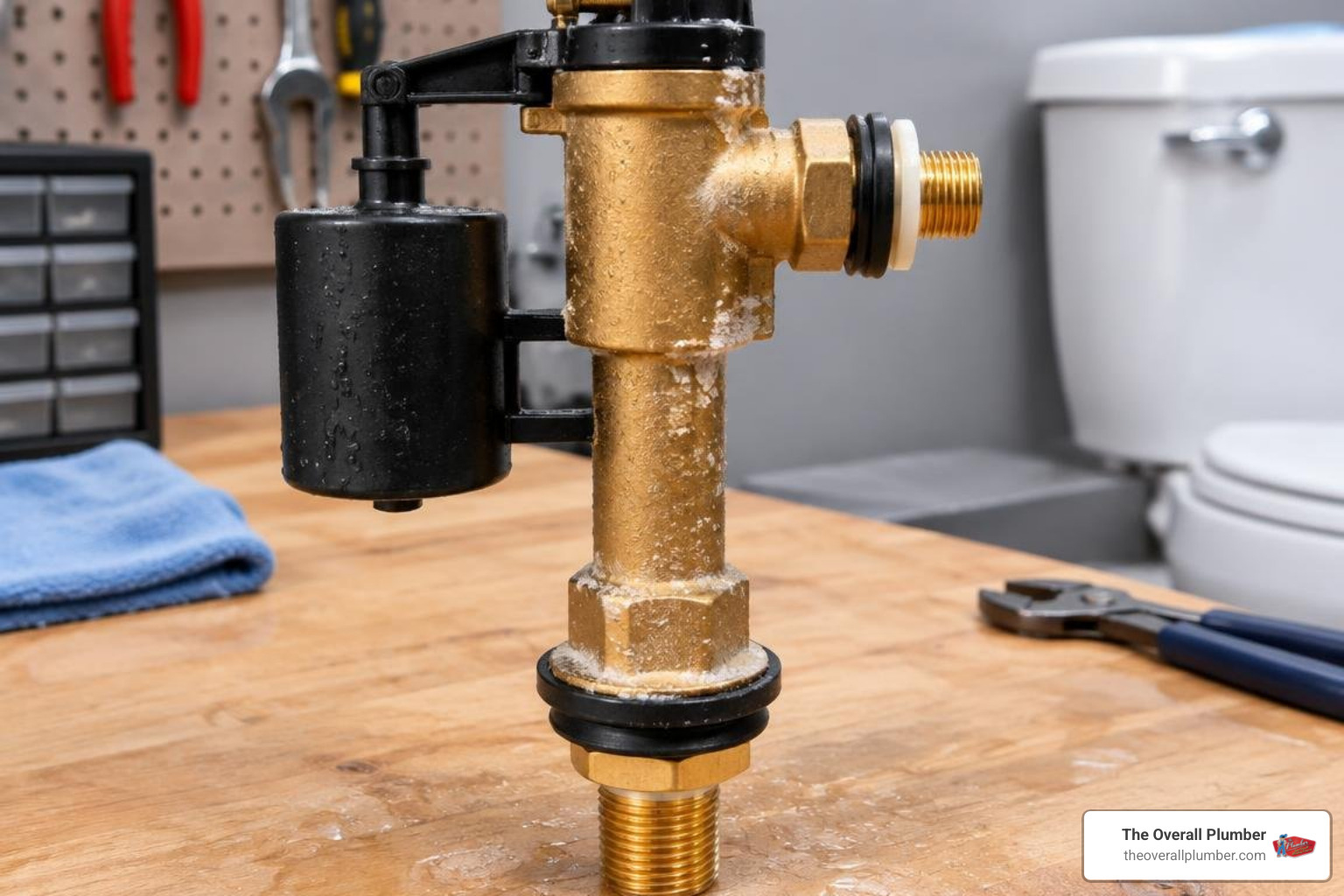
In areas with high water hardness (calcium carbonate exceeding 180 mg/L) or municipal supply pressures above 70 PSI, standard plastic shanks and thin rubber diaphragms wear down prematurely. Calcium deposits crystallize on the valve seat, preventing a full shutoff, while high line pressure causes loud water hammer banging.
For these demanding conditions, heavy-duty commercial models like the Fluidmaster PRO45H fill valve specifications show the advantages of thick-walled bodies, heavy brass shanks, and Viton chemical-resistant diaphragm seals. The heavy brass base resists cross-threading, prevents tank-bottom warping, and easily handles pressures up to 125 PSI.
Key Technical Factors: Fit, Anti-Siphon Protection, and Water Savings
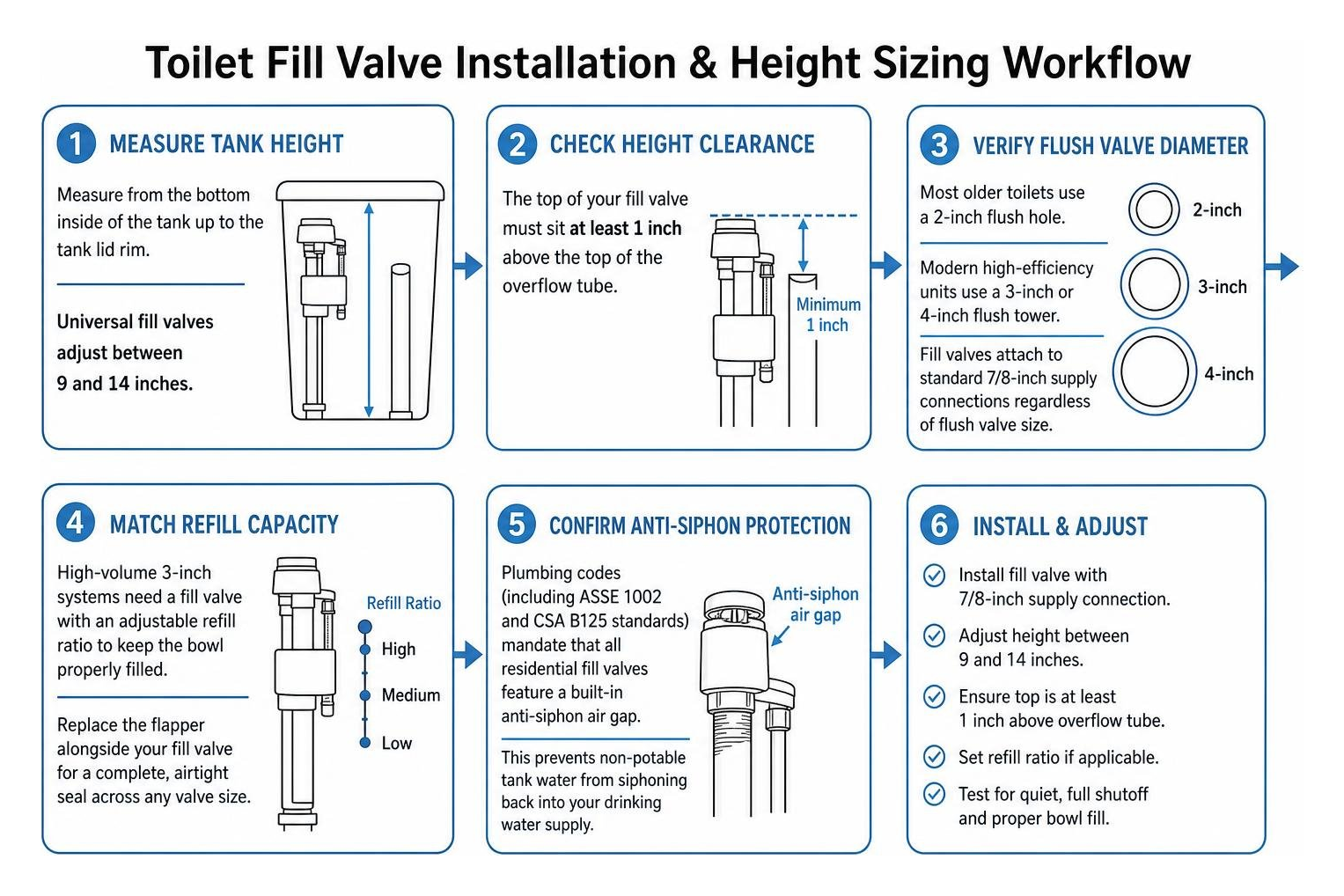
Before purchasing any replacement part, keep three technical factors in mind:
- Tank Height & Telescoping Range: Measure from the bottom inside of the tank up to the tank lid rim. Modern universal fill valves adjust between 9 and 14 inches. The top of your fill valve must sit at least 1 inch above the top of the overflow tube to prevent continuous siphon leaks.
- Flush Valve Diameter: Most older toilets use a 2-inch flush hole, whereas modern high-efficiency units use a 3-inch or 4-inch flush tower. While fill valves attach to standard 7/8-inch supply connections regardless of flush valve size, high-volume 3-inch systems need a fill valve with an adjustable refill ratio to keep the bowl properly filled. Knowing how to replace a flapper alongside your fill valve ensures a complete, airtight seal across any valve size.
- Anti-Siphon Code Compliance: Plumbing codes (including ASSE 1002 and CSA B125 standards) mandate that all residential fill valves feature a built-in anti-siphon air gap. This backflow prevention mechanism ensures that if municipal water pressure suddenly drops, non-potable tank water cannot be siphoned backward into your household drinking water supply.
Diagnosing Valve Failures and Common Tank Leaks
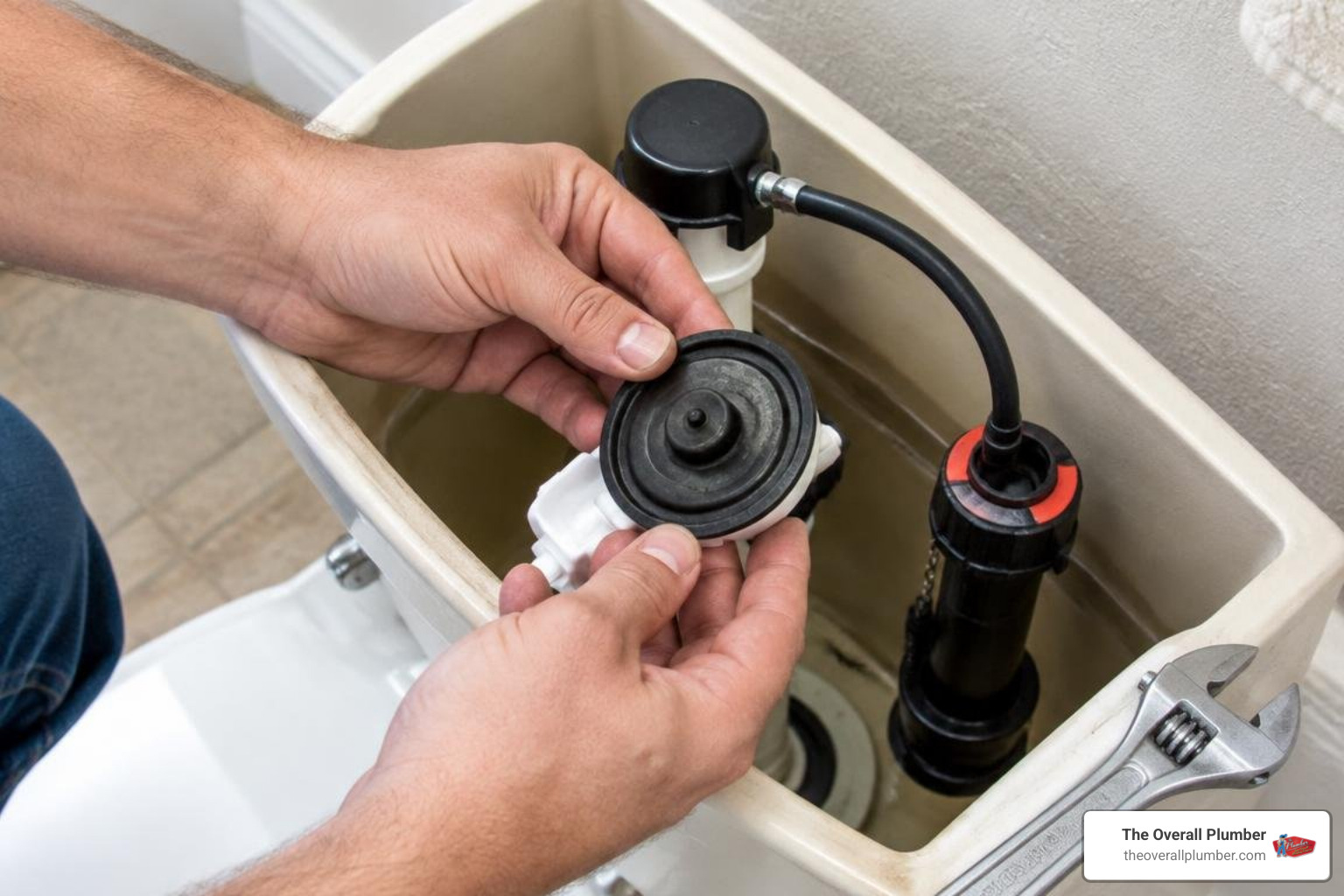
When a toilet starts acting up, checking these key components helps you spot the problem:
- Constant Hissing or Trickling: If water continuously trickles into the overflow tube, the fill valve diaphragm seal under the top cap is cracked, worn, or coated in calcium sediment.
- Leaks from the Top Cap: Water spraying upward against the tank lid points to a ruptured internal rubber seal or excess municipal line pressure forcing water past the cap housing.
- Water Pooling Beneath the Tank Shank: If moisture appears on the floor directly beneath the fill valve connection, the rubber shank washer is either brittle, overtightened, or misaligned. Inspecting the tank using our guide on how to fix toilet problems can help you isolate a fill valve leak from a failed tank-to-bowl gasket.
Step-by-Step Fill Valve Installation and Adjustment
You can complete a DIY valve swap in about 15 to 20 minutes by following these simple steps:
- Shut Off the Water: Turn the angle stop valve on the wall clockwise until tight. If your shutoff is stuck or dripping, follow our steps for installing a new toilet shut-off valve before proceeding.
- Drain and Sponge the Tank: Flush the toilet and hold the handle down to clear out most of the water. Sponge out the remaining water at the bottom of the tank into a small bucket.
- Remove Old Hardware: Place a towel beneath the tank. Unscrew the water supply line coupling nut, then remove the mounting locknut from the threaded shank beneath the tank. Lift the old fill valve out.
- Set the Critical Level Line: Adjust the height of your new valve so the “Critical Level” mark molded onto the valve body rests at least 1 inch above the top of the overflow pipe.
- Install and Hand-Tighten: Seat the new rubber shank washer firmly against the base of the valve inside the tank. Insert the shank through the bottom hole, screw on the plastic locknut underneath by hand, and snug it down an additional 1/2 turn. Never overtighten with a metal wrench, as this can crack porcelain.
- Connect the Refill Tube: Push the small rubber refill tube onto the valve nipple and clip the opposite end onto the overflow pipe, directing water downward.
- Test and Calibrate: Turn the wall shutoff back on. Let the tank fill, then check the water level against the manufacturer’s waterline marked inside the tank. Turn the fine-adjustment screw clockwise to raise the water level, or counterclockwise to lower it. Review our guide on replacing your toilet inlet valve for more tips on fine-tuning.
Frequently Asked Questions About Toilet Fill Valves
How long does a toilet fill valve typically last?
A quality toilet fill valve lasts between 5 and 10 years under normal residential conditions. A family of five cycles a fill valve more than 9,000 times each year. In areas with hard water or heavy mineral sediment, dissolved calcium and chloramines break down internal rubber diaphragms faster, often shortening that service life to 4 or 6 years without regular maintenance.
What is the difference between Fluidmaster and Korky fill valves?
Fluidmaster fill valves rely on an external float cup that travels vertically along the central valve shaft, providing quick visual feedback and high refill speeds. Korky valves use an enclosed internal float chamber that operates quietly and resists hard-water buildup. Both offer universal fit models that work reliably across major toilet brands.
Why is my toilet tank not filling with water after flushing?
If your tank does not refill after a flush, first make sure the wall angle stop is opened all the way. If the supply stop is fully open, the inlet strainer screen at the bottom of the fill valve shank is likely clogged with mineral debris, or the internal diaphragm seal is stuck shut. You can remove the top cap, place an inverted cup over the assembly, and briefly turn on the water supply to flush out trapped sediment.
For hands-on assistance with persistent toilet leaks or valve installations, contact The Overall Plumber to schedule service.