


What Does Gas Line Repair Cost in 2026?
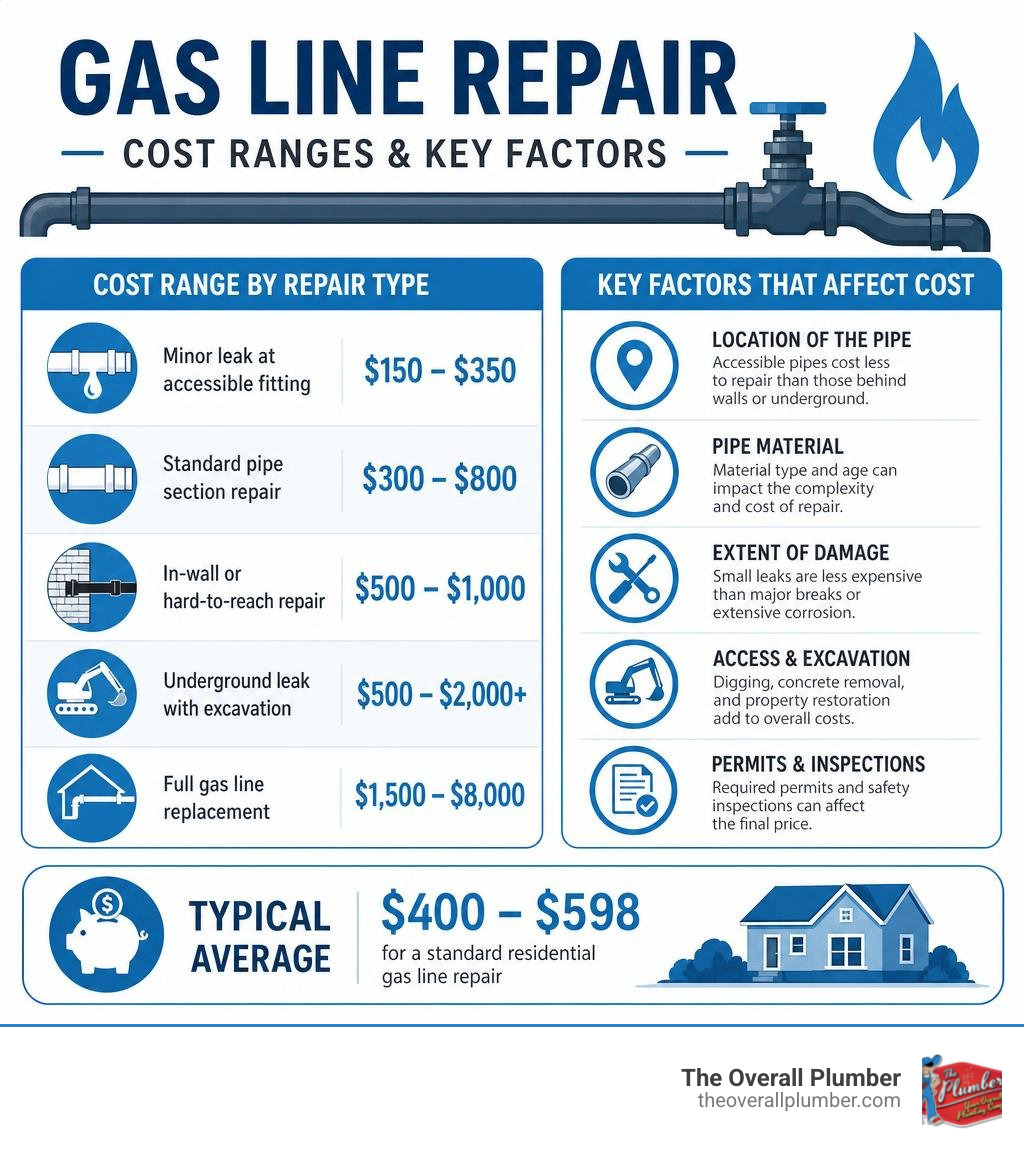
The cost of gas line repair typically falls between $150 and $800 for most homeowners in 2026, though prices can vary widely based on the severity of the damage and where the pipe is located.
Here’s a quick breakdown to help you estimate your costs:
| Repair Type | Typical Cost Range |
|---|---|
| Minor leak at accessible fitting | $150 – $350 |
| Standard pipe section repair | $300 – $800 |
| In-wall or hard-to-reach repair | $500 – $1,000 |
| Underground leak with excavation | $500 – $2,000+ |
| Full gas line replacement | $1,500 – $8,000 |
The national average sits around $400 to $598 for a typical residential repair. Simple fixes like tightening a fitting or sealing a small accessible leak start as low as $120 to $150. Bigger jobs — especially those that require digging up a buried line — can push well past $2,000.
Gas leaks are not a wait-and-see situation. If you smell rotten eggs, hear hissing near a gas pipe, or notice your gas bill creeping up for no clear reason, those are warning signs that something needs attention fast.
I’m Dayton Whitworth, a second-generation plumber serving Greater Brazoria County, Galveston County, Houston, and the surrounding Gulf Coast, with hands-on experience handling everything from minor gas line leaks to full system replacements — and I’ve seen how the cost of gas line repair can swing dramatically depending on pipe material, location, and how quickly the problem is caught. In the sections below, I’ll walk you through every factor that affects your final price so you can plan with confidence.
Average Cost of Gas Line Repair in 2026
When evaluating the cost of gas line repair, it helps to understand how these expenses are calculated across the country and right here in our Texas service areas like Houston, Pearland, and League City. According to the Yelp Gas Line Services Cost Guide, which aggregates real quote data from thousands of projects across the United States, homeowners typically see prices ranging from $87 to $425 for minor, straightforward repairs. However, when a pipe suffers from deep corrosion or is buried beneath a concrete driveway, the scope of work shifts dramatically.
Nationally, the average price for a standard residential gas line repair is about $598, or roughly $15 to $25 per linear foot. If the damage is highly localized, such as a worn-out valve on an exposed pipe in your utility room, you might only pay between $120 and $250.
For more complex issues, the Gas Line Repair Cost Guide – Current Cost outlines a wider spectrum. A mid-range repair or partial line replacement often runs between $350 and $1,000, while severe issues that involve major excavation can easily climb to $2,000 or $3,000.
Regional pricing variations also play a significant role. Here along the Texas Gulf Coast—from Pasadena and Friendswood down to Galveston—our unique coastal climate, soil conditions, and local municipal codes influence pricing. High humidity can accelerate exterior pipe rust, and shifting clay soils can put physical stress on underground lines, leading to more frequent repairs. Fortunately, labor rates in the South and Southeast generally trend slightly lower than in the Northeast or West Coast, helping keep your baseline repair costs highly competitive.
Average Cost of Gas Line Repair for Minor Leaks
A minor gas leak is typically found near accessible fittings, joints, or appliance hookups. These leaks are often detected during routine appliance installations or when a homeowner notices a faint, occasional whiff of that characteristic rotten-egg smell (which is actually mercaptan, an additive used to make naturally odorless gas detectable).
To pinpoint these small leaks, we often perform a simple soap bubble test. By applying a specialized soapy solution to the pipe joints and fittings, we can watch for growing bubbles that indicate escaping gas. If the leak is located at an easy-to-reach joint, fixing it is relatively straightforward.
The average cost to repair a minor leak at an accessible fitting ranges from $120 to $250. In many cases, we simply need to tighten the joint, replace a worn-out connection, or apply a fresh coat of pipe thread sealant. If you want to understand the mechanics of how these quick fixes are performed, you can read our guide on How to Fix Gas Line Fast by Using 4 Methods.
Average Cost of Gas Line Repair for Major and Underground Leaks
When a gas leak occurs underground or behind finished walls, the complexity—and the price tag—escalates. Underground gas lines supply fuel to outdoor kitchens, pool heaters, guest houses, or run from the main meter to your home. Over time, soil moisture, tree root intrusion, or accidental digging can puncture or crack these pipes.
Repairing an underground gas leak typically costs between $500 and $2,000, but can easily exceed $3,000 if extensive excavation is required. The primary cost driver here isn’t the physical pipe material; it’s the labor-intensive process of trenching to locate and access the damaged section.
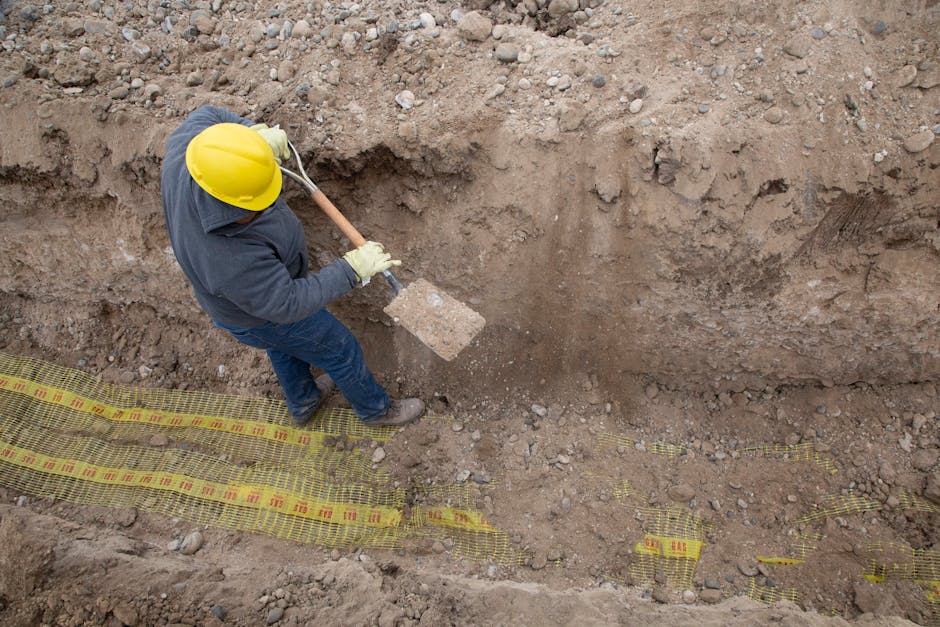
If the pipe runs beneath a landscaped lawn, trenching is relatively straightforward but will require yard restoration later. However, if the line runs under a concrete patio, sidewalk, or driveway in Pasadena or Clear Lake, we must use specialized concrete cutting equipment to reach the pipe, adding significant labor and restoration costs to the final bill.
Key Factors That Influence Gas Line Repair Pricing
No two gas line repair jobs are exactly alike. When we provide an estimate for your home in Galveston County or Harris County, we evaluate several critical variables that shape the total cost of gas line repair:
- Pipe Location and Accessibility: Exposed pipes in an open attic, crawlspace, or utility room are fast and easy to repair. Pipes embedded inside drywall, run under flooring, or buried deep underground require extra time, tools, and labor to access.
- City Permits and Inspections: Nearly all municipal jurisdictions in Texas—including La Porte, Santa Fe, and Texas City—require permits for gas line repairs and modifications. These permits ensure that the work is inspected by a city official to guarantee safety. Permits typically add $50 to $300 to the project cost.
- Complexity of the System: Branching a single line to a new appliance is much simpler than repairing a complex manifold system that distributes gas to a furnace, water heater, stove, and fireplace simultaneously.
For a comprehensive look at how these factors influence the initial setup of your gas system, you can review the HomeGuide Gas Line Installation Cost analysis.
Pipe Material and Length
The type of pipe material used in your home directly impacts both the material costs and the labor required to complete the repair. Different materials require different tools, joining methods, and installation times:
- Black Iron: The traditional standard for indoor gas lines. It is incredibly durable but heavy and labor-intensive to thread and install. Repairing black iron typically costs $15 to $25 per linear foot.
- Corrugated Stainless Steel Tubing (CSST): A flexible metal pipe that is highly popular in modern homes because it can be snaked through walls easily, reducing the need for multiple joints. CSST repairs are highly efficient but the material itself is slightly more expensive.
- Copper and Brass: Sometimes used for specific appliance connections, though local codes in some Texas jurisdictions restrict their use depending on the sulfur content of the local gas supply.
- HDPE (High-Density Polyethylene): The industry standard for underground outdoor lines. It is highly resistant to corrosion and chemical damage, costing about $15 to $30 per linear foot to repair or replace.
Labor Rates and Emergency Surcharges
Labor represents the largest portion of your gas line repair bill. Because working with natural gas carries inherent safety risks, you should only hire a licensed, insured, and highly trained plumber or gas fitter.
Standard hourly rates for a licensed plumber typically range from $45 to $200 per hour, with most master plumbers charging between $75 and $150 per hour. The total time required for a standard repair is usually 2 to 4 hours.
If you suspect a gas leak outside of normal business hours, you cannot afford to wait. Emergency gas line repairs incur additional surcharges. An emergency callout fee typically adds a flat $200 to $300 to the bill, or the hourly rate may be billed at time-and-a-half or double-time. When safety is on the line, having access to reliable 24 Hour Emergency Plumbers is essential to secure your property and stop the leak immediately.
Gas Line Replacement vs. Repair: Costs and Decisions
At some point, patching a damaged gas line is no longer the safest or most cost-effective option. If your gas system is aging, experiencing multiple leaks, or constructed from outdated materials, a partial or full replacement is the smartest path forward.
As a general rule of thumb, we recommend the 40-50% rule: if the cost to repair a section of your gas line exceeds 40% to 50% of the cost to replace the entire run, you should invest in replacement. A localized repair might solve today’s leak, but if the surrounding pipe is thin and corroded, another leak is likely to develop nearby in the near future.

While a localized repair averages $400 to $600, a complete residential gas line replacement typically costs between $1,000 and $4,000, depending on the length of the run and the accessibility of the pipes. For large homes or complex layouts requiring extensive line runs, a whole-house replacement can range from $3,000 to $8,000.
When Replacement is Necessary
We actively recommend replacing your gas lines under the following circumstances:
- Systemic Rust and Corrosion: If galvanized steel or black iron pipes show widespread flaking, rust, or deep pitting, the integrity of the metal is compromised.
- Outdated or Recalled Materials: Older homes may still feature materials that are no longer up to modern building codes or have been associated with safety recalls.
- Failing a Pressure Test: If your system fails a municipal safety inspection, local gas providers like CenterPoint Energy will shut off service to your home until the entire system can prove it holds pressure. To restore your service, we must perform a professional Centerpoint Gas Pressure Test to verify that the lines are completely sealed and compliant with current codes.
Additional and Hidden Costs of Gas Line Work
When budgeting for the cost of gas line repair, it is important to look beyond the plumber’s initial estimate for the pipe fix itself. There are several secondary expenses that frequently arise during a major gas line project:
- Permit Fees: As mentioned, local municipal permits in Harris and Galveston counties are mandatory for major gas repairs, typically costing $50 to $300.
- Pressure Testing and Inspections: After a repair or replacement is completed, we must perform a hydrostatic or pressure test to confirm the system is 100% airtight. This test can range from $75 to $500 depending on the complexity of your system and local code requirements.
- Drywall and Ceiling Repairs: If we have to cut through your living room ceiling or kitchen drywall to access a leaking pipe, you will need to hire a drywall specialist to patch, texture, and paint the affected areas. This can add $200 to $1,000 to your total restoration costs.
- Landscaping and Concrete Restoration: If your outdoor lines required excavation, expect to spend $300 to $1,500+ to repair damaged sod, replant flower beds, or repave cut sections of concrete driveways and walkways.
Frequently Asked Questions About Gas Line Repair
Dealing with gas line issues can be stressful. Here are clear answers to some of the most common questions we receive from homeowners in our Texas service communities.
Can I repair a gas line myself?
No. DIY gas line repair is highly dangerous, illegal in virtually all municipal jurisdictions, and will instantly void your homeowners insurance policy. Natural gas is highly volatile; a single loose fitting or improper seal can cause a catastrophic explosion or slow-burning fire.
Furthermore, gas repairs must be permitted, completed by a licensed specialist, and pass strict pressure tests to comply with local safety codes. Attempting to work on these lines yourself is simply not worth the risk. For a deeper look at why pressurized utility lines require professional hands, read our article: Don’t Get Burned by DIY Hot Water Line Repair.
Does homeowners insurance cover gas line repair?
Standard homeowners insurance policies typically do not cover gas line repairs that are caused by normal wear and tear, corrosion, aging, or tree root intrusion.
However, if your gas line is damaged due to a sudden, covered peril—such as a lightning strike, a fallen tree during a Gulf storm, or an explosion—your policy may help cover the repair costs. Many insurance providers also offer an optional “Service Line Endorsement” for an extra $30 to $60 per year, which covers repairs to underground utility lines (water, sewer, and gas) running from the street to your home.
How long does a typical gas line repair take?
The duration of a repair depends entirely on the location and severity of the leak:
- Simple Fitting or Valve Repair: 1 to 2 hours.
- Accessible Pipe Section Replacement: 2 to 4 hours.
- In-Wall or Attic Repair: 3 to 6 hours.
- Underground Excavation and Repair: 1 to 2 days, depending on the depth of the line and the soil conditions.
Schedule Your Professional Gas Line Service Today
When it comes to gas line safety, you should never settle for second best. At The Overall Plumber, we bring decades of localized expertise to every gas line repair, replacement, and safety inspection we perform across Brazoria County, Galveston County, and the Greater Houston area.
We understand that a gas line issue is an urgent matter. That is why we offer priority scheduling, satisfaction guarantees, and absolutely no overtime fees or trip charges. Whether you need a routine system check or a comprehensive Certified Plumber for Gas System Testing, our team of licensed, highly trained professionals is ready to restore safety and peace of mind to your home.
Don’t ignore the warning signs of a damaged gas line. Contact us today at (281) 668-8055 to schedule your professional gas line inspection or repair!