


Act Fast When You Suspect a Frozen Pipe
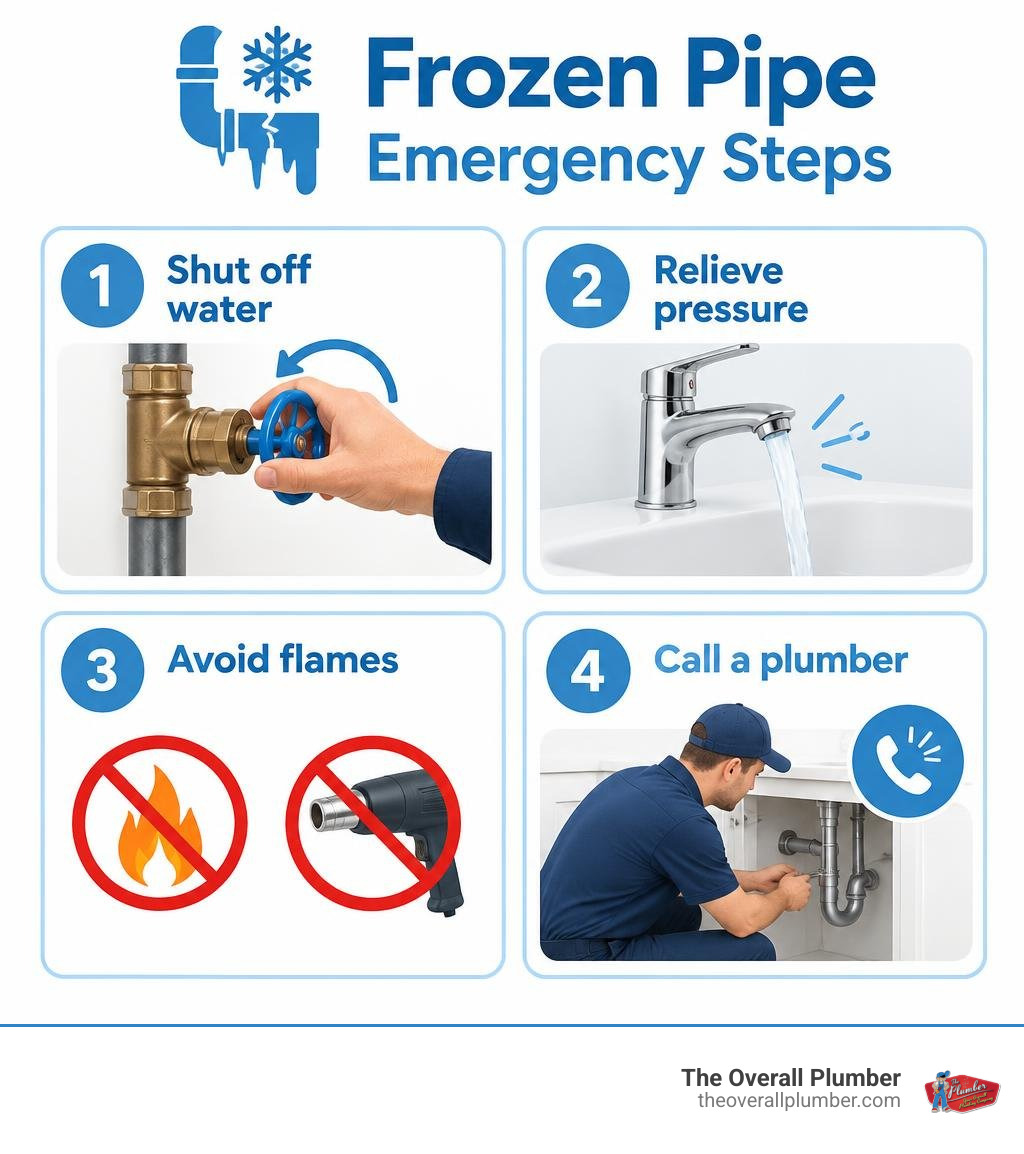
If you suspect a frozen pipe, turn off your home’s main water supply if you see a leak or think a pipe may have cracked. Open the affected faucet to relieve pressure, avoid open flames or high heat, and call a frozen pipe repair service as soon as possible. A plumber can safely thaw the line, check for hidden splits, and restore water without raising the risk of a burst.
Water expands by roughly 9% when it freezes. That expansion can block a pipe and create enough pressure to crack it. A small 1/8-inch crack under normal water pressure can release 4 to 8 gallons per minute, so even a pipe that has not burst yet needs prompt attention.
Watch for little or no water from one faucet, frost on exposed pipes, strange clanking or gurgling sounds, damp drywall, or water stains. Pipes in exterior walls, garages, attics, crawl spaces, and drafty older homes are often the first to freeze. The American Red Cross recommends keeping cabinet doors open and letting faucets drip during severe cold to reduce the chance of freezing.
I am Dayton Whitworth, a second-generation plumbing professional serving the Greater Brazoria County, Galveston County, Houston, and Gulf Coast areas. Through emergency plumbing work and frozen pipe repair service calls, I help homeowners stop damage quickly and address the weak points that can lead to another freeze.
Why You Need a Professional Frozen Pipe Repair Service Immediately
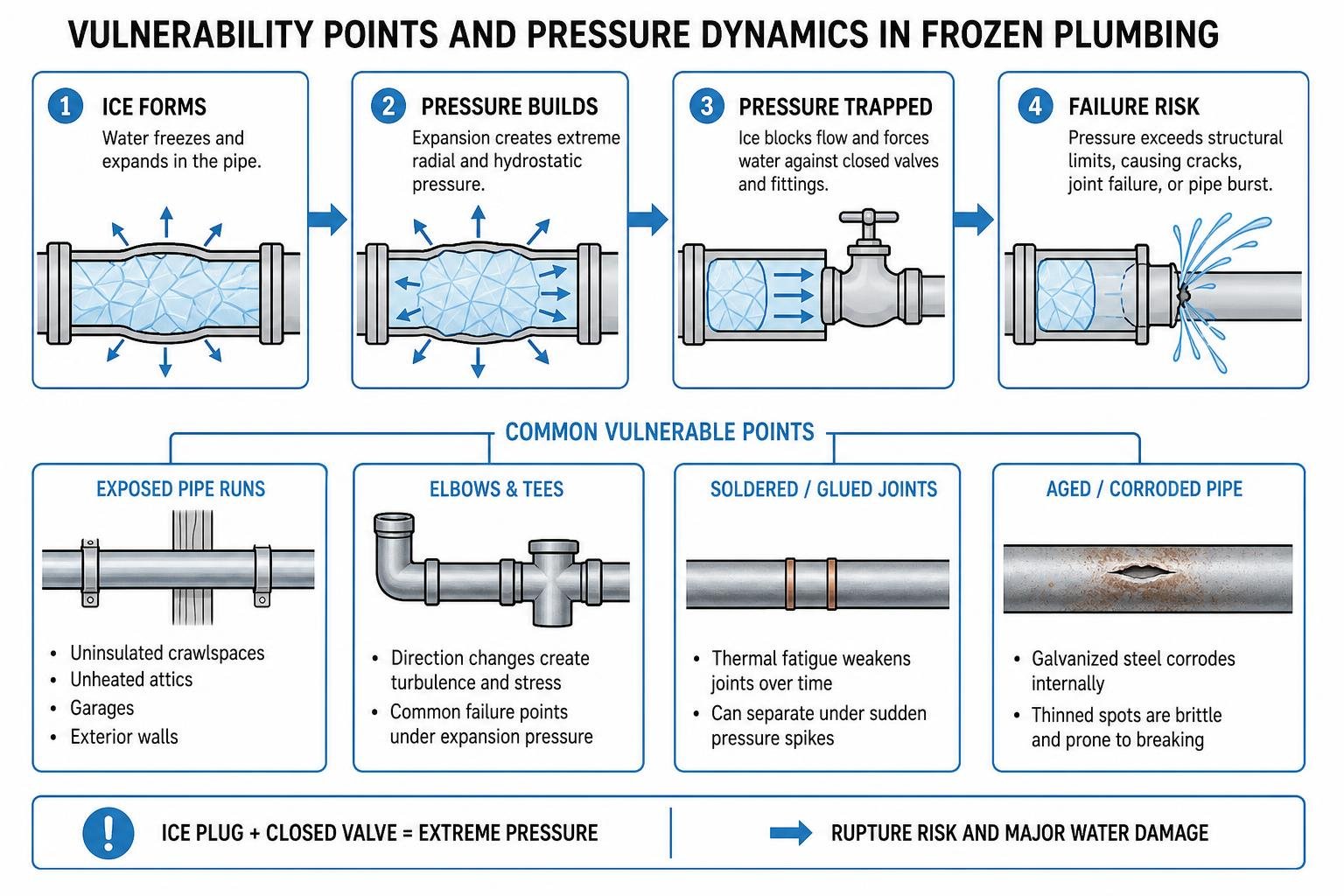
When water turns to solid ice inside a sealed plumbing line, the physical expansion generates extreme radial and hydrostatic pressure. The ice plug itself is rarely what breaks the pipe; rather, as the ice expands, it forces the trapped water downstream against closed valves and fixture fittings. This builds immense pressure between the ice blockage and the faucet, pushing metal and plastic beyond their structural yield points.
Leaving an ice plug unaddressed invites catastrophic flooding. A simple 1/8-inch fracture in a pressurized line running at 60 PSI will dump between 4 and 8 gallons of water per minute directly into your wall cavities, flooring, or ceiling. Within minutes, clean drywall transforms into saturated mush, subfloors warp, and mold colonies begin establishing spores behind trim.
Knowing when to call a frozen pipe plumber before the system ruptures can save thousands of dollars in remediation expenses. Professional intervention stops the pressure spike while providing controlled diagnostic thawing.
| Service Stage | Average Cost Range | Primary Risks Prevented | Typical Resolution Time |
|---|---|---|---|
| Pre-Burst Thaw & Inspection | $185 – $450 | Pipe rupture, joint separation, structural flooding | 1 – 2 hours |
| Post-Burst Emergency Repair & Restoration | $4,000 – $10,000+ | Structural rot, black mold growth, ruined electrical circuits | 3 – 7 days |
Recognizing Signs of Freezing and Hidden Pipe Vulnerabilities
Recognizing an oncoming freeze allows you to intervene before a hairline fracture opens up. The most common warning signs include:
- Zero or Restricted Flow: Turning on a faucet yields only a weak trickle or a complete lack of running water.
- Surface Frost: A visible white coating of frost forms on exposed copper, PEX, or CPVC supply runs.
- Unusual Noises: Clanking, whistling, or bubbling noises emerge from the walls as trapped water struggles against an expanding ice barrier.
- Wall Moisture: Bulging paint, sagging sheetrock, or damp spots indicate condensation or active leakage from a stressed joint.
Certain areas of the home are significantly more vulnerable to cold air exposure. Plumbing runs through uninsulated crawlspaces, exterior walls facing prevailing north winds, unheated attics, and attached garages are the primary failure zones.
Older homes in our coastal Texas communities present unique structural challenges. Historic properties in Galveston or older neighborhoods across Pasadena and Houston often feature uninsulated wall cavities and aging galvanized steel piping. Galvanized steel suffers from internal corrosion over decades, creating brittle thin spots that snap easily under expansion stress. Similarly, aged soldered joints on copper lines experience thermal fatigue, breaking free at elbows and tees when subjected to sudden temperature drops.
When to Call an Emergency Frozen Pipe Repair Service
Cold snaps that dip below 20°F create severe plumbing stress across the upper Gulf Coast, where homes are rarely built with interior-wall plumbing routing. When temperatures plummet, an ice blockage can form in less than three hours of steady draft exposure.
If you suspect an inaccessible line has frozen inside an exterior wall, under a concrete slab foundation, or up in an attic, contacting 24 hour emergency plumbers is essential. Hidden freeze points cannot be safely warmed with consumer tools, and attempting to force water through an unyielding ice plug risks blowing out hidden elbow joints. Our team provides rapid technician dispatch across Harris, Galveston, and Brazoria counties to assess line integrity and deploy professional mitigation before minor splits escalate into structural collapses.
Immediate Action Plan: What to Do Before Help Arrives
When an emergency strikes, taking prompt damage-control measures before our service truck arrives minimizes structural destruction. Follow this critical sequence:
- Isolate the Water Supply: Turn off your home’s main water valve completely to eliminate line pressure.
- Open Fixtures: Open both hot and cold handles on fixtures connected to the frozen run to give melting water room to move.
- Clear Surrounding Areas: Move furniture, electronics, rugs, and valuables away from walls showing signs of moisture or frost.
- Isolate Power: If water is pooling near electrical outlets, baseboard heaters, or your breaker panel, shut off the corresponding circuits at the main panel immediately.
- Contain Existing Leaks: Place buckets under active drips and use towels to catch localized moisture.
Water Main Shut-Off and Pressure Relief Procedures
Every homeowner should locate their main water shut-off mechanism before freezing weather arrives. Most homes utilize one of two primary valve styles:
- Ball Valves: Commonly found where the main line enters the home or garage. These feature a straight lever handle. Rotate the lever 90 degrees so it rests perpendicular to the pipe to close the supply completely.
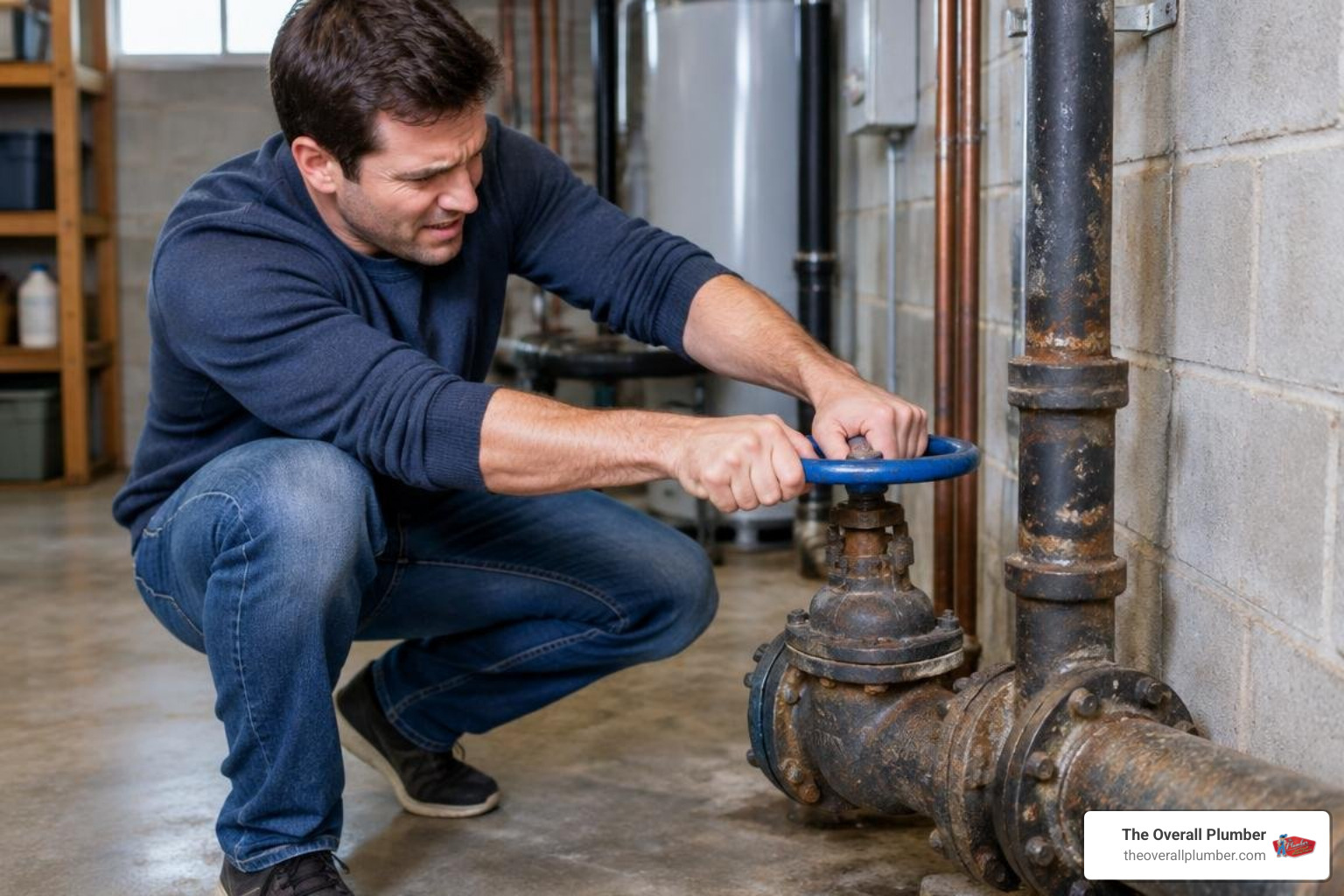
- Gate Valves: Older installations often use a round wheel handle. Turn the wheel clockwise until it stops turning completely. Avoid using excessive force with wrenches, as aged brass stems can shear off.
If your interior shut-off valve is inaccessible or seized, locate the municipal water meter box near the street curb. Using a specialized curb stop meter key, turn the brass valve head clockwise a quarter-turn until the padlock eyelets align.
Once the main supply is closed, open the lowest faucet on the property (such as an outdoor hose bib or laundry sink) along with the highest faucet in the house. This dual opening uses gravity to drain residual water from vertical risers, relieving trapped hydrostatic pressure and significantly reducing the risk of downstream wall ruptures. If you cannot isolate the main line, reach out immediately for local residential plumbing emergency services to protect your foundation and flooring.
DIY Thawing Hazards vs. Safe Temporary Management
While it is tempting to tackle a frozen line with whatever tools are in the garage, aggressive DIY heating methods often cause catastrophic damage.
Never use an open flame, propane torch, or high-output commercial heat gun on plumbing lines. Applying direct flame to a frozen copper pipe creates extreme thermal shock, cracking the metal instantly and vaporizing trapped water into high-pressure steam that can rupture the pipe violently. More critically, applying an open flame inside drafty wall cavities filled with dry framing and paper-faced insulation is a leading cause of residential winter structure fires.
Instead, stick to gentle, temporary stabilization while waiting for a licensed plumber:
- Open vanity and kitchen cabinet doors beneath sinks to let natural room warmth circulate around exposed PEX or copper supply lines.
- Set a portable space heater several feet away from open cabinets, ensuring it is positioned on a flat surface away from combustible materials.
- For exposed pipes in accessible basements or laundry rooms, you can wrap the line with warm towels soaked in hot water.
If you discover a minor weeping crack during this process, learning how to fix a leaking pipe quickly with a temporary rubber patch and hose clamp can help hold back residual drainage until permanent repairs occur.
How Technicians Diagnose, Thaw, and Restore Frozen Plumbing
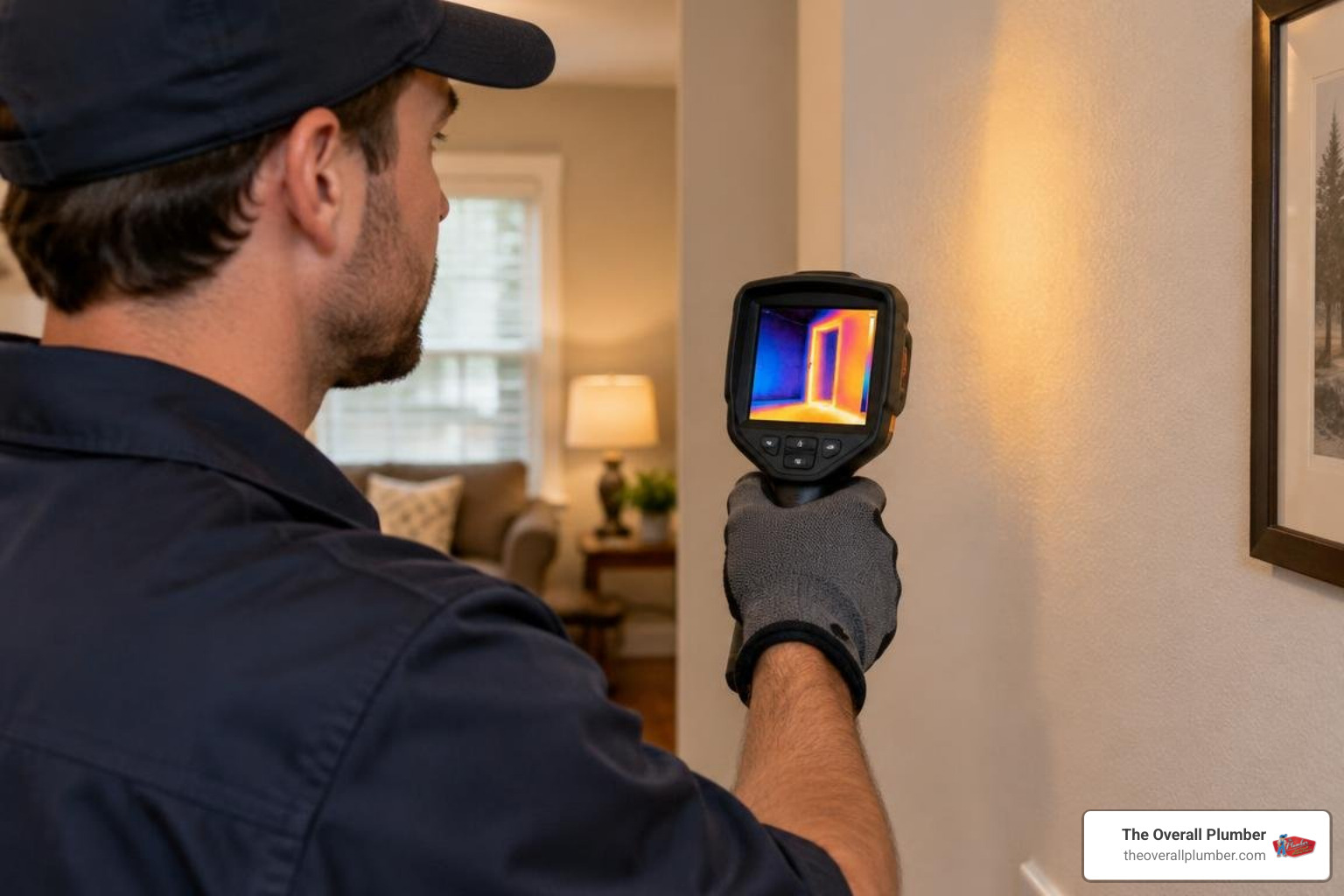
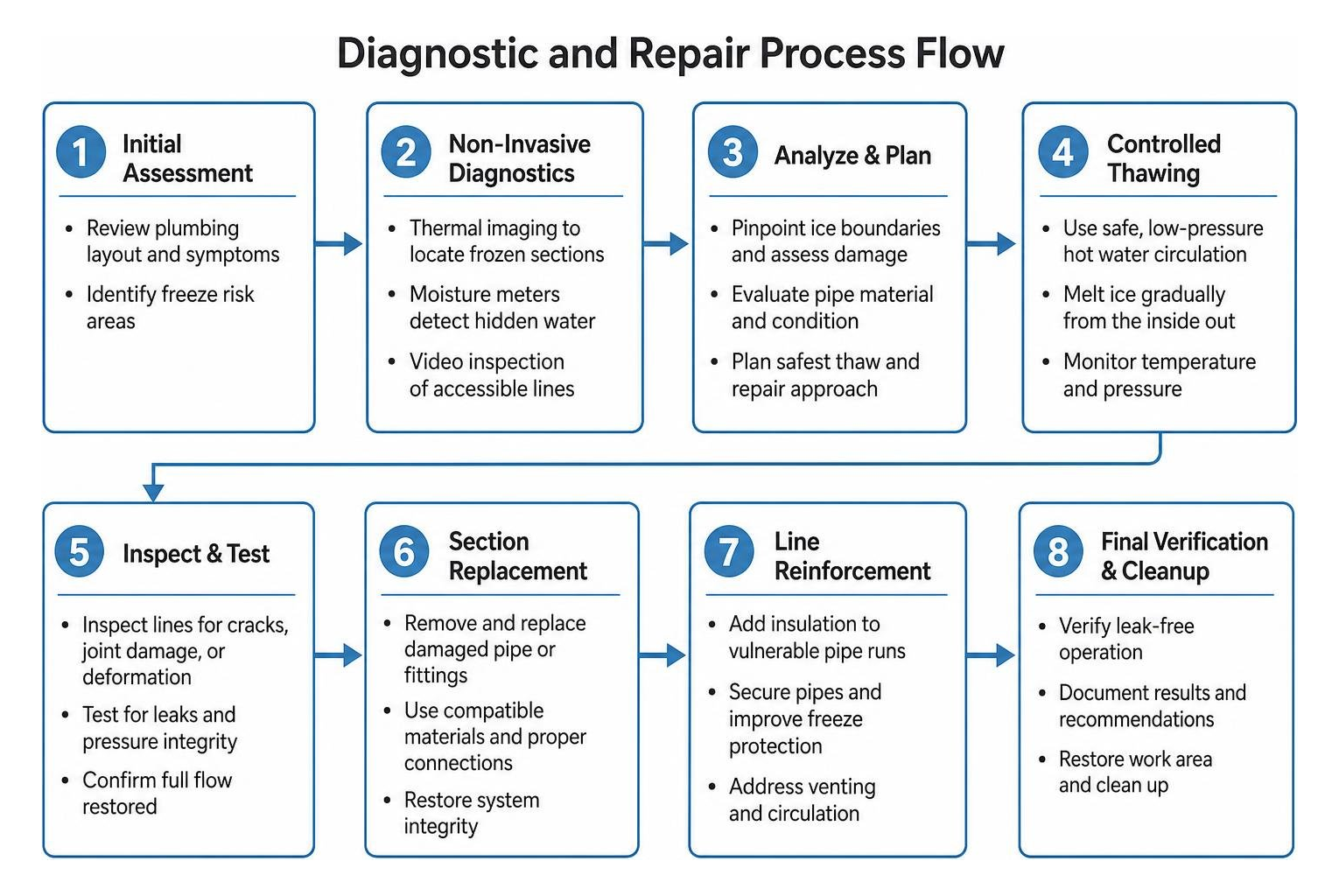
Professional restoration requires precise diagnostics to protect your structural framing and plumbing infrastructure. When our technicians arrive on-site, we do not guess where the freeze is located. We conduct non-invasive acoustic and thermal assessments to pinpoint the exact boundaries of the ice blockage without tearing open unnecessary sections of drywall.
Our diagnostic sequence evaluates the entire plumbing layout, checking copper solder joints for micro-fissures, examining PEX tubing for over-expansion stretching, and assessing brittle CPVC fittings for stress crazing.
Diagnostic Tools Used in a Frozen Pipe Repair Service
Modern plumbing diagnostics eliminate destructive exploratory wall demolition. We utilize:
- Infrared Thermal Imaging Cameras: These cameras reveal surface temperature differentials behind sheetrock, displaying frozen pipe runs as clear, dark-blue thermal signatures.
- Digital Moisture Meters: Non-invasive pins and surface pads detect hidden water migration inside wall cavities and subflooring before stains become visible to the eye.
- High-Definition Video Inspection Systems: Optical cameras are fed into accessible branch lines to inspect interior pipe walls, identifying structural deformation, internal ice plugs, and joint dislodgement.
Professional Thawing, Section Replacement, and Line Reinforcement
Once the freeze is mapped, technicians apply controlled thawing techniques tailored to the specific pipe material:
- Controlled Hot Water Circulation: Safe, low-pressure hot water circulation units introduce warm water directly to the face of the ice plug, steadily melting the obstruction from the inside out without thermal shock.
- Low-Voltage Electric Pipe Thawers: For accessible metallic lines, specialized resistance-heating equipment passes a safe, high-amperage current through the pipe wall, warming the metal evenly across the entire run.
- Infrared Surface Heating: Safe, regulated infrared panels heat wall cavities gradually to bring copper and PEX lines up to standard operating temperatures without scorching framing materials.
A typical controlled thaw takes between 20 and 90 minutes depending on ice volume, pipe diameter, and wall depth.
If the freeze caused physical ruptures, we perform surgical section replacements. Damaged sections of split copper or brittle galvanized lines are removed and replaced using high-grade PEX-A expansion tubing or precision-soldered Type L copper fittings. PEX-A is particularly resilient for repair retrofits because it can expand up to three times its diameter before sustaining structural failure.
For complex wall repairs, our team provides complete broken pipe repair services, finishing every job with a static hydraulic pressure test to verify that every joint holds up to full municipal pressure before water service is restored.
Proven Winterization Strategies to Prevent Future Pipe Freezes
Preventing future plumbing freezes requires a comprehensive approach that targets cold air infiltration and insulates vulnerable plumbing lines. Many homeowners assume cold snaps in Texas are too brief to warrant full winterization, but uninsulated attic and crawlspace lines can freeze solid in just a few hours during a sudden coastal freeze.
Key pipe protection methods include:
- Closed-Cell Foam Insulation: Slip pre-slit tubular foam sleeves over all exposed hot and cold water pipes in unheated garages, attics, and crawlspaces. Ensure all corner joints are sealed with acrylic insulation tape.
- Thermostatically Controlled Heat Cables: Install self-regulating heating cables along high-risk supply runs. These smart cables automatically increase their heat output as the ambient pipe temperature drops toward freezing.
- Air Sealing Building Envelopes: Inspect your home’s foundation, rim joists, and exterior siding for penetrations where electrical conduits, dryer vents, or outdoor spigots enter. Seal these gaps using expanding polyurethane foam or exterior-grade silicone caulk to stop freezing drafts from blowing directly onto plumbing runs.
For older central heating plumbing systems, reviewing heating pipe repair and leak solutions ensures your boiler feed lines and hydronic loops remain safe from winter temperature drops.
Exterior Spigot Isolation and Indoor Temperature Protocols
Outdoor hose connections are the most common source of freeze-related pipe bursts. When a garden hose remains attached during freezing weather, it traps water inside the spigot body. As this water freezes, it expands directly backward into the interior wall pipe.
Take these preventative measures before freezing weather arrives:
- Disconnect, drain, and store all garden hoses before temperatures dip below freezing.
- Install insulated foam faucet covers over all exterior spigots to create a dead-air insulation barrier.
- If your home features interior shut-off valves for outdoor lines, close the interior valve, open the outside spigot handle, and unthread the small brass bleeder cap on the interior valve to drain all trapped water.
Inside the home, maintain a consistent indoor temperature. Never set your thermostat lower than 55°F, even if you are traveling away from home for the winter. During extreme cold snaps reaching into the teens, open cabinet doors beneath exterior-wall sinks and allow the furthest faucet from the main supply to maintain a slow, steady pencil-lead-thick drip. Moving water resists freezing, and the open faucet prevents pressure buildup within the line.
Frequently Asked Questions About Frozen Pipe Repair
Can a frozen pipe burst after it thaws?
Yes, pipes frequently appear to “burst” during or immediately after the thawing process. In reality, the physical crack or joint split occurred when the ice originally expanded. The solid ice plug acts as a temporary dam, sealing the fracture and preventing water from escaping. Once ambient heat melts the ice plug, full municipal water pressure returns, forcing water through the split and causing immediate flooding. This is why line pressure must always be relieved and water monitored closely during every thaw.
Does homeowners insurance cover water damage from frozen pipes?
Most standard homeowners insurance policies cover sudden and accidental water damage resulting from a burst frozen pipe, including structural drywall repairs, flooring replacement, and mold mitigation. However, insurance adjusters frequently deny claims if they determine the homeowner failed to maintain adequate heat in the property (typically at least 55°F) or neglected known plumbing vulnerabilities. Having a professional plumbing invoice and diagnostic report documenting the sudden nature of the freeze is essential when filing a claim.
How long does a professional pipe thawing and repair take?
A standard professional thawing procedure typically takes between 20 and 90 minutes, depending on the severity of the ice blockage, pipe accessibility, and pipe material. If the pipe suffered a physical split that requires section replacement or PEX-A retrofitting, accessible repairs generally take an additional 1 to 2 hours. Complex repairs located deep behind finished tile or beneath concrete slab foundations may require additional time for surgical access and post-repair pressure testing.
If you are dealing with a frozen line or suspect a burst pipe, protect your home from severe water damage by calling our team immediately for fast, professional emergency service.