


What a Leaking Shower Valve Is Trying to Tell You
Shower valve repair is one of the most common plumbing fixes homeowners deal with — and the good news is that most cases can be solved by replacing the cartridge inside the valve.
Quick Answer: How to Fix a Leaking Shower Valve
- Turn off the water supply at the shutoff valves or main supply line.
- Remove the shower handle by prying off the cap and loosening the set screw.
- Pull off the escutcheon (trim) plate to expose the valve cartridge.
- Remove the retaining clip and extract the old cartridge using pliers or a cartridge puller.
- Lubricate the O-rings on the new cartridge and insert it in the correct orientation.
- Reinstall the retaining clip, trim plate, and handle.
- Turn the water back on slowly and check for leaks.
That midnight drip. You tighten the handle, you try ignoring it, and it still drips. Beyond being annoying, a faulty shower valve can waste water, spike your utility bills, and — if left alone — cause hidden water damage and mold growth behind your walls. The fix is usually simpler than it looks, and this guide walks you through the whole process.
I’m Dayton Whitworth, a second-generation plumber serving Houston and the Gulf Coast, and shower valve repair is one of the most frequent calls our team at The Overall Plumber handles. Let’s break it down so you know exactly what you’re dealing with before you pick up a wrench.
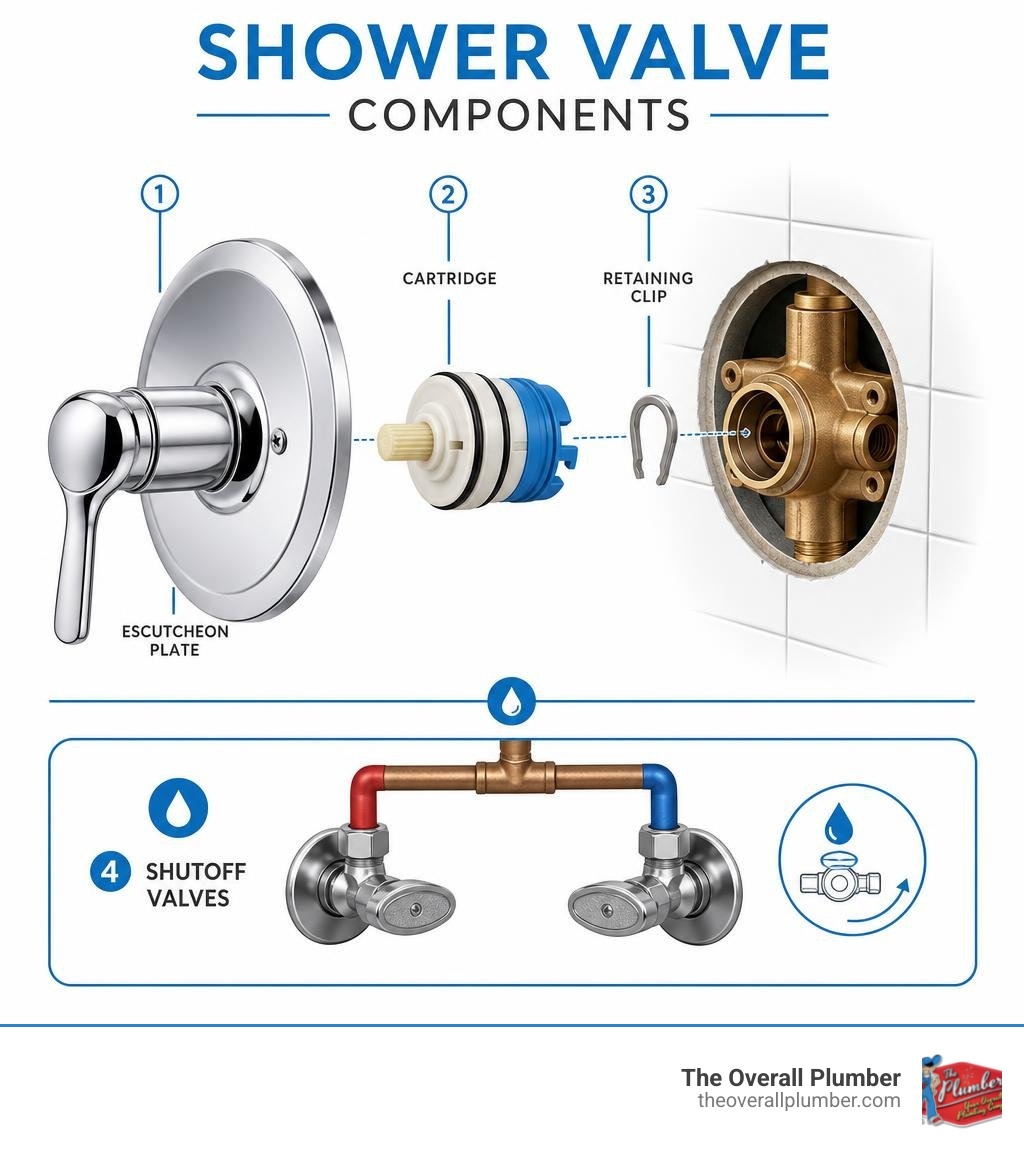
Know your shower valve repair terms:
Recognizing the Signs and Identifying Your Shower Valve
Before you start tearing into your bathroom tile, you need to understand what your shower is trying to tell you. Ignoring the early warning signs of a failing valve can lead to extensive structural water damage and mold growth behind your shower walls. When water leaks behind the escutcheon plate, it often runs down inside the wall cavity, quietly rotting your framing before you ever notice a puddle.
If you are dealing with persistent leaks or suspect there are larger plumbing issues throughout your home, checking out our comprehensive guide to plumbing repairs can help you spot hidden problems before they turn into costly disasters.
Common Signs You Need a Shower Valve Repair
A failing shower valve rarely breaks down overnight. Instead, it drops subtle (and sometimes not-so-subtle) hints that it’s time for a shower valve repair:
- The Continuous Drip: Even when the handle is turned completely off, water continues to drip from the showerhead or the tub spout.
- Temperature Swings: You’re enjoying a warm shower when suddenly the water turns ice-cold or scalding hot because someone flushed a toilet elsewhere in the house.
- Low Water Pressure: If your home has great water pressure everywhere else, but your showerhead is producing a sad, weak stream, mineral buildup inside the valve cartridge is the likely culprit.
- A Stiff or Gritty Handle: If turning the shower handle feels like you are grinding sand, the internal seals have worn down, or hard water minerals have seized the moving components.
Pressure-Balancing vs. Thermostatic Valves
To fix a valve, you must first know what kind you have. Modern showers typically use one of two main mixing valve types, plus a diverter valve if you have a tub-and-shower combination.
- Pressure-Balancing Valves: These are the most common single-handle valves found in homes across Harris County and Galveston County. They feature a internal piston or diaphragm that balances the relative pressure of the hot and cold water lines. If the cold water pressure drops (like when a washing machine fills), the valve instantly slides to restrict the hot water flow, preventing accidental scalding.
- Thermostatic Valves: These high-end systems utilize a temperature-sensitive element (often wax or a bimetallic coil) to maintain a precise, pre-set temperature regardless of pressure changes. They allow you to control the water volume and temperature independently.
- Diverter Valves: If you have a tub spout that directs water up to the showerhead when you pull a pin or turn a secondary knob, you are dealing with a diverter. If water leaks from the tub spout while the shower is running, you likely need a diverter repair rather than a main mixing valve fix.
| Feature | Pressure-Balancing Valve | Thermostatic Valve |
|---|---|---|
| Primary Safety Focus | Anti-scald protection via pressure equalization | Precise, pre-set temperature limits |
| Controls | Single handle controls both flow and temperature | Separate controls for water volume and temperature |
| Response to Pressure Drops | Reduces flow of opposite side to maintain balance | Automatically adjusts hot/cold mix to maintain target temp |
| Cost & Complexity | Budget-friendly, standard in most homes | More expensive, complex internal mechanism |
Preparation: Tools, Materials, and Safety First
A successful DIY repair depends entirely on your preparation. There is nothing worse than having your main water supply shut off, only to realize halfway through the job that you don’t have the correct replacement cartridge or tool.

Essential Tools for Shower Valve Repair
Before you begin, gather the following professional-grade tools and materials:
- Adjustable Wrench & Channel-Lock Pliers: For removing the cartridge retaining nut.
- Screwdrivers (Flathead and Phillips): For removing the handle and trim plate screws.
- Hex Keys (Allen Wrenches): Many modern shower handles are held in place by a small, recessed set screw.
- Cartridge Puller: Highly recommended, especially for Moen valves. A stuck cartridge can be incredibly difficult to extract without one.
- Plumber’s Grease (100% Silicone-Based): Crucial for lubricating the new cartridge O-rings. Never use petroleum-based products like WD-40 or petroleum jelly, as they will degrade the rubber seals over time.
- Old Towels and a Bucket: To protect your tub surface and catch escaping water.
- A Drain Cover or Rag: To block your shower drain so you don’t accidentally drop tiny screws down the pipe.
If you are working on older systems, like a classic three-handle valve, you may need specialized stem wrenches to extract the individual hot, cold, and diverter stems. For those dealing with older setups, watching a guide on how to repair a three-handle shower valve can save you a lot of guesswork.
How to Safely Shut Off Water and Relieve Pressure
Never, under any circumstances, remove a shower cartridge without shutting off the water first. If you do, you will instantly turn your bathroom into a high-pressure water park.
- Locate the Water Stops: Remove your shower handle and escutcheon plate. Look inside the wall cavity on either side of the valve body. Many modern valves feature built-in screwdriver-slot shutoff stops. Turn these clockwise until they stop.
- Whole-House Shutoff: If your valve does not have local stops, you must shut off the main water supply to your home. In our Texas coastal service areas, this valve is typically located near your water meter at the front curb, or where the main line enters your home.
- Relieve the Line Pressure: Once the water is shut off, turn the shower handle to the “on” position. Let any trapped water drain out completely. Open another faucet on a lower level of the house to help drain the remaining water out of the pipes.
Step-by-Step Guide to Replacing a Shower Valve Cartridge
With your water safely shut off and your tools nearby, you are ready to perform the repair. We will focus on single-handle cartridge replacement, as it is the most common DIY task. For a deeper dive into full valve replacements, you can review the steps outlined in wikiHow’s guide on replacing a shower valve.
Removing the Handle and Extracting the Cartridge
- Protect the Area: Place a towel over the shower floor or tub drain. This prevents dropped screws from disappearing into your plumbing and protects your tub’s finish from dropped tools.
- Remove the Handle: Locate the set screw on your shower handle (often hidden under a small plastic cap). Use an Allen wrench or screwdriver to loosen it, then pull the handle straight off. If it is stuck due to mineral buildup, tap it gently with a plastic mallet or wiggle it while pulling.
- Remove the Trim and Escutcheon Plate: Unscrew the decorative plate covering the wall opening. If there is old caulk sealing the plate to the tile, carefully slice through it with a utility knife to avoid peeling the paint or damaging the tile.
- Remove the Stop Tube and Retaining Clip: Slide off the metal sleeve (stop tube) covering the valve body. You should now see the brass or plastic valve body. Look for a small, U-shaped metal retaining clip holding the cartridge in place. Pry this clip upward using a flathead screwdriver or needle-nose pliers and set it aside safely.
- Extract the Old Cartridge: This is where things can get tricky. If you are lucky, you can grasp the end of the cartridge stem with pliers, wiggle it, and pull it straight out. If it refuses to budge, use a dedicated cartridge puller. Thread the puller onto the cartridge stem, tighten the nut against the tool’s body, and gently draw the cartridge out of the valve housing.
If you are working on a classic Delta system, you might be dealing with a ball valve setup rather than a cartridge. In that case, you can easily rebuild the internal components using a specialized Delta 212 Ball shower valve repair kit.
Installing the New Cartridge and Testing for Leaks
Before inserting your new cartridge, inspect the inside of the brass valve body. Use an old toothbrush or a piece of fine emery cloth to clean away any loose mineral deposits or grit.
- Lubricate the New Cartridge: Apply a generous layer of 100% silicone plumber’s grease to the rubber O-rings and seals on your new cartridge. This ensures a watertight seal and makes future repairs much easier.
- Align and Insert: Pay close attention to the orientation of the cartridge. Most manufacturers stamp “TOP” or a small notch on the cartridge body to indicate which way faces up. Push the cartridge straight into the valve body until it is fully seated.
- Reinstall the Retaining Clip: Slide the U-shaped clip back into its slots. It should slide in easily without force. If it doesn’t, your cartridge is not pushed in far enough.
- Set the Rotational Limit Stop: Modern cartridges feature a plastic ring called a rotational limit stop. This safety feature prevents the handle from turning too far into the hot water zone. Adjust this according to the manufacturer’s instructions to ensure your shower water doesn’t exceed safe temperatures.
- Test for Leaks: Before putting the trim plate and handle back on, turn your water supply back on slowly. Inspect the valve body closely for any signs of weeping or dripping. Turn the valve on and off to verify smooth operation and proper hot-to-cold mixing.
- Reassemble the Trim: Slide the stop tube back on, screw the escutcheon plate in place, and reattach the handle. Apply a fresh bead of silicone caulk around the top and sides of the escutcheon plate, leaving the bottom open so any water that gets behind the plate can safely drain out.
For more detailed troubleshooting on cartridge seating and stem configurations, consult Fixupfirst’s guide on fixing a leaky shower valve.
DIY vs. Professional Shower Valve Repair: Costs and Complications
While replacing a cartridge is a highly manageable DIY project, sometimes a simple fix turns into a major plumbing headache. Understanding the line between a quick weekend project and a major structural repair is essential for protecting your home.
If you are unsure whether your plumbing system requires a simple cartridge swap or a complete system overhaul, our ultimate guide to plumbing repairs for Houston homeowners offers expert advice on navigating local building codes and system diagnostics.
When to Call a Licensed Plumber
It is time to put down the wrench and call in our professional team at The Overall Plumber if you encounter any of the following scenarios:
- A Stuck or Broken Cartridge: If the plastic ears of your old cartridge snap off inside the brass valve body during extraction, removing the remaining pieces without scratching the brass walls is incredibly difficult. Any scratch inside the valve body will cause a permanent, unfixable leak.
- No Shutoff Access: If you cannot locate your main water shutoff, or if the valve is frozen solid, do not force it. You risk snapping the main water pipe.
- Converting an Older System: If you have an outdated two-handle or three-handle system and want to upgrade to a modern, code-compliant single-handle pressure-balancing system, you will need to cut out the old valve body and solder in new piping. To see what this conversion looks like, you can read the Family Handyman guide on two-handle to single-handle replacement.
- Corroded Pipes: If your home has aging galvanized steel or thin copper pipes that are highly corroded, attempting to unscrew or cut fittings can trigger a cascading pipe failure behind your walls. For homeowners in Brazoria County dealing with severe pipe degradation, a professional evaluation is highly recommended. You can learn more about extensive piping solutions through Repipe Solutions in Brazoria TX.
Understanding Repair Costs and Timeframes
If you decide to tackle this project yourself, a quality replacement cartridge typically costs between $15 and $50, and the repair can be completed in about an hour or two.
However, if you need a professional touch, here is what you can expect regarding industry standard costs and labor requirements:
- Average Repair Costs: According to national industry data, the average cost to repair a shower valve professionally ranges from $285 to $342 per valve.
- Labor Requirements: A standard shower valve replacement typically requires a minimum of 2 hours of labor, plus the cost of specialized fittings, mounting hardware, and connectors.
- Contractor Overhead: If your project is part of a larger bathroom remodel supervised by a general contractor, expect an additional 13% to 22% markup for project management and supervision.
- Full Replacement Costs: If you require a complete rough-in valve replacement behind the wall, costs will vary based on your local market. For a detailed breakdown of local pricing, check out the Angi guide on shower valve replacement costs in Houston.
Frequently Asked Questions About Shower Valves
Why is my shower still dripping after replacing the cartridge?
If you installed a brand-new cartridge and your showerhead is still dripping, there are a few likely causes:
- Damaged Valve Body: The brass housing inside your wall may be scratched, pitted, or corroded, allowing water to bypass the cartridge’s rubber seals.
- Debris in the Valve: A tiny piece of copper shaving, solder flux, or mineral scale may have washed down the pipe and lodged itself in the new cartridge’s delicate seals.
- Worn Seats and Springs: If you have a Delta-style valve, you may have replaced the ball but forgotten to replace the tiny rubber seats and springs hidden behind it inside the valve body.
Can I change my shower handle without replacing the valve?
Yes! If your valve is working perfectly but your trim looks outdated, you can perform an aesthetic upgrade. Many manufacturers offer “trim kits” designed to fit existing valve bodies without needing to cut into the wall. Just make sure the new trim kit is explicitly compatible with your specific valve brand and model series.
How do I fix reversed hot and cold water lines?
If you turn on your shower after a repair and find that “cold” is scalding hot and “hot” is freezing cold, don’t panic. You do not need to cut any pipes. This common issue happens when the cartridge is installed upside down. Simply turn off the water, remove the handle, pull the cartridge out, rotate it 180 degrees, and reinstall it.
Whether you are in Pasadena, League City, Galveston, or right here in Houston, our team at The Overall Plumber is always ready to help when a DIY project gets a little too complicated. Give us a call at (281) 668-8055 today! We offer satisfaction guarantees, priority scheduling, and never charge overtime fees.
To explore our full range of professional plumbing solutions, visit Our Plumbing Services page or check The Plumber Service Area to confirm we service your neighborhood.