


Find the Source of a Bathroom Floor Leak Before Damage Spreads
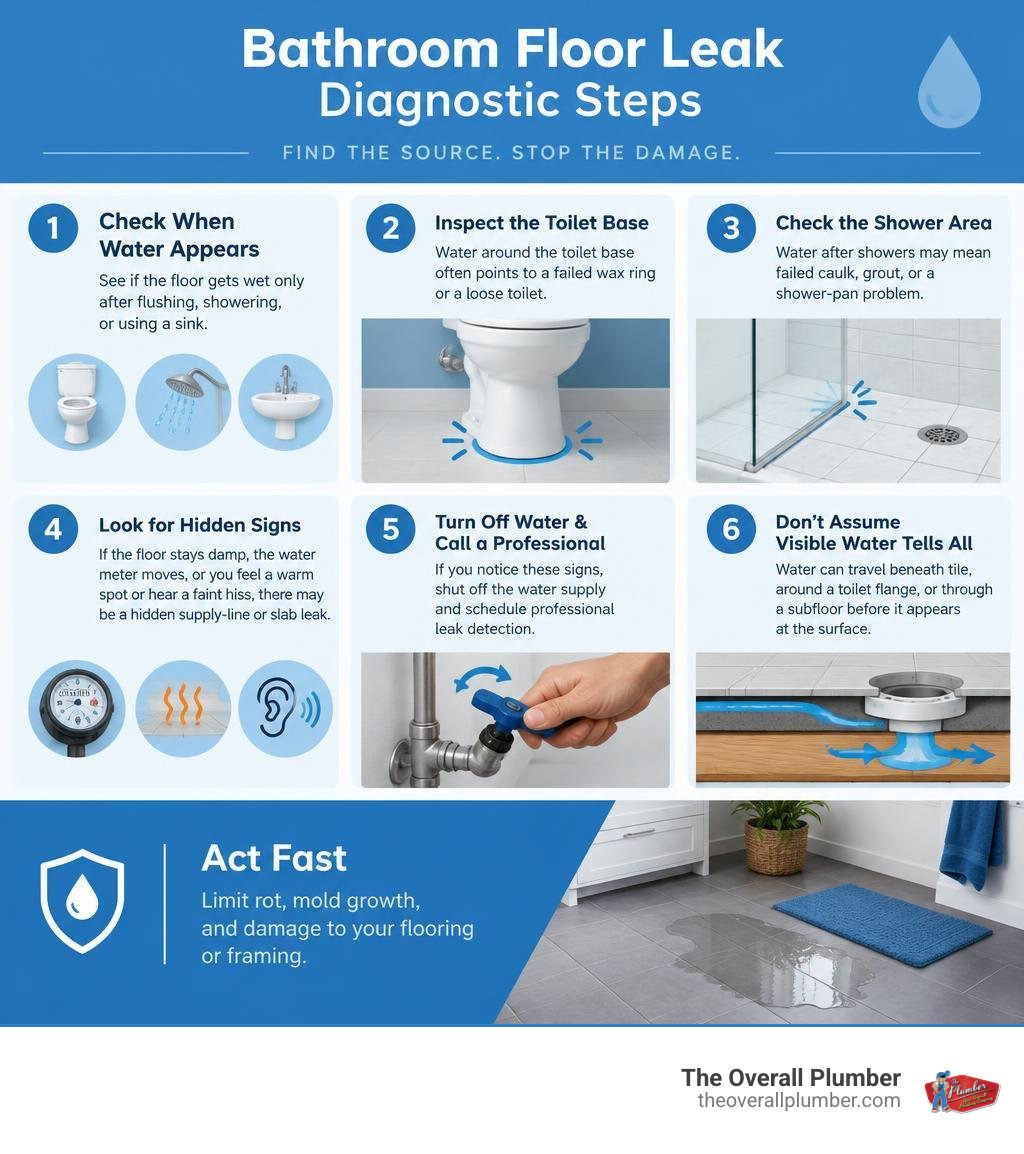
For Santa Fe bathroom floor leaks, start by checking whether water appears only after flushing, showering, or using a sink. A leak at the toilet base often points to a failed wax ring or loose toilet, while water after showers may mean failed caulk, grout, or a shower-pan problem. If the floor stays damp when fixtures are not in use, the water meter moves with all water off, or you feel a warm spot or hear a faint hiss, turn off the water supply and schedule professional leak detection. Those signs can indicate a hidden supply-line or slab leak.
Do not assume visible water tells you where the leak began. Water can travel beneath tile, around a toilet flange, or through a subfloor before it appears at the surface. Fast action helps limit rot, mold growth, and damage to flooring or framing.
I am Dayton Whitworth, a second-generation plumbing professional with experience diagnosing pipe breaks, drainage problems, and hidden water issues for homeowners. This guide will help you narrow down the likely cause of Santa Fe bathroom floor leaks before the damage gets worse.
Common Causes and Diagnostic Steps for Santa Fe Bathroom Floor Leaks
Water always takes the path of least resistance. When moisture appears on your tile or vinyl planks, determining its true origin requires systematic elimination. The puddle you step in next to the vanity might originate from an under-sink angle stop, a cracked tub seal, or an pressurized line embedded in your foundation.
To diagnose the problem safely, follow this straightforward sequence:
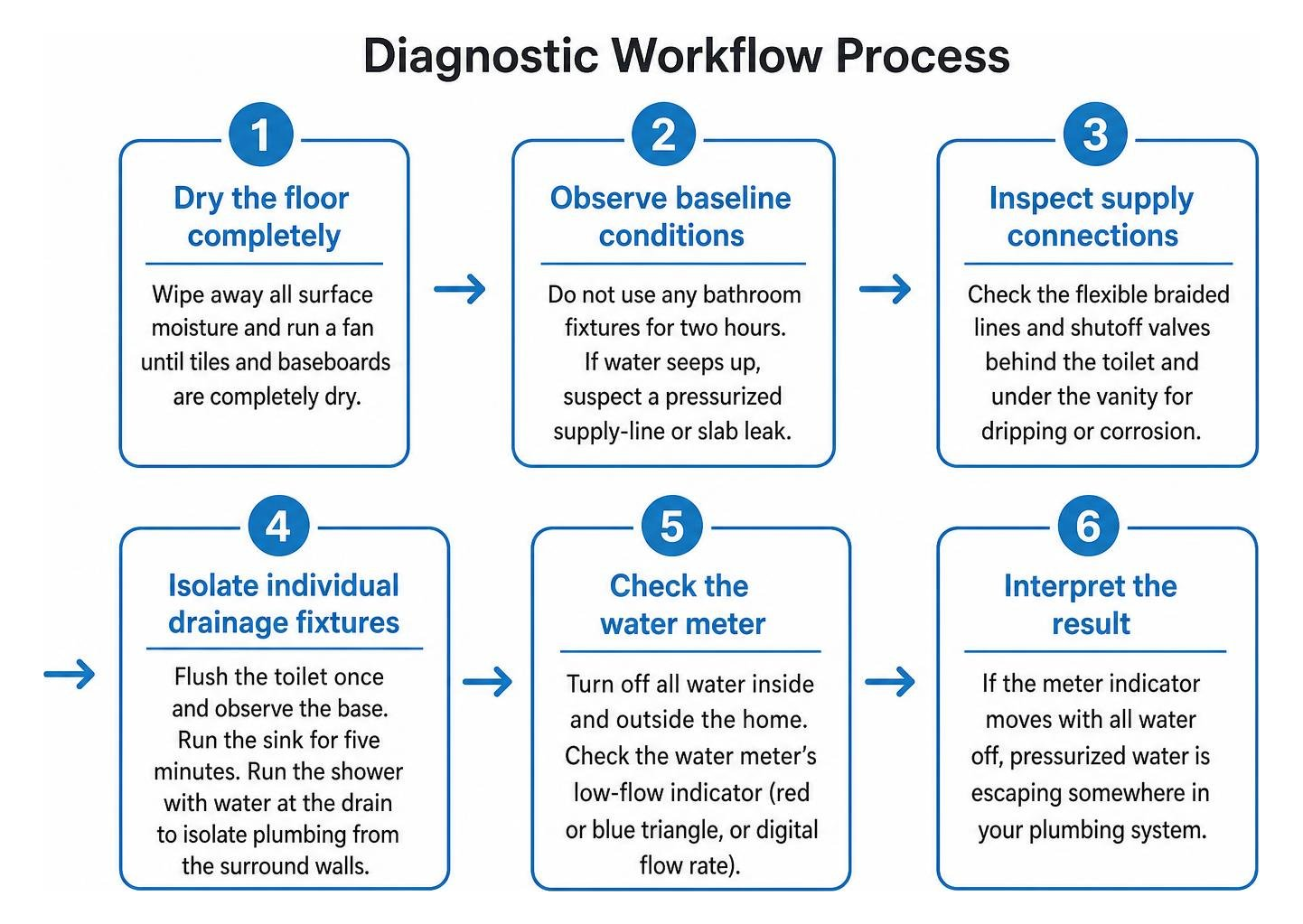
- Dry the floor completely: Wipe away all surface moisture using towels and run a fan to ensure the tiles and baseboards are completely dry.
- Observe baseline conditions: Do not use any bathroom fixtures for two hours. If water seeps up without any fixture being run, you are likely dealing with a pressurized supply-line or slab leak.
- Inspect supply connections: Check the flexible braided lines and shutoff valves behind the toilet and under the vanity for active dripping or corrosion.
- Isolate individual drainage fixtures: Flush the toilet once and observe the base. Run the sink for five minutes. Run the shower while keeping water directed solely at the drain to isolate the plumbing from the surround walls.
- Check the water meter: Ensure all water inside and outside the home is turned off. Check your municipal water meter’s low-flow indicator (often a small red or blue triangle, or a digital flow rate). If it spins, pressurized water is escaping somewhere in your plumbing system.
Inspecting Toilet Wax Rings and Santa Fe Bathroom Floor Leaks
One of the most frequent culprits behind unexplained floor water is a compromised toilet wax ring. The wax ring creates an airtight and watertight seal between the horn at the bottom of the toilet bowl and the closet flange mounted to your floor.
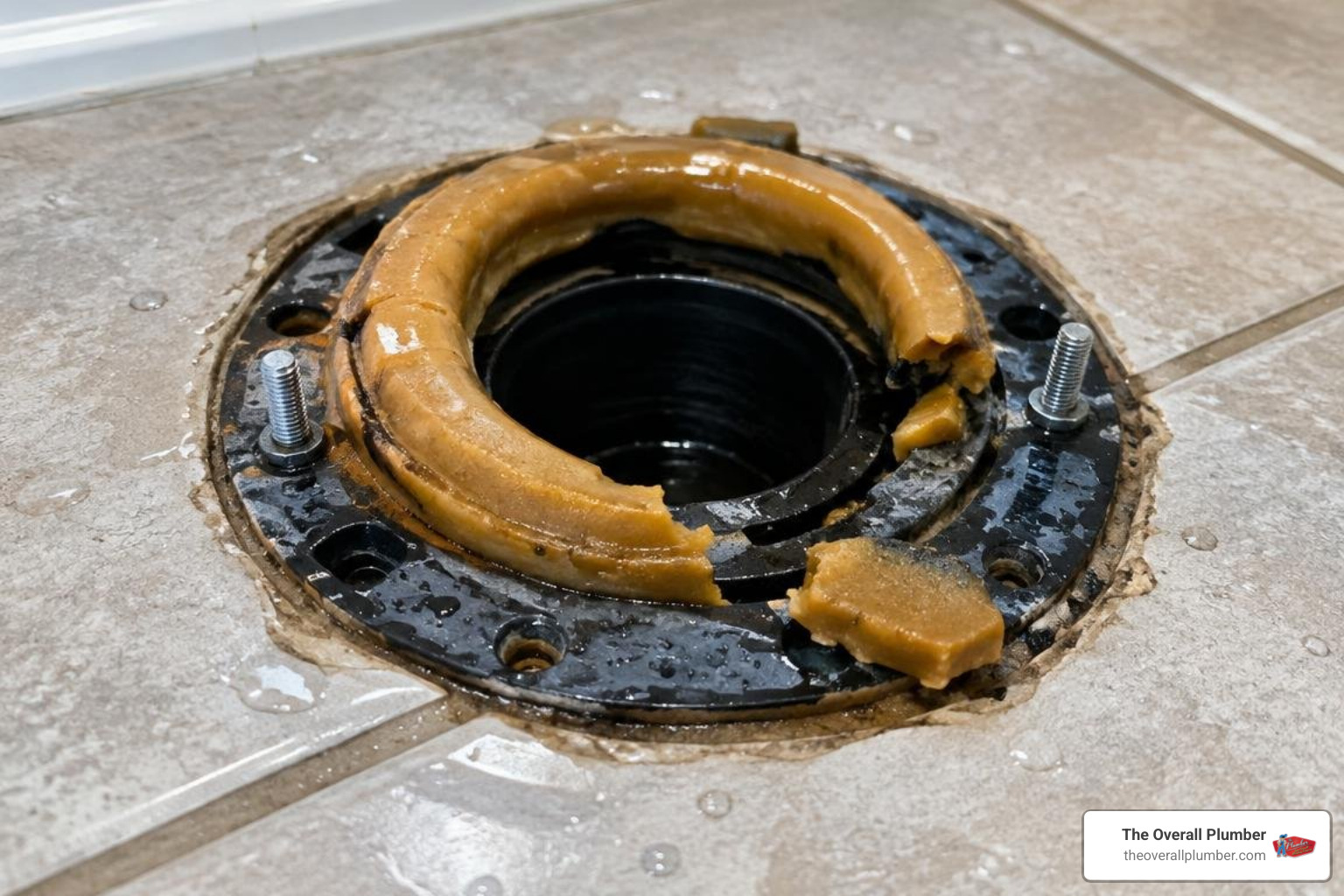
When this seal fails, water escapes beneath the base of the fixture every time the toilet is flushed:
- Toilet Base Rocking: If the toilet shifts or wobbles when you sit down, the wax seal has likely compressed unevenly or broken completely.
- Flange Corrosion or Breakage: A damaged or rusted flange prevents the closet bolts from holding the toilet firmly to the floor, breaking the seal.
- Foul Sewer Gas Odors: A broken wax seal lets sewer gases vent directly into your bathroom, creating a persistent sulfur or sewage smell even when the room is spotless.
- Subfloor Rot and Tile Cracking: Water leaking past a broken ring soaks into the subfloor or underlayment, rotting wooden joists or weakening the mortar bed beneath ceramic tiles.
Shower Pans, Tile Grout, and Plumbing vs Moisture Intrusion
It is vital to distinguish between a pressurized plumbing leak and simple surface moisture intrusion. Gravity-fed leaks occur during or immediately after bathing when water penetrates cracked grout, deteriorated perimeter caulk, or a torn shower pan membrane.
| Leak Characteristic | Pressurized Supply Leak | Gravity / Drain Leak | Surface Moisture Intrusion |
|---|---|---|---|
| Water Flow Pattern | Continuous pooling 24/7 | Occurs only when drain is in use | Appears during or right after showering |
| Meter Movement | Water meter runs continuously | Meter does not move | Meter does not move |
| Common Origin | Slab pipes, supply lines, angle stops | P-traps, shower drains, toilet wax ring | Failed tile grout, torn shower pan, cracked caulk |
| Primary Risk | Major structural washouts, high water bills | Subfloor dry rot, black mold | Mildew, loose tiles, cosmetic damage |
If water only pools on the floor after a long shower, carefully inspect the silicone caulk lines around the tub apron, the glass door track seals, and the grout joints near the floor-to-wall transition.
Slab Leaks vs Fixture Issues: Advanced Detection Methods
Homes built on concrete slab foundations house many of their primary hot and cold water supply lines beneath or within the concrete. Over time, shifting soil, chemical corrosion, or friction against aggregate can cause these copper or PEX pipes to develop pinhole leaks.
Detecting a slab leak early prevents structural shifting, foundation cracking, and astronomical water bills.
Slab Leak Detection Techniques for Santa Fe Bathroom Floor Leaks
When a pressurized pipe fails under your concrete foundation, several telltale symptoms emerge:
- Hot Spots on the Floor: A ruptured hot water line will transfer heat directly through the concrete slab, creating localized warm spots on your tile or vinyl floor.
- Continuous Hissing Sounds: When the house is silent, you may hear the faint sound of running water or rushing air coming from beneath the bathroom floor.
- Spinning Water Meters: If your water meter continues to register usage when all fixtures, appliances, and hose bibbs are shut off, a pressurized line is actively leaking.
- Tile Tenting and Buckling: Concrete saturated with moisture expands and pushes against flooring materials, causing tiles to crack, loosen, or tent upward.
Non-Invasive Diagnostic Tools Plumbers Use
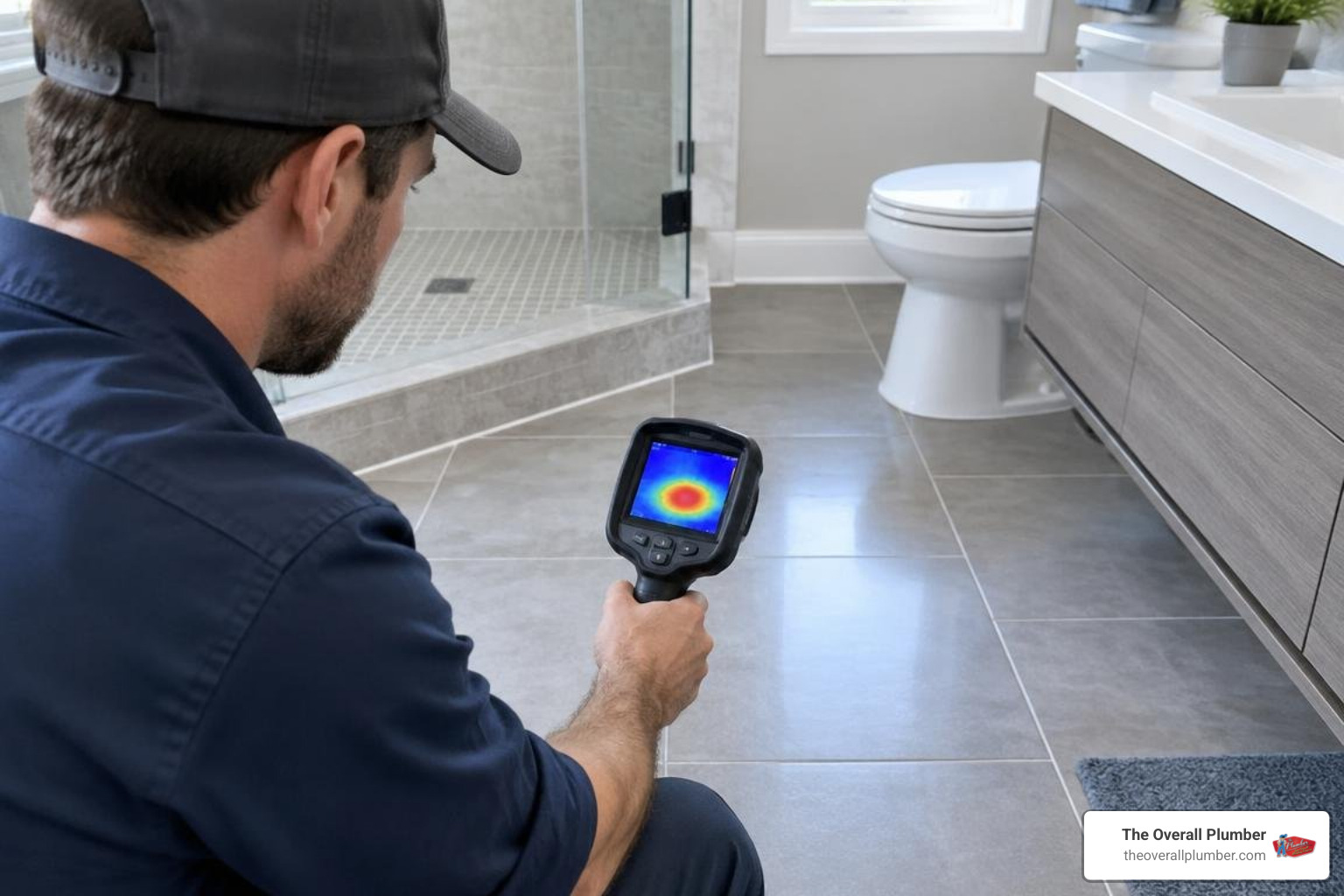
Modern plumbing diagnostics eliminate the guesswork. Rather than chipping through concrete or tearing out finished tile walls to locate a leak, professional technicians rely on advanced non-destructive technology:
- High-Resolution Thermal Imaging: Infrared cameras detect minute temperature differences on the floor surface (down to 0.1°C), clearly mapping the hot water plume from an underground leak.
- Acoustic Correlators and Ground Microphones: Sensitive acoustic listening equipment amplifies the sound of pressurized water escaping pipes, pinpointing the leak within a 0.5-foot radius.
- Electromagnetic Pipe Tracers: These devices map the exact route of metallic and non-metallic plumbing lines beneath your foundation without damaging floors.
- Pinless Moisture Meters: Calibrated radio-frequency meters measure moisture saturation deep within concrete slabs, subflooring, and framing studs without puncturing surfaces.
A comprehensive whole-home leak detection survey typically takes between two to four hours to thoroughly map and isolate hidden failures.
Repair Options, Insurance Claims, and Prevention Strategies
Once a bathroom leak is accurately pinpointed, resolving it quickly protects your home’s foundation and indoor air quality.
Professional Slab Leak Repair Options
Depending on the age of your plumbing system and the location of the break, several repair methods exist:
- Direct Spot Repair: Plumbers make a precise opening in the slab directly over the failure, cut out the damaged copper section, and install high-grade replacement piping.
- Pipe Rerouting: Instead of breaking through your bathroom floor, the damaged underground line is capped off, and a new PEX line is run overhead through walls and attic spaces.
- Trenchless Pipe Relining: In select situations, internal epoxy relining or cured-in-place pipe lining can restore damaged drainage or service lines without invasive excavation.
Insurance Documentation and Smart Prevention
According to consumer guidance from the Texas Department of Insurance, homeowners insurance policies in Texas generally cover water damage if it is “sudden and accidental”—such as an unexpected pipe burst. However, coverage frequently excludes gradual damage caused by deferred maintenance, such as long-term grout neglect.
- Documentation: Request a comprehensive plumbing diagnostic report containing moisture mapping data, thermal images, and camera inspection logs to submit with your insurance claim. Many policies cover the cost of tear-out and access required to reach the failed pipe.
- Smart Leak Detectors: Installing smart leak sensors with automated shutoff valves near toilets, vanities, and water heaters will immediately isolate your water supply if an abnormal flow or standing water is detected.
- Preventative Care: Joining regular plumbing protection plans ensures your water pressure, shutoff valves, and fixtures receive annual inspections to catch weak points before they burst.
Frequently Asked Questions About Bathroom Floor Leaks
How can I tell if a leak is coming from the toilet or a slab leak?
Perform a simple water meter test and a dye test. First, add several drops of dark food coloring into your toilet tank and wait 20 minutes without flushing; if color appears in the bowl or on the floor, the flapper or tank bolts are leaking. Next, ensure all fixtures are off and check your water meter. If the meter is spinning continuously, the leak is on a pressurized supply pipe—often beneath the slab. Warm floor areas and constant faint hissing further point directly to a slab leak rather than a simple fixture seal failure.
Will homeowners insurance cover bathroom floor leak repairs in Santa Fe?
Most standard homeowners insurance policies cover the collateral damage caused by sudden and accidental pipe breaks, including replacing rotted subflooring, damaged tile, and drywall. They may also cover the cost of accessing the broken pipe beneath a slab. However, the cost to repair the actual plumbing pipe itself is typically the homeowner’s responsibility, and claims may be denied if the leak shows signs of long-term neglect.
What should I do immediately upon noticing standing water on the bathroom floor?
First, locate and shut off your home’s main water supply valve to halt any active pressurized leaks. If water is pooling near electrical outlets or baseboard heaters, turn off the corresponding breaker at your electrical panel. Mop up all standing water to protect your subfloor and baseboards from rotting, take clear photos and videos of the pooling for insurance records, and schedule a professional diagnostic inspection.
If you are dealing with persistent moisture, rising utility bills, or mysterious floor puddles, contact our licensed team for professional Santa Fe leak detection and repair services or call us at 281-668-8055.