

Why Drain Cleaning Priority Scheduling Matters for Your Home and Facility
Drain cleaning priority scheduling is the practice of ranking your drains by risk level and usage, then assigning cleaning frequencies before problems occur — not after a backup forces your hand.
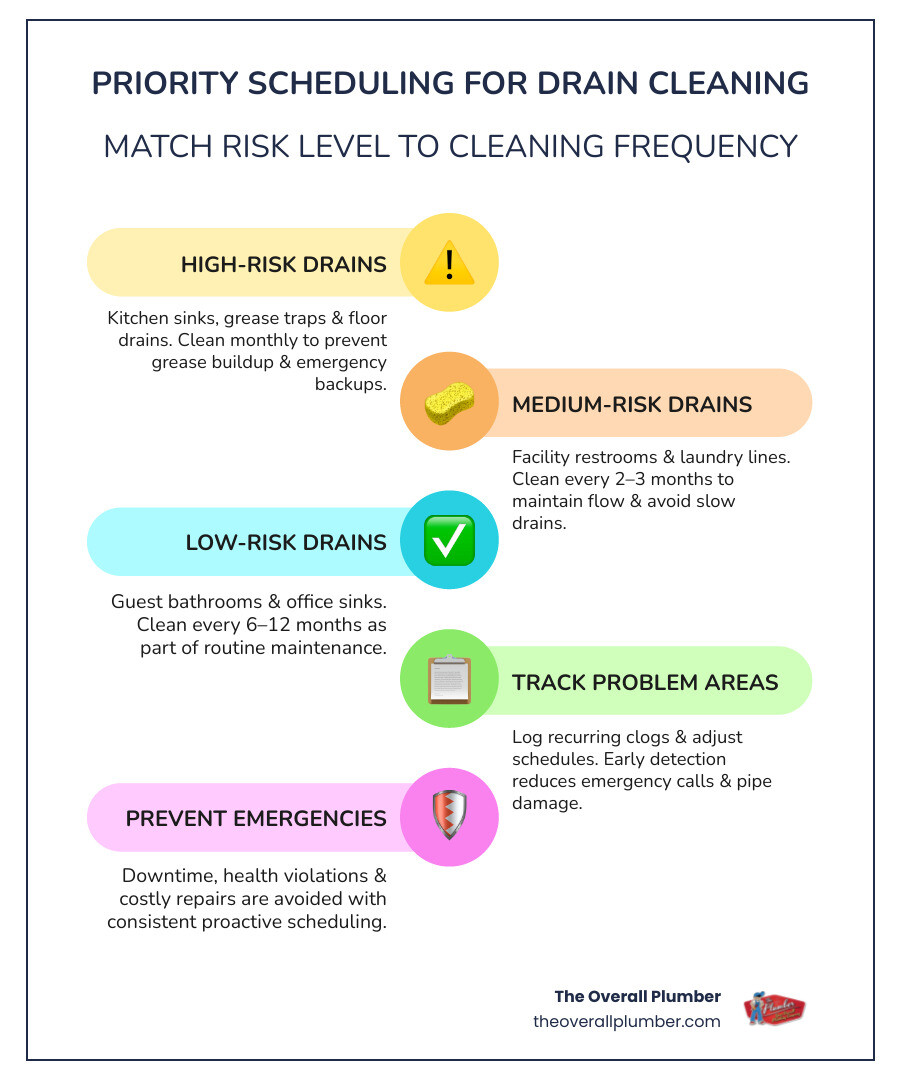
Here is a quick breakdown of how priority scheduling works:
- High-risk drains (kitchen sinks, grease traps, floor drains) — inspect and clean monthly
- Medium-risk drains (facility restrooms, laundry lines) — clean every 2–3 months
- Low-risk drains (guest bathrooms, office sinks) — clean every 6–12 months
- All drains — track recurring problem areas and adjust schedules accordingly
Drain failures rarely happen overnight. Grease, food solids, hair, soap scum, and biofilm build up gradually until a slow drain becomes a full backup. By the time you notice a problem, the blockage is often well advanced — and the cost of emergency service is far higher than routine prevention.
For homeowners, the stakes are just as real. A clogged main drain or tree root intrusion can disrupt your entire household, damage your pipes, and result in expensive emergency calls outside normal business hours.
I’m Dayton Whitworth, a second-generation plumber serving Greater Brazoria County, Galveston County, Houston, and the surrounding Gulf Coast, with hands-on experience building drain cleaning priority scheduling programs for both residential and commercial clients. I’ll walk you through exactly how to set one up so you can stop reacting to emergencies and start preventing them.
Why Preventive Maintenance Beats Emergency Drain Backups
When you run a facility or manage a busy household in the Houston or Galveston area, it is easy to adopt an “out of sight, out of mind” attitude toward your plumbing. Drains are hidden behind walls and beneath concrete slabs, quietly doing their jobs—until they aren’t.
Waiting for a drain to back up before calling in professional help is a costly, stressful, and highly disruptive strategy. When a commercial drain fails, it rarely happens at a convenient time. Instead, it occurs during peak operational hours, leading to immediate operational risks and hygiene hazards. In food service, hospitality, or healthcare settings, a wastewater backflow can trigger instant health department violations, force emergency shutdowns, and ruin your hard-earned reputation.
By shifting your mindset from reactive emergency response to proactive, preventive care, you protect your property and your bottom line. Regular inspections allow us to identify and clear minor build-ups long before they develop into solid blockages. This proactive approach saves you from the premium costs of emergency plumbing dispatches and ensures your daily routines remain completely uninterrupted. If you want to dive deeper into how keeping your lines clear saves you time and money, read our guide on How Clogged Drain Service Can Help You Unclog Fast.
Common Causes of Commercial and Residential Drain Clogs
To design an effective drain cleaning priority scheduling plan, you first need to understand what actually clogs your pipes. While the end result – a pool of dirty water and a slow-draining sink – is the same, the culprits vary significantly between commercial and residential settings.
In commercial kitchens and food preparation facilities, grease buildup is the undisputed king of clogs. FOG (Fats, Oils, and Grease) enters the drainage system as warm liquid. As it travels down the pipe, it cools, solidifies, and clings to the pipe walls. Over time, other food waste particles get trapped in this sticky lining, narrowing the pipe’s diameter until wastewater can no longer pass through.
In residential settings and facility restrooms, hair and soap scum are the primary offenders. Soap scum forms a sticky, chemical residue that binds loose hair, lint, and skin cells together. This mixture acts like a net, catching everything that passes by.
Furthermore, physical obstructions like non-flushable items (baby wipes, feminine hygiene products, paper towels) frequently choke commercial toilet lines. Despite what product packaging might claim, these items do not break down in water and will quickly snag on any rough spots or bends in your sewer lines.
For outdoor and underground main lines, especially in older neighborhoods across League City, Pasadena, and Galveston, tree root intrusion is a massive problem. The warm, moist environment inside a sewer pipe is highly attractive to mature tree roots. They find tiny cracks or loose joints in older clay or cast-iron pipes, force their way inside, and grow into dense root balls that completely block the flow of waste.
Whether you are dealing with grease in a commercial kitchen or root intrusion in a residential main line, relying on temporary quick-fixes will not solve the underlying issue. Professional drain cleaning solutions are required to physically clear the lines and restore full flow capacity. The U.S. Environmental Protection Agency also identifies blockages and line breaks as factors associated with sanitary sewer overflows, which is why identifying clog sources early is a critical part of long-term plumbing maintenance.
Designing a Layered Strategy for Drain Cleaning Priority Scheduling
An effective drain cleaning priority scheduling program does not treat every drain in your building the same way. Instead, it utilizes a layered strategy that combines risk assessment, usage frequency, and different cleaning methods to maximize efficiency and minimize costs.
A layered strategy involves four key steps:
- Debris Removal: Manually clearing grates, strainers, and interceptors to prevent solid waste from entering the main plumbing lines.
- Controlled Flushing: Using high-volume water flows to push loose, soft sediments downstream before they can settle.
- Enzymatic and Biological Treatments: Applying natural, non-corrosive enzymes that digest organic matter like grease and biofilm along the pipe walls.
- Deep Mechanical Cleaning: Scheduling professional hydro jetting or auger services to scour the pipes back to their original flow capacity.
To help you visualize how to separate your facility’s drains, we have compiled a standard priority scheduling matrix:
| Drain Risk Category | Typical Location | Common Culprits | Recommended Inspection/Cleaning Frequency |
|---|---|---|---|
| High-Risk | Commercial kitchens, food prep areas, grease traps, main sewer lines with root history | Fats, oils, grease, food waste, tree roots | Monthly to every 6 weeks |
| Medium-Risk | High-use public restrooms, laundry facilities, locker rooms | Soap scum, hair, paper towels, biofilm | Every 3 to 6 months |
| Low-Risk | Office kitchenettes, guest bathrooms, utility closets | Dust, light soap residue, minor hair | Every 12 months |
How to Establish Drain Cleaning Priority Scheduling for High-Risk Zones
High-risk drains require aggressive, consistent attention. In commercial kitchens, food processing plants, and healthcare facilities, a single day of downtime can result in thousands of dollars in lost revenue or critical safety violations.
For these zones, monthly inspections are highly recommended. We physically check floor drains, grease interceptors, and main discharge lines to ensure grease and organic solids are not building up to dangerous levels. If you manage a high-occupancy building, having a trusted partner on standby is essential. To learn more about managing sudden plumbing crises in these high-stakes environments, check out Your Guide to 24/7 Emergency Drain Cleaning.
Implementing Drain Cleaning Priority Scheduling for Low-Risk Areas
Low-risk drains, such as those in office restrooms, guest bathrooms, or administrative areas, do not need monthly hydro jetting. However, they cannot be ignored entirely. Over years of use, even a low-traffic sink will accumulate a layer of biofilm and soap residue that restricts flow.
For these areas, an annual or semi-annual schedule is perfect. During these routine visits, we track recurring problem areas using advanced camera inspections. If a low-risk drain keeps clogging, a camera inspection will reveal if there is an underlying structural issue, such as a sagging pipe or a cracked joint, that needs to be addressed. If you suspect your main line is struggling, read our detailed guide on Main Drain Clogs: Why You Need a Priority Auger Service to understand how professional tools safely clear tough blockages.
Core Methods for Professional Drain Cleaning and Sanitation
When it comes to executing your drain cleaning priority scheduling plan, using the right tool for the job is critical. Professional plumbers rely on several core methods, each designed for specific types of blockages and pipe materials:
- Hydro Jetting: This method uses specialized pumps to blast high-pressure water (up to 4,000 PSI) through your pipes. It is incredibly effective at scouring away heavy grease buildup, tree roots, and hardened scale, restoring the pipe to its original interior diameter.
- Steam Drain Cleaning: Excellent for hygiene-sensitive environments like healthcare facilities and commercial kitchens. Steam cleaning provides thermal sanitation, killing bacteria and reducing biofilm that traditional cold-water hydro jetting cannot eliminate.
- Vacuum-Assisted Debris Removal: Before flushing lines, we highly recommend using industrial vacuums to physically remove heavy solids, sand, and grease from interceptors, pits, and floor drains. This prevents debris from washing further down the line and causing a massive blockage downstream.
- Mechanical Augers and Drain Snakes: Ideal for physical blockages like paper products, hair, or localized tree roots. The steel cable physically cuts through the obstruction to restore flow quickly.
- Enzymatic and Biological Cleaners: These treatments use naturally occurring, non-pathogenic bacteria and enzymes to slowly digest organic waste. They are perfect for ongoing, scheduled maintenance to keep pipes clear of biofilm without damaging your plumbing system.
It is important to note that commercial-grade mechanical tools should always be favored over liquid chemical drain openers. Chemical cleaners rely on harsh acids or caustics that generate intense heat. This heat can warp PVC pipes, corrode older cast-iron lines, and pose severe safety hazards to anyone working on the plumbing system later.
Frequently Asked Questions About Drain Maintenance
Why are chemical drain cleaners discouraged for commercial facilities?
Over-the-counter chemical drain cleaners are highly corrosive. In commercial facilities with complex, long pipe runs, these chemicals often fail to clear the blockage completely, leaving a highly toxic, acidic pool of water sitting inside your pipes. This corrodes metal pipes, softens plastic lines, damages the environment, and creates a severe chemical burn hazard for our plumbers when they arrive to clear the line mechanically.
How often should commercial grease traps and drains be cleaned?
As a general rule, commercial grease interceptors and associated drains should be cleaned at least once a month. However, high-use commercial kitchens may require bi-weekly cleanings to comply with local municipal codes in Harris and Galveston Counties. Keeping a consistent schedule ensures grease never has the chance to escape into the main public sewer line.
What are the benefits of professional drain cleaning over DIY methods?
DIY methods like hand-cranked snakes or retail chemicals only offer temporary, short-term relief. They often poke a small hole in the clog rather than removing it, leading to another backup days later. Professional drain cleaning utilizes camera diagnostics to locate the exact source of the issue, followed by high-powered equipment like hydro jetters or heavy-duty augers to provide a comprehensive, long-term solution.
Secure Your Plumbing Protection Plan Today
Managing a facility or a home is hard enough without having to worry about unexpected sewer backups. The best way to keep your plumbing system running flawlessly is by partnering with The Overall Plumber to establish a customized plumbing protection plan.
We offer comprehensive drain cleaning, advanced camera inspections, and priority scheduling tailored specifically to your property’s needs. Best of all, our services are backed by outstanding satisfaction guarantees, and we never charge trip fees or overtime rates – even on weekends or holidays. If you are located in Brazoria County, Houston, Clear Lake, Santa Fe, League City, Texas City, La Porte, Friendswood, Pearland, Pasadena, Galveston, Harris County, or Galveston County, we are ready to keep your drains flowing smoothly. Visit our Local Plumber Clogged Drain Service page to learn more about how we can protect your home or business.
Need to set up a priority maintenance plan for your facility’s plumbing? Contact our team today to schedule your professional drain inspection and keep your system running smoothly.