


The Best Mini Inspection Cameras for People Who Hate Blind Spots
Why Mini Camera Inspection Is the Smartest Way to Diagnose Hidden Pipe Problems
Mini camera inspection is a non-destructive method of viewing the inside of pipes, drains, and sewer lines using a small waterproof camera head attached to a flexible push-rod cable.
Quick answer — here are the top mini inspection cameras worth knowing about:
| Camera | Best For | Camera Head Size | Cable Length |
|---|---|---|---|
| RIDGID SeeSnake Mini Pro | Professional sewer lines | 25 mm | 200 ft (61 m) |
| Forbest 1/4″ Micro | Tight drain lines | ~6 mm | Varies |
| Vividia VS-33PT50 | Pan-tilt HD inspections | 33 mm | 164 ft (50 m) |
| USA Borescopes MinCord mini13 | Narrow pipes & cavities | 13 mm | 50 ft |
| ROSCOPE mini | Small installations | 8.5 mm | ~4.6 ft |
| Milwaukee M12 M-Spector | DIY & light pro use | Compact | Up to 65 ft |
Blind spots inside your plumbing system are where small problems quietly turn into expensive ones. A slow drain might be a simple clog — or it could be a cracked pipe, tree root intrusion, or a collapsed section you can’t see without looking inside.
That’s exactly what mini inspection cameras are built to solve. These compact tools push a tiny, high-resolution camera head through your pipes and send back live video so you — or your plumber — can see the problem directly, without digging, guessing, or tearing out walls.
I’m Dayton Whitworth, a second-generation plumber serving Greater Brazoria County, Galveston County, Houston, and the surrounding Gulf Coast, and mini camera inspection is one of the most valuable diagnostic tools I use on a daily basis to give homeowners clear answers fast. In the sections below, I’ll break down the best options on the market so you know exactly what to look for.
Understanding Mini Camera Inspection Technology
To understand why a mini camera inspection is so effective, you have to look at the “guts” of the machine. At its core, a mini inspection system consists of a high-resolution camera head, a flexible push-rod (the “snake”), and a monitor to view the live feed. Unlike standard sewer cameras that might be too bulky for residential bathroom drains or kitchen sinks, mini versions are designed specifically for smaller diameter lines.
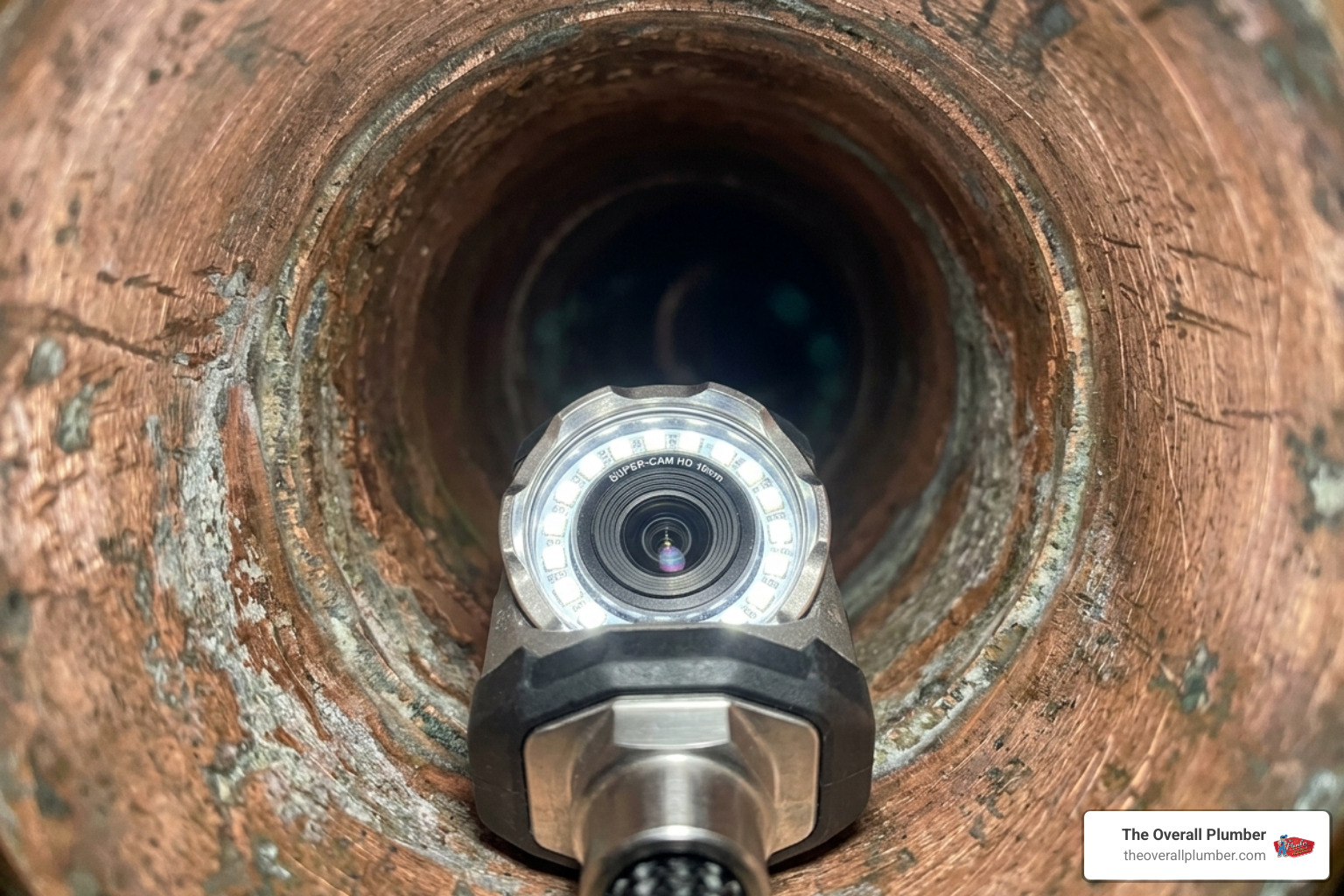
The technology behind these devices has come a long way. Modern systems like the Mini Reel utilize advanced image sensors that can provide 600 TV lines of resolution or higher, ensuring that even a hairline crack in a PVC pipe is visible.
One of the most critical components for us in the field is the 512Hz sonde. This is a small signal transmitter located inside the camera head. When we find a break or a massive clog, we use a handheld locator above ground to pick up that 512Hz signal. This allows us to point to the exact spot in your yard or under your slab where the issue is located, which is a key part of our Video Camera Sewer Line Inspection service. Instead of digging up your whole lawn, we only dig where the camera tells us to.
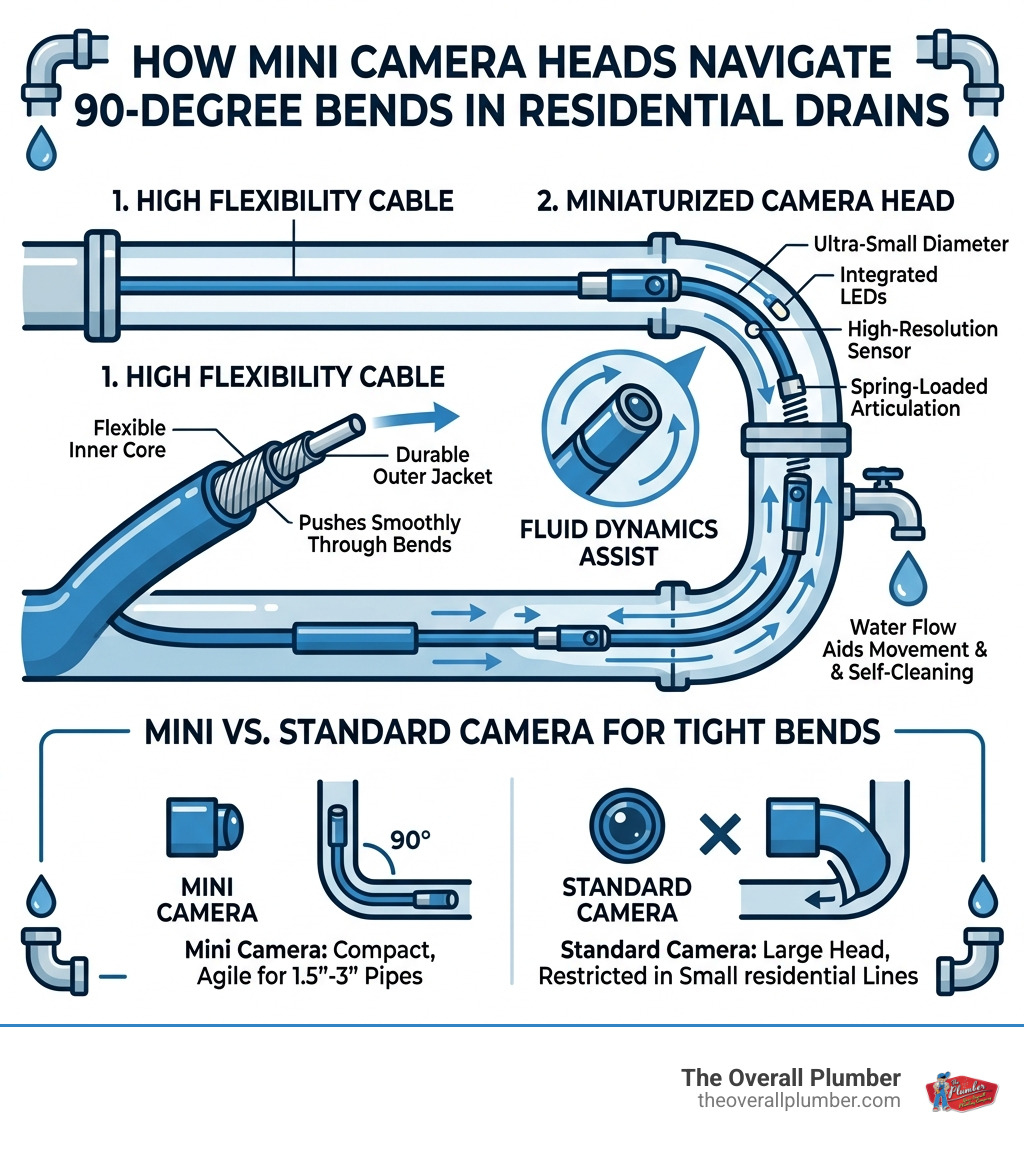
Furthermore, these systems often use fiber optics or reinforced push-rods that are stiff enough to be pushed long distances (up to 200 feet) but flexible enough to negotiate those pesky 90-degree elbows in your plumbing.
Key Features of High-Performance Mini Cameras
When we go out to jobs in Pearland, League City, or Friendswood, we aren’t just looking for a “camera on a string.” We need professional-grade features that ensure we don’t miss a thing. If you are comparing models, here are the features that actually matter:
Digital Self-Leveling
There is nothing more disorienting than watching a sewer video where the “floor” of the pipe is at the top of the screen. Digital self-leveling ensures the image stays upright regardless of how the camera rotates. High-end units like the RIDGID SeeSnake Mini Pro use digital leveling rather than mechanical parts, which means fewer moving pieces to break.
TruSense and HDR
TruSense technology benefits include High Dynamic Range (HDR) sensors. In the dark, wet environment of a sewer line, glare from LED lights can wash out the image. HDR balances the bright and dark areas so you can see into the shadows of a pipe.
TiltSense Inclinometer
This feature tells the technician the exact pitch or “fall” of the pipe. If a sewer line in Houston has a “belly” (a sag where water sits), the inclinometer will show the change in degree, helping us diagnose why a line keeps backing up even after it’s been cleaned. This is vital for maintaining healthy Sewer Lines in Houston.
Camera Head Diameter vs. Pipe Size
Choosing the right head size is a balancing act. A head that is too large won’t fit through a P-trap; a head that is too small might not have enough light to illuminate a large 8-inch main line.
| Camera Head Diameter | Ideal Pipe Size Range | Typical Application |
|---|---|---|
| 8mm – 13mm | 1″ to 2″ | Sinks, showers, micro-conduits |
| 25mm (1 inch) | 1.5″ to 4″ | Residential drains, main stacks |
| 33mm+ | 3″ to 8″ | Main sewer lines, industrial pipes |
Choosing the Right Mini Inspection Camera for Your Needs
The “best” camera depends entirely on what you’re trying to see. In our experience across the Houston area, we see a wide variety of pipe types, from vintage cast iron in Galveston to modern PVC in Pearland.
For General Residential Plumbing
For most homes, a 25mm (1-inch) camera head is the “Goldilocks” size. It’s small enough to fit through most cleanouts and navigate 2-inch lines but powerful enough to light up a 4-inch main sewer line. The SeeSnake Mini Pro is a heavy hitter here, offering 200 feet of cable which is more than enough for almost any residential lot in Harris County.
For Ultra-Tight Spaces
If you’re dealing with swimming pool lines, HVAC condensation drains, or 1-inch micro-bore tubing, you need something like the ROSCOPE mini applications. With an 8.5mm head, this handheld unit is perfect for quick checks of siphons and shower connectors. Similarly, the MinCord mini13 features a 13mm head that can handle 90-degree bends in pipes as small as 25mm (about 1 inch).
Specialized Industrial Use
In some cases, we need more than just a view; we need to see around corners. The Vividia VS-33PT50 offers “Pan-Tilt” (PT) capability, meaning the camera head can rotate and pivot to look directly at a joint or a weld seam. This is often used in large-scale ducting or industrial vessel inspections.
Portable All-in-One Systems vs. Wi-Fi Models
The way we view the footage has changed.
- All-in-One Systems: These have a built-in LCD screen (like the 7-inch screen on the Gen-Eye POD). They are rugged, reliable, and don’t require a phone signal to work.
- Wi-Fi Models: Systems like the REMS MiniScope portability or the Wi-Fi enabled Gen-Eye units allow the camera to beam the image directly to a smartphone or tablet.
We find Wi-Fi models incredibly helpful because they allow us to instantly email a video clip of a root intrusion to a homeowner while we are still standing in their driveway. It provides immediate transparency and helps you make an informed decision about repairs.
Specialized Mini Camera Inspection for Tight Bends
Navigating a 90-degree turn is the ultimate test for a mini camera inspection tool. If the push-rod is too stiff, it will get stuck. If it’s too soft, you can’t push it past 20 feet.
The minCord 5 maneuverability is a great example of engineering for this problem. It uses an ultra-flexible spring section behind the camera head. This “neck” allows the head to pivot sharply while the rest of the rod provides the “shove” needed to reach deep into the system. This is essential for navigating P-traps under sinks without having to disassemble the entire drainage assembly.
Frequently Asked Questions about Mini Inspection Cameras
What pipe sizes can a mini camera inspection handle?
Generally, mini cameras are designed for the “working area” between 1 inch (25mm) and 8 inches (200mm). While a micro camera (8mm) can technically look into a 1/2-inch pipe, its lighting might be limited. For standard residential work in our Texas service area, these cameras are the kings of 2-inch to 4-inch lines.
How deep can these cameras go underwater?
Most professional mini cameras carry an IP68 waterproof rating. This means they are dust-tight and protected against long periods of immersion under pressure. For example, the VT 25 FL underwater specs show it can handle up to 5 bar of pressure, which is roughly equivalent to 50 meters (164 feet) of water depth. For a standard clogged sewer line, this is more than enough protection.
Do I need a sonde for my mini camera inspection?
If you are just curious about what a clog looks like, you don’t need a sonde. However, if you actually plan on fixing the problem, a sonde is non-negotiable. Without a 512Hz sonde, you might see a broken pipe but have no idea if it’s under your living room rug or the oak tree in the front yard. Precision mapping saves homeowners thousands in unnecessary excavation costs.
Conclusion
At The Overall Plumber, we believe that you shouldn’t have to guess about the health of your home’s infrastructure. Whether you are in La Porte, Santa Fe, or Galveston, a mini camera inspection is the most cost-effective way to get a “doctor’s eye view” of your pipes.
By using high-end technology like digital self-leveling, HDR imaging, and 512Hz locating sondes, we provide precision diagnostics that stop “blind spot” plumbing disasters before they start. We offer professional camera inspections, drain cleaning with augers, and comprehensive repair services with no trip charges and no overtime fees.
If you’re tired of slow drains or recurring backups, don’t wait for a total collapse. Schedule a video camera sewer line inspection with us today and see exactly what’s going on down there. We guarantee your satisfaction and offer priority scheduling to get your home back in flow.